by Felicia Goodman | Dec 14, 2025 | Missed Calls Management
Healthcare now operates as an industry which bases patient loyalty on how easily patients can access its services. Patients will accept restricted parking options and extended intake procedures and outdated facility décor but they cannot accept clinics which remain inaccessible to them. A patient will choose to leave their current healthcare provider after missing just one phone call from their doctor. The financial consequences of this situation continue to expand because multiple such incidents happen every week.
In today’s competitive healthcare environment, missed calls medical practice issues have become one of the most overlooked drivers of patient dissatisfaction, online complaints, and revenue loss. Health facilities dedicate their resources to EMRs and new equipment and marketing initiatives yet they fail to recognize their phone system as their most essential customer interaction channel.
Medical facilities need to identify the causes of patient no-shows during calls while they must also determine how these events affect their present operational state.
Why Missed Calls Hurt Medical Practices More Today
The healthcare environment has undergone substantial changes during the last five years. Patients want to experience the same quick and easy communication that retail brands and banks and on-demand healthcare call center services provide to their customers. Patients who contact a clinic clinic expect to receive either an appointment booking or a cancellation notice or a referral to another healthcare provider.
- someone answers,
- someone assists them, or
- someone follows up quickly.
If none of these happen, the patient feels dismissed, or worse, unsafe.
Several factors magnify the consequences of missed calls:
Rising patient expectations
People are accustomed to immediate answers everywhere else. Anything slower feels outdated or uncaring.
Higher competition
Urgent cares, telehealth companies, and retail clinics are ready to take your missed call.
Digital-first behavior
If a clinic phone line fails, patients turn instantly to Google Maps or Yelp to find another provider.
Overloaded front-desk teams
Most clinics are heavily understaffed. Phones are the first thing to fall behind.
Consumer-style decision making
Healthcare organizations need to provide services at the same level which regular customers experience at other commercial establishments. Patients evaluate healthcare providers through the same evaluation process which they use to assess service brands.
The changes have made it so that any single missed call will trigger a chain reaction which affects how patients view the practice and both practice revenue and patient maintenance.
The Hidden Costs Behind Missed Calls in Healthcare
Many clinic leaders underestimate the true impact of missed calls. The loss extends far beyond a single unanswered ring. Missed calls generate a chain of operational disruptions, staff stress, and declining patient trust.
Some of the most damaging hidden consequences include:
- Lost new patient appointments
- Increased no-shows due to poor reschedule access
- Missed medication refill requests
- Delayed clinical triage for worsening symptoms
- Incorrect appointment types when callbacks are rushed
- Negative online reviews
- Decreased patient lifetime value
- Lower care continuity and health outcomes
These problems grow quietly in the background until the clinic suddenly wonders why schedules feel inconsistent or reviews have slipped.
Now let’s examine the 10 ways medical practices lose patients because of missed calls medical practice problems, and why each one matters.
10 Ways Medical Practices Lose Patients Because of Missed Calls
1. Patients Go to Urgent Care When They Can’t Reach Their Doctor
When a sick patient cannot reach their provider, the next immediate option is urgent care. Patients assume their clinic is too busy, unavailable, or not invested in their needs. This drives significant revenue away from the practice, and many of these patients never return.
Missed calls turn manageable visits into expensive urgent care claims that the clinic could have resolved in minutes.
2. New Patients Choose Competitors Who Answer Faster
New patient inquiries are among the highest-value seasonal calls a clinic receives. If these calls go unanswered, patients don’t wait. They simply call the next provider on Google, and the competitor gets the appointment.
This is one of the most serious forms of patient loss due to missed calls, because marketing money is wasted every time a prospect is unable to reach the clinic.
3. Existing Patients Lose Trust When They Can’t Reach Their Provider
The patient views the missed call as his own issue despite its seemingly unimportant nature for operational purposes. The clinic operates without any indication that it will assist patients who need help. The patient trust level decreases rapidly whenever they need to wait extended periods for phone calls which result in either voicemail messages or delayed return calls that take more than one day to respond.
Healthcare depends on trust as its most vital element. An object becomes irreparably damaged when it reaches a state where it cannot be restored to its original condition.
4. Missed Calls Delay Clinical Triage and Increase Risk
The phone receives multiple calls which ask about patient symptoms and drug side effects and wound problems and need for immediate medical help. Medical conditions will deteriorate while patients will need to visit emergency facilities because of delayed medical services.
The wrong handling of urgent non-emergency calls at clinics will produce poor medical results while putting their patients at risk of harm.
5. The system fails to connect scheduled reschedule calls which results in unoccupied time slots.
Patients tend to contact the practice during their off-hours and at the beginning of their day to make changes to their scheduled appointments. The clinic fails to schedule vital appointments because staff members either ignore these calls or they do not have suitable methods to record them.
The loss of scheduling calls during peak periods will result in substantial revenue shortfalls.
6. Patients now face rising frustration because they need to request their medication prescription refills.
The process of obtaining refills needs to be handled right away. The phone system overload prevents patients from requesting their medications which leads to their stress and causes them to direct their anger toward the healthcare provider.
Patients need to visit different medical providers because the present healthcare system does not offer sufficient treatment for their ongoing medical conditions.
7. High Call Volume Creates Rushed Staff and More Errors
When calls pile up, staff start working faster, not smarter. Messages become incomplete. Appointments get double-booked. Insurance questions are misunderstood. Patients are placed on long holds as staff “catch up.”
This contributes to perception issues, inefficiencies, and clinical risk.
8. Voicemail Is Not a Substitute for Real Call Handling
Many clinics rely on voicemail as if it solves overflow problems. It does not.
Patients assume voicemail equals “no one is available,” and many never leave a message. Those who do expect a rapid callback, and when that callback is delayed, patient satisfaction drops further.
Voicemail has become one of the biggest contributors to clinic call handling issues.
9. Patients Leave Negative Reviews After Missed Calls
Most negative healthcare reviews focus on service, not medical care. The top complaints?
- “No one answered the phone.”
- “Never got a callback.”
- “Couldn’t reach anyone.”
Reviews heavily influence new patient acquisition. A clinic suffering from frequent missed calls will eventually see declining star ratings.
10. Missed Calls Create a Reputation for Being “Impossible to Reach”
Once a clinic develops this reputation, patient attrition accelerates. Word spreads quickly among families, friend groups, and online communities. Even loyal patients begin reconsidering their options.
Your phone line becomes a reflection of your entire practice culture, responsive or not.
What High-Performing Clinics Do Differently
Clinics that avoid these problems share common behaviors. They treat call handling as a mission-critical function, not a secondary administrative task. These practices improve patient retention and protect revenue by redesigning their communication systems.
High-performing clinics typically:
- Use call centers or overflow support during peak hours
- Offer after-hours answering services
- Implement call triage protocols
- Reduce voicemail dependency
- Measure call abandonment rates
- Review staffing models for busy periods
- The system needs AI-based call routing and automation functions to function properly.
- The front-desk staff requires training which teaches them to manage customer interactions and solve conflicts successfully.
The fundamental connection between these elements exists because they can be reached. Patients do not require flawless care but they need healthcare providers to be accessible at all times.
Why Outsourced Call Support Solves Missed Call Problems
Outsourced medical call teams address every root cause behind missed calls. They provide predictable coverage, consistent communication, and experienced agents who understand healthcare terminology and triage.
These teams help clinics by:
- Answering calls within seconds
- Managing appointment scheduling
- Handling cancellations and high-volume surges
- Delivering accurate message-taking
- Supporting after-hours and weekend coverage
- Reducing in-office staff pressure
- Ensuring no call goes unanswered
This transforms patient perception immediately. The clinic operates with an organized system which provides immediate medical care through caring services that result in higher patient retention rates.
Frequently Asked Questions
Why are missed calls such a serious problem for medical practices?
The system generates missed calls which indicate patients require urgent assistance or scheduling assistance or they need someone to confirm their situation. The clinic’s unresponsiveness to patient calls makes patients feel unimportant which they interpret as a sign of no available time resulting in patient dissatisfaction and trust breakdown that drives patients to find alternative medical care.
How do missed calls contribute to patient loss?
When patients can’t reach a clinic, they rarely wait. The healthcare system faces a situation where patients select to receive their medical care from urgent care facilities and telehealth services and other healthcare organizations. Medical practices lose their patients unexpectedly because their patients need to contact them multiple times without receiving any responses.
What types of calls are most commonly missed in clinics?
The most common missed calls at the practice include new patient inquiries and appointment reschedule requests and medication refill calls and after-hours concerns and urgent symptom questions which occur most during peak hours and high-volume seasons.
Can missed calls impact a clinic’s online reputation?
Yes. Online review patients left negative feedback because they never received phone calls and had to wait for long periods before getting any response instead of expressing their medical treatment dissatisfaction. The practice of staff call management produces two essential problems because it leads to dissatisfied patients and makes it harder for future patients to schedule their appointments.
How can medical practices prevent missed calls effectively?
Medical facilities can decrease their number of missed calls through better staffing during busy times and by reducing their dependence on voicemail systems and implementing after-hours answering services and teaming up with external medical call centers to provide immediate and skilled phone support.
Conclusion: Missed Calls Are Not an Operational Issue, They Are a Patient Experience Issue
Every missed call represents a moment where a patient needed help and felt ignored. The clinic develops its reputation through patient experience collection which creates new ways for patients to view the facility. The loss of unanswered calls creates more value than monetary damage because it leads to broken trust relationships and lost business opportunities and destroyed human relationships.
Medical facilities need to purchase improved call management systems which will provide them with medical call support teams to protect their reputation and maintain patient loyalty and operational stability.
Every clinic needs to respond to all initial patient contacts which start with telephone calls.

by Felicia Goodman | Dec 10, 2025 | Healthcare Call Center Services
Healthcare organizations need to handle unavoidable seasonal changes in patient numbers because these patterns show predictable patterns. Medical practices experience major increases in patient calls throughout different times of the year because of flu season and allergy waves and RSV outbreaks and insurance deadline periods. The front desk staff receives rising numbers of patient calls during peak times which leads to longer wait times and operational inefficiencies that harm both patient satisfaction and medical facility operations.
Medical practices require specific call center personnel to manage their highest volume of patient communication. Medical practices can maintain patient access to help services through peak months by using specialized call center teams which prevent resource exhaustion. Medical facilities operating with seasonal patient volume changes must establish dedicated call center teams because this has become essential for their operational success.
Understanding the Seasonal Call Volume Challenge in Medical Practices
The healthcare industry experiences regular patient behaviors which produce changing needs for communication. The patient volume at primary care facilities and urgent care centers and pediatric clinics and specialty practices reaches its highest point during particular times of the year. The front office staff at medical facilities faces an impossible task when dealing with excessive phone calls during peak periods.
The rapid increase in phone calls results in abandoned calls and dissatisfied patients while the administrative team becomes completely overwhelmed. Medical facilities face a common communication problem because their current operational capacity does not support the increasing number of patients.
Multiple clinics fail to recognize the actual financial impact which occurs when they do not answer their calls during busy times. Healthcare organizations lose thousands of dollars every month because their staff fails to answer all incoming calls and complete all scheduled appointments. Patients who experience delayed communication with their doctors will receive inferior medical care while simultaneously harming their clinic reputation and resulting in lower patient review scores.
High Call Volume Clinic Support: Why In-House Teams Struggle
Medical practice front desk personnel execute various duties which exceed their basic job requirements. The front desk staff at medical facilities handle patient registration and insurance processing and physician coordination and clinical message management and patient care support within the clinic. The current workload of front desk staff becomes impossible to handle when they receive an excessive number of incoming calls.
Staff members who have achieved advanced administrative skills encounter problems when handling seasonal business expansion because they do not possess.
The staff faces two major challenges when they need to keep wait times brief and handle non-stop appointment requests and clinical inquiries and prescription refill requests and insurance and billing support and correct call routing.
The combination of staff trying to handle phone calls and serve patients in person leads to negative patient experiences because patients on the phone experience long delays and patients in the office feel ignored.
A dedicated call center team takes over all communication duties which enables your internal staff to dedicate their time to delivering patient care.
The Impact of Medical Call Center Seasonal Spikes
All medical specialties face identical communication challenges when their phone lines become overwhelmed and their schedules become full and their staff members experience increased stress levels. Medical call centers experience sudden communication demand increases which we refer to as medical call center seasonal spikes.
These spikes lead to:
- Increased abandoned call rates
- Delayed or missed appointments
- Scheduling errors
- Patient dissatisfaction
- Low online review ratings
- Staff burnout
The practice experiences two major long-term effects from these accumulated problems which result in lost revenue and decreased patient retention.
The team provides continuous communication support throughout all seasons to prevent demand spikes from happening. The team responds immediately to all calls and manages messages based on their schedule while following all rules of the scheduling system.
Why Dedicated Call Center Teams Are the Strategic Solution
Medical practices can manage seasonal growth through dedicated call center staff instead of permanent hires to preserve operational stability. Healthcare organizations reach their peak performance through operational methods which use dedicated call center teams because these teams achieve maximum efficiency at lower costs while providing superior patient care.
1. Consistent Availability and Faster Response Times
Patients develop strong dissatisfaction when they need to wait for long periods and receive recorded messages instead of speaking with someone. The practice provides ongoing support through its dedicated call center teams which maintain professional communication during busy periods.
The system delivers quick medical care to patients through its same-day scheduling system which also provides immediate response to urgent questions. The quick response time from healthcare providers leads to better patient trust and satisfaction which serve as essential factors for long-term practice success.
2. Professional Handling of Clinical and Administrative Inquiries
Medical facilities need more than basic telephone support because they require specialized assistance. The team requires agents who possess this knowledge.
- How to triage symptoms properly
- When to escalate calls to clinical staff
- Insurance requirements
- Appointment protocols
- Clinic-specific workflows
Healthcare-trained call center teams operate as dedicated personnel who manage complex medical and administrative customer service operations. The team minimizes errors while preventing communication breakdowns which becomes essential when patients show signs of anxiety or sickness or confusion about their medical treatment.
3. Reduced Healthcare Appointment Overload
Healthcare facilities experience their most significant challenge through appointment overload because patient numbers increase during seasonal periods. The wrong handling of calls leads to practice schedules reaching maximum capacity while patients must wait longer and healthcare providers reach their limits.
Call center teams ease this burden by:
- Balancing appointment distribution
- Avoiding double-booking
- Offering alternative solutions (telehealth, urgent slots, next-day scheduling)
- Managing cancellation lists to keep schedules full without overflow
This leads to a smoother, more consistent patient flow.
4. Improved Revenue Capture and Lead Management
Healthcare providers lose revenue because their phone system fails to answer incoming calls. The practice faces a high risk of losing new patient opportunities because they depend on their internal staff to handle calls during busy times.
Outsourced teams specializing in lead management ensure:
- Every new patient inquiry is captured
- Urgent requests are prioritized
- Consultations are scheduled promptly
- Referrals are followed up
- No opportunity is overlooked
This directly supports practice growth during critical seasons where demand is highest.
5. Enhanced Staff Productivity and Morale
The seasonal peak period creates excessive work stress for administrative staff which results in burnout that causes them to leave their jobs. The call center operates under call pressure to support staff members in their ongoing performance of critical duties.
The workplace environment becomes more positive while administrative work becomes more precise and clinics experience less disorganization during their busiest time of year.
Outsourced Phone Support for Clinics: A Scalable and Cost-Efficient Model
The process of hiring seasonal workers through internal recruitment methods proves to be both expensive and unproductive. The search for new employees followed by their training and management needs significant resources and extended periods of time.
Outsourced teams provide:
- Immediate onboarding
- No HR overhead
- Predictable monthly costs
- Highly trained healthcare communicators
- Flexibility to scale up or down
This level of scalability is crucial for medical practices experiencing unpredictable seasonal surges.
Medical facilities need to establish enhanced call support systems which should operate for several months until patient volumes return to typical levels without needing to maintain additional staff members.
Real-World Scenarios Where Dedicated Call Centers Make a Difference
Pediatrics and Back-to-School Rush
The late summer period brings excessive patient traffic to pediatric clinics because parents need their children to receive physical exams and vaccine updates and sports clearance forms. Parents repeatedly contact the clinic because they need urgent assistance to fulfill school requirements. The call center exists to provide instant solutions and precise information to families.
Family Medicine During Flu and RSV Season
Medical facilities experience three times their typical number of incoming calls when flu season arrives. The call center agents perform three essential tasks which include scheduling flu shot clinics and providing symptom information and triage management and preventing front-desk staff from reaching maximum capacity.
Allergists and ENT Clinics need to manage rising patient numbers during spring and fall pollen peak seasons.
Allergists and ENT Clinics During Spring and Fall Allergy Waves
The system processes more than 1000 patient inquiries because patients need to use their benefits before their deductibles expire. The practice receives substantial advantages from additional support during this time.
A well-designed call system enables patients to experience a smooth and patient-focused interaction. Patients who visit during peak times already experience stress because of their illness so extended waiting times combined with confusing communication make their situation worse.
End-of-Year Insurance and Deductible Deadlines
The team supports patients through information delivery and appointment scheduling and complete patient care through their dedicated approach.
The practice develops a positive reputation through this method which leads to better patient retention and improved online ratings.
Patients who receive excellent care from their healthcare providers tend to stay with the practice and share their positive experiences with others.
How Dedicated Call Centers Improve the Patient Experience
Medical practices need to choose outsourcing partners who prove their HIPAA compliance and their ability to handle healthcare calls and their expertise in EHR system integration and their capacity to generate detailed reports and their support for multiple languages and their availability to provide 24/7 call center service and their ability to manage high-volume periods and their understanding of appointment protocols.
The perfect outsourcing partner will function as your organization’s additional staff members by delivering professional services that match your brand standards.
Preparing Your Practice for Seasonal Call Spikes: Best Practices
Organizations need to actively work on their call center partnership to achieve maximum benefits from this specialized service.
- Analyze historical call data to identify seasonal patterns.
- The call agents need to understand their escalation procedures through established communication protocols.
- The practice should modify its website and portal content to show seasonal requirements.
- The practice management system needs to have either access or integration capabilities with the call center.
- The practice should schedule ongoing meetings with call center leaders to track performance and implement changes when demand reaches its highest point.
Medical practices can maintain continuous patient care through preparation work which enables them to manage increased patient visits during seasonal periods.
FAQ
What causes seasonal call volume spikes in medical practices?
The combination of illness outbreaks and flu and RSV season and back-to-school requirements and allergy waves and year-end insurance deadlines results in increased call volume during specific times of the year.
How do dedicated call center teams reduce high call volume?
The team provides immediate call responses while handling scheduling needs and symptom assessment and administrative questions and prevents any lost call opportunities.
Do call centers help with healthcare appointment overload?
Yes. The agents at these centers perform scheduling duties and prevent overbooking and distribute appointments evenly to maintain continuous patient flow.
Are outsourced call centers HIPAA compliant?
Healthcare call centers which operate with integrity maintain HIPAA compliance through their strict protocols and specialized training and secure communication systems.
Can call centers manage peak seasons like flu season?
The team maintains readiness to handle unexpected patient call increases which happen during times of highest hospital volume.
Conclusion
Medical practices experience seasonal demand fluctuations but they do not need to deal with phone system overload and staff exhaustion. Dedicated call center teams bring essential structure and scalability and specialized expertise to handle annual seasonal call volume increases for medical practices. The system delivers instant support to patients while clinics maintain their appointment schedules and administrative staff continue their work without interruptions.
A professional call center operates as a vital operational tool which your practice should implement to handle flu season and allergy spikes and year-end insurance deadlines.

by Felicia Goodman | Dec 1, 2025 | Healthcare Call Center Services
A multi-specialty clinic functions as multiple independent medical practices which share common facilities. The different departments at the clinic maintain their own phone systems and operational procedures and scheduling protocols and communication patterns. The current system generates excessive disorganization because patients face extended wait times and their calls get directed to wrong numbers and staff members receive excessive messages while patients become angry and staff members experience exhaustion.
A centralized call center for medical clinics functions as an organized answer to communication problems. The consolidation of all communication functions into one system enables medical facilities to decrease their mistakes and enhance their scheduling precision and provide uniform care to all their patients.
The research shows how different specialty clinics experience communication breakdowns and explains how centralized healthcare call centers solutions solve these problems and demonstrates AI-based call centers will become the future standard for healthcare management.
Why Multi-Specialty Clinics Experience Daily Communication Chaos
Medical clinics experience natural operational complexity because they combine different medical specialties into one facility. The independent operation of cardiology and orthopedics and internal medicine and dermatology and imaging and urgent care services leads to unavoidable communication failures.
Key reasons chaos happens:
- Multiple departments = multiple phone lines
Patients call the wrong line, get transferred repeatedly, or reach voicemail.
- Front-desk overload
Staff juggle calls, check-ins, paperwork, insurance issues, and provider support simultaneously.
- Inconsistent communication methods
Some departments text patients; others leave voicemails; some use email inconsistently.
- Internal message errors
A mislabeled referral or lost phone note can delay care across multiple providers.
- Long hold times
Medical facilities front-desk personnel manage walk-in patients and clinical duties before they can serve patients who are currently waiting in line.
Real example
A cardiology patient attempts to change their stress test appointment through a phone call. The ortho line incorrectly answers the call which leads to two phone transfers before the patient disconnects after spending 10 minutes on the line.
The situation occurs numerous times throughout each week. The system fragmentation produces chaos instead of staff performance being the cause.
What a Centralized Call Center for Medical Clinics Actually Is
A centralized call center operates as a single coordinated hub which handles all communication channels. The call center team handles all phone calls for scheduling appointments and triage operations instead of having different departments answer their own lines.
Core functions include:
- Appointment scheduling & rescheduling
- Centralized scheduling for healthcare providers across departments
- Insurance verification support
- Referral intake
- Voicemail processing
- Patient reminders & follow-ups
- Message routing to clinical teams
- Waitlist management
- Patient instructions & pre-visit guidance
The team provides standardized care through scripts and workflows and protocols which connect each specialty to deliver uniform care throughout the entire clinic.
How Centralization Immediately Reduces Chaos in Multi-Specialty Clinics
Centralizing communication allows clinics to replace unpredictable chaos with structured efficiency.
1. Faster Response Times
When call volumes surge, individual departments become overwhelmed.
A centralized system distributes calls across multiple trained agents, reducing wait times dramatically.
Typical improvements:
- 40–60% fewer missed calls
- 20–30% faster average response time
- Drastically reduced patient complaints about hold times
Patients appreciate being answered promptly, and are more likely to follow through with appointments.
2. Consistent Patient Instructions
Decentralized systems often give conflicting information. One department may say fasting is required, another says it’s optional.
A call center eliminates this by using:
- Unified scripts
- Standardized scheduling rules
- Verified pre-visit instructions
- Multispecialty clinic support protocols
Every patient receives the same accurate information, regardless of who handles the call.
3. Accurate Internal Message Routing
Lost messages are a major pain point in multi-specialty clinics.
Centralization solves this by:
- Logging every message
- Timestamping communication
- Routing to the correct clinical team automatically
- Tracking completion
- Reducing human hand-offs that cause mistakes
Providers receive complete, accurate information, not handwritten notes or incomplete voicemails.
4. Less Disruption for Clinical Staff
Front-desk and medical assistants are constantly interrupted in decentralized clinics.
A centralized call center:
- Removes phone pressure from clinical areas
- Reduces noise and interruptions
- Helps staff focus fully on in-person patients
- Improves wait times and visit flow
- Lowers staff burnout
This directly improves in-office patient experience.
Real Examples of Problems Solved Through Centralization
Example 1: Long Hold Times
Before:
A patient calls dermatology, waits 12 minutes, gets transferred twice, then disconnected.
After centralization:
A trained agent answers in 30 seconds, schedules the visit, sends prep instructions, and confirms via SMS.
Example 2: Incorrect Instructions Given
Before:
One receptionist tells patients to arrive fasting; another says it’s unnecessary.
After:
Care instructions come from a single standardized database, eliminating confusion.
Example 3: Lost Voicemails
Before:
Voicemails sit unchecked until the end of the day, delaying urgent calls.
After:
The call center processes all voicemails right away while it starts immediate escalation when needed.
Centralized Scheduling in Healthcare: A Major Advantage
Centralized scheduling healthcare teams understand:
- Appointment lengths by specialty
- Provider-specific preferences
- Prep requirements (e.g., fasting, labs, imaging)
- Linked appointments (e.g., imaging → orthopedics follow-up)
- High-demand times
Benefits include:
- Fewer double bookings
- Reduced appointment mistakes
- Better provider utilization
- Smoother patient flow through departments
- Faster filling of cancellations
- More accurate time allocation for complex visits
For multi-specialty environments, this is transformative.
What Centralized Call Centers Support Clinic Communication Outsourcing
Many clinics use centralization as a form of clinic communication outsourcing, either fully or partially.
Why outsourcing works well for busy clinics:
- No need to hire additional front-desk staff
- Extended hours become possible
- Bilingual or multilingual agents available
- Reduced operational costs
- Professional call coverage even during peak hours
- Lower staff turnover
- Improved patient satisfaction scores
Outsourced partners specializing in healthcare already understand:
- HIPAA requirements
- Medical terminology
- Specialty-specific workflows
- Urgency triage
This ensures professionalism and accuracy.
Medical Clinic Workflow Improvement Through Centralization
A centralized communication model improves nearly every workflow inside the clinic.
Key workflow improvements:
- Streamlined intake
Patient data is entered consistently, reducing duplicate work.
- Better preparation for providers
Providers receives complete messages, helping appointments run smoothly.
- Reduced backlogs
The call center absorbs surges in volume, protecting clinic staff from overload.
- Coordination between specialties
Linked visits and referrals are handled efficiently.
- Clear escalation protocols
Urgent requests reach the right provider without delay.
- More predictable patient flow
Efficient scheduling reduces bottlenecks and delays.
The result is a calmer, more efficient clinic, even during peak hours.
Benefits for Patients, Providers, and Administrators
Patients
- Shorter hold times
- Faster scheduling
- Clear instructions
- Improved satisfaction
- Fewer appointment mistakes
Providers
- Fewer interruptions
- Better-prepared patients
- Higher on-time arrivals
- More accurate clinical messages
- Improved productivity
Administrators
- Centralized reporting
- Scalable staffing
- Clear oversight
- Reduced operational waste
- Higher patient retention
Centralization creates measurable improvements at every level.
AI Technology: The Future of Centralized Call Centers
Modern call centers increasingly use AI and large language models to support patient communication.
Current capabilities include:
- AI-powered call routing
- Conversational AI for basic patient questions
- Predictive scheduling based on historical data
- Automated appointment reminders
- AI triage suggestions
- Smart documentation assistance
- Sentiment analysis to identify unhappy callers
These tools assist, not replace, human staff. The result is faster response times and better accuracy while keeping empathy at the forefront.
AI-enhanced call centers provide:
- Real-time data for administrators
- Reduced call lengths
- Higher first-call resolution
- More personalized communication
- Better scalability during peak times
AI doesn’t remove the human touch; it strengthens it by eliminating repetitive work. At this stage, many clinics also explore AI tools for healthcare communication to improve accuracy and reduce staff workload.
Why Centralization Is No Longer Optional for Large Clinics
Multi-specialty clinics today face unprecedented pressure:
- Higher patient expectations
- Increased competition
- Growing call volume
- More complex scheduling demands
- Staff shortages
A centralized call center is no longer a convenience; it’s a strategic necessity for clinics wanting to:
- Reduce operational chaos
- Improve patient satisfaction
- Support staff retention
- Modernize workflow
- Increase appointment conversions
- Strengthen communication quality
The clinics that thrive are the ones that unify communication instead of fragmenting it.
Conclusion
A centralized call center for medical clinics creates major operational changes for multi-specialty practices. The system decreases disorganization while shortening wait times and enhancing appointment management and unifies patient interactions and produces a peaceful environment for both patients and medical staff. Modern AI technology enables clinics to create structured communication systems through trained agent deployment for patient need fulfillment.
Multi-specialty clinics should select centralization for their expansion because it enables better operational efficiency and maintains doctor availability and produces superior patient results.

by Felicia Goodman | Nov 28, 2025 | Healthcare Call Center Services
Telehealth has become a major part of the American healthcare system, especially after 2020, when virtual care saw enormous growth. Patients today expect faster communication, easier access, and a smoother experience when connecting with their healthcare providers online. Telehealth now plays a huge role in primary care, mental health, dermatology, urgent care, and many specialty practices.
But as telehealth grows, so do the communication challenges. Many clinics now struggle with high call volume, limited staff, slow patient support, and inconsistent follow-up. These issues interrupt patient flow, reduce satisfaction, and create gaps in virtual care.
This is where a telehealth call center services becomes valuable. Clinics that outsource telehealth communication support are able to manage larger patient volumes, reduce administrative pressure, and deliver a more organized experience from start to finish.
Why Telehealth Clinics Need Strong Communication Systems
Telehealth operates differently compared to in-person care. Every part of the visit, scheduling, intake, technology setup, the actual appointment, and the follow-up, depends on clear and reliable communication. If even one step breaks down, the clinic’s workflow slows.
1. Overloaded Phone Systems and Limited Staff
Most telehealth clinics rely on a small in-house team to manage a wide range of tasks:
- Patient questions
- Basic tech support
- Insurance verification
- Digital intake forms
- Appointment scheduling
- General care coordination
During peak times, marketing campaigns, or seasonal illness surges, phone lines quickly overload. This leads to:
- Missed calls from new patients
- Frustration among existing patients
- Disorganized virtual visits
- Negative online reviews
One missed call can mean one missed appointment, and for a clinic, that means lost revenue and reduced trust.
2. Patients Need More Guidance During Telehealth
Unlike in-person care, telehealth requires patients to handle technology and communication steps on their own. Many patients struggle with:
- Logging into the platform
- Using the right device
- Accessing their telehealth link
- Handling audio/video issues
- Understanding what to do if the connection drops
- Submitting digital forms before the visit
A virtual clinic patient support team helps guide patients through these steps, making the visit smoother and reducing delays.
3. Telehealth Requires Precise Timing
Virtual appointments depend heavily on timing. Providers must stay on schedule, and clinics need intake forms and consent documents completed in advance. If one patient is delayed or unsure how to join the visit, it affects the entire day’s schedule.
Follow-Up Is More Important in Virtual Care
Telehealth clinics must maintain consistent follow-up to ensure patients continue their treatment plans. This includes:
- Lab result callbacks
- Prescription renewals
- Medication reminders
- Chronic care check-ins
- Post-visit instructions
Without a structured follow-up system, patients get lost in the process, leading to missed treatments and lower retention.
How a Telehealth Call Center Improves Patient Flow
A telehealth call center provides specialized communication services that help clinics operate more efficiently. These services directly support patient flow, reduce administrative pressure, and allow providers to focus on clinical care.
Below are the key functions that strengthen a telehealth operation.
1. Professional Telehealth Appointment Scheduling
A dedicated scheduling team helps the clinic by managing:
- New patient appointments
- Follow-up visits
- Same-day telehealth requests
- Provider availability
- Platform instructions
This reduces scheduling errors, keeps slots filled, and improves patient convenience. When scheduling becomes more efficient, clinics see higher completion rates and fewer gaps in the day.
2. Virtual Intake & Patient Onboarding
Telehealth requires intake to be done before the appointment begins.
A telehealth call center supports:
- Patient registration
- Insurance and eligibility checks
- Consent forms
- Tech support
- Visit reminders
- Pre-visit instructions
When the intake process is smooth, providers can start appointments on time and see more patients without delays.
3. 24/7 Virtual Clinic Patient Support
Patients may need help at night, early in the morning, or during weekends. Outsourced telehealth support provides:
- After-hours phone coverage
- Weekend availability
- Basic medication questions (non-clinical)
- Portal/login troubleshooting
- Technology assistance
- General patient FAQs
This improves patient trust and increases successful appointment completion.
4. Automated Calls, Texts & Email Reminders
Telehealth no-shows tend to be higher than in-person visits. A strong reminder system is essential. Call centers handle:
- SMS reminders
- Automated voice calls
- Email confirmations
- Day-before instructions
- Tech setup guidance
These reminders reduce no-shows by 30–55%, depending on the clinic.
5. Post-Visit Follow-Up & Care Coordination
Many telehealth clinics struggle to keep up with follow-ups. A call center handles:
- Post-visit follow-up calls
- Lab result notifications
- Medication reminders
- Care plan instructions
- Refill reminders
- Chronic care check-ins
This improves compliance and helps patients stay engaged in their treatment.
6. Overflow Support During High Volume Periods
Telehealth clinics experience spikes during:
- Morning hours
- New service launches
- Marketing campaigns
- Flu seasons
- Schedule changes
Overflow support ensures every call is answered, even during the busiest times.
7. Multichannel Telehealth Communication Services
Patients prefer different ways of communication. Call center teams handle:
- Phone support
- SMS text support
- Email
- Live chat
- Patient portal messages
- Secure messaging
Offering multiple channels improves accessibility and patient satisfaction.
8. Reduced Administrative Burden on Providers
Telehealth providers often spend too much time on administrative tasks:
- Returning patient calls
- Fixing technical issues
- Managing messages
- Clarifying instructions
A telehealth call center removes these responsibilities, allowing clinical teams to focus on delivering care.
The ROI of Using a Telehealth Call Center
Clinics that outsource telehealth communication support experience:
- Higher patient retention
- More completed appointments
- Reduced staffing costs
- Better online reviews
- Improved workflow efficiency
- Easier scaling during growth
- By improving communication, clinics reduce stress for both patients and providers.
Real-World Scenarios: How Clinics Benefit
Scenario 1: High Demand With Limited Staff
A 3-provider urgent care telehealth clinic received 300 calls per day but had only one receptionist.
Problems included:
- 40% missed calls
- Scheduling delays
- Negative feedback
After partnering with a telehealth call center:
- Call answer rate improved to 94%
- Scheduling became smoother
- Patient satisfaction increased noticeably
Scenario 2: Mental Health Telehealth Practice
Patients often forgot login links before their appointments.
A call center provided:
- Text message links
- Automated reminders
- Clear preparation instructions
No-shows dropped by 52%.
Scenario 3: Virtual Primary Care
The clinic struggled with follow-ups and refill requests. After outsourcing:
- All follow-up tasks were completed consistently
- Patient compliance improved
- Care continuity increased
How Outsourced Telehealth Support Streamlines the Patient Journey
Outsourced teams help clinics by providing:
- Better first contact with trained agents
- Accurate and efficient scheduling
- Faster intake and preparation
- Real-time support during the telehealth visit
- Strong post-visit follow-up
- Consistent communication across all channels
This creates a smoother experience for both patients and providers.
Choosing the Right Telehealth Call Center
A reliable telehealth call center should offer:
- HIPAA compliance
- Trained healthcare agents
- 24/7 availability
- Experience with telehealth platforms
- Multichannel communication
- EMR/EHR integration
- Custom scripts
- Reporting and analytics
Red flags include communication barriers, long hold times, lack of medical terminology knowledge, and unclear processes.
Conclusion
Telehealth continues to grow quickly across the United States, and clinics must keep up with rising communication demands. A professional telehealth call center helps improve patient flow, reduce no-shows, and enhance the virtual care experience.
By outsourcing telehealth communication and patient support, clinics operate more efficiently, scale faster, and offer a smoother experience for patients. In today’s digital healthcare environment, strong communication systems are essential for growth, patient retention, and high-quality virtual care.
by Felicia Goodman | Jul 29, 2025 | Healthcare Call Center Services
Summary Highlights:
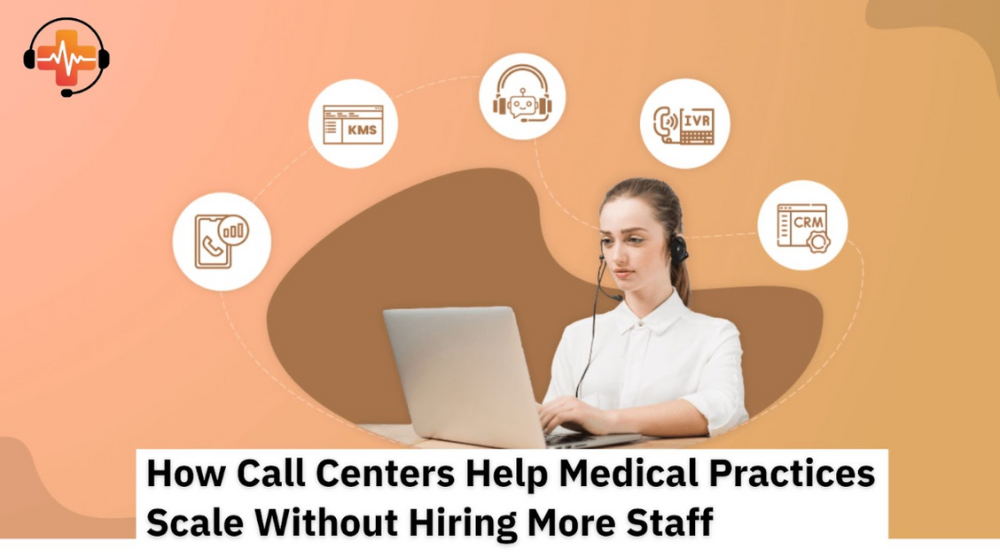
- Healthcare Call Center enables medical practices to grow without hiring more staff by handling scheduling, calls, and follow-ups with trained professionals.
- Outsourcing reduces administrative overload, prevents missed revenue from unanswered calls, and improves patient retention with consistent communication.
- Scalable systems replace the need for additional hires, allowing practices to expand patient volume while maintaining high-quality care and low overhead.
The Staffing Challenge in Growing Medical Practices
Most medical practices eventually reach a critical point—more patient calls, appointment requests, and administrative tasks than the current team can handle. As demand rises, so does the pressure on front desk staff, leading to missed calls, long hold times, and patient frustration. While hiring more staff might seem like the only solution, it’s often expensive, time-consuming, and adds long-term HR responsibilities. That’s why many clinics are now partnering with Healthcare Call Center to handle overflow communication and routine operations. With 24/7 live answering, appointment scheduling, insurance verification, and patient follow-up services, our call center becomes an extension of your team—without the need for extra desks, payroll, or training time. This model helps medical practices scale without hiring more staff, giving them the freedom to grow sustainably while still delivering a smooth, high-quality patient experience.
What Makes Scaling Difficult Without Support?
As your practice grows, so do patient expectations, communication needs, and administrative demands. But expanding your physical staff to match that growth isn’t always realistic—or efficient. Without a reliable system to absorb that growth, even well-run clinics start to feel the pressure.
Rising Staff Workload
Your in-house team is the heartbeat of your clinic, but even they have limits. Balancing incoming calls, checking in patients, handling referrals, updating the EMR, and answering insurance questions can lead to burnout. As responsibilities pile up, the quality of patient interactions—and employee satisfaction—begins to suffer.
Missed Calls and Lost Revenue
Every missed call can mean a lost appointment, a frustrated patient, or a missed opportunity to convert a lead. In busy practices, even one missed call per hour can add up to thousands in lost annual revenue. When phones are constantly ringing, patients end up on hold—or worse, give up and call another provider. This is especially true in high-volume settings like dental clinics, where call support for dental practices ensures every inquiry is captured and converted into booked appointments.
Gaps in Follow-Up and Retention
Maintaining patient relationships after the visit is key to long-term success. Without a system for timely follow-ups, appointment reminders, post-visit care calls, or review requests, practices risk losing patients to competitors. Retention drops, rebooking slows down, and brand trust weakens. Healthcare Call Center solves these pain points by delivering a cost-effective, fully staffed communication solution that works in sync with your internal systems. We help medical practices scale without hiring more staff by managing the most time-consuming patient touchpoints—without compromising the quality of care your clinic is known for.
How Healthcare Call Center Enables Lean Practice Management
A lean operation prioritizes efficient use of existing resources without compromising care. Healthcare Call Center integrates directly into your workflows and fills key gaps:
- 24/7 live call answering for inbound inquiries
- Appointment scheduling into your existing system
- No-show prevention through reminders and confirmations
- Patient communication systems to handle callbacks and education
- GMB support to improve local visibility and drive new leads
This structure removes the need to train, hire, and manage more team members to handle administrative demands.
Reducing Admin Overload Through Outsourcing
When phones are ringing nonstop and inboxes are overflowing, your front desk team is stretched too thin. By outsourcing non-clinical communication tasks, medical practices can immediately lighten the load. This not only reduces stress and burnout but also allows your on-site staff to stay focused on delivering quality care where it matters most—at the bedside or exam room. Instead of juggling appointments, voicemails, and paperwork, your team gets to concentrate on patient relationships and in-clinic operations, improving both efficiency and satisfaction. For many growing clinics, medical call center outsourcing is a necessity in modern healthcare to stay competitive, responsive, and compliant.
Admin Outsourcing Services Include:
- Scheduling and rescheduling
- Referral tracking
- Patient intake support
- Missed call follow-up
- Review generation and post-visit outreach
Healthcare Call Center becomes your virtual front desk—handling the bulk of patient communication without adding to your payroll or infrastructure. It’s how modern medical practices scale without hiring more staff while maintaining a high standard of patient service.
More Calls, More Patients, No Extra Hires
Many healthcare clinics feel stuck—wanting to grow but fearing the stress of hiring, training, and managing more staff. The reality is that growth doesn’t have to mean more overhead. With the right communication systems and support in place, practices can scale smartly and sustainably. A reliable call center can absorb rising patient demand without overwhelming your internal team.
- Expand your patient base
- Maintain or improve care quality
- Keep your overhead flat
- Increase revenue and retention
With Healthcare Call Center, practices handle more calls, care for more patients, and grow their bottom line—without ever needing to expand their internal staff.
Scalable Growth Is Built on Smart Systems, Not More People
Whether you’re a solo provider or managing a multi-location clinic, real growth doesn’t come from simply adding more staff—it comes from optimizing your operations. When your front desk is backed by streamlined systems, your practice can handle more patients, more inquiries, and more revenue-generating opportunities without missing a beat. By partnering with Healthcare Call Center, you’re not just adding a service—you’re adding a virtual extension of your team that’s trained, reliable, and always available. We adapt to your workflow, EHR platform, and practice goals so you can scale on your own terms. It’s not about hiring more—it’s about doing more with what you already have. Smart practices grow by leveraging efficient systems, not bloated payrolls. Let us help you grow lean, strong, and patient-focused.
FAQs About Healthcare Call Center
What is a Healthcare Call Center, and how does it help my practice?
A Healthcare Call Center is a HIPAA-compliant communication service that manages calls, schedules appointments, and engages leads for medical practices. It acts as an extension of your front desk, reducing administrative burden and helping convert inquiries into loyal patients.
Are Healthcare Call Centers HIPAA-compliant?
Yes. Reputable call centers like Healthcare Call Center are fully HIPAA-compliant, meaning all patient data, calls, and follow-ups are securely managed to ensure PHI (Protected Health Information) confidentiality.
How can a call center reduce no-show appointments?
Our service reduces patient no-shows by up to 30% by sending automated phone, text, and email reminders, and by following up personally. This improves scheduling efficiency and increases practice revenue.
What services does a medical answering service typically include?
Standard features include 24/7 live call answering, appointment scheduling, missed call recovery, GMB optimization, follow-ups, and post-treatment patient check-ins, all tailored to medical workflows.
How fast will my leads be contacted?
How fast will my leads be contacted?
Our call center responds within 1 minute of lead capture, significantly increasing your chance of converting prospects before they call a competitor.
Does your call center integrate with my existing scheduling system?
Yes. We integrate directly into your practice management software or EMR to book patient appointments seamlessly, with no disruption to your current workflow.
Can a call center handle after-hours patient inquiries?
Absolutely. Our 24/7 US-based team ensures that no lead or urgent patient request goes unanswered, whether it’s 2PM or 2AM.
Do you serve all types of medical practices?
Yes. We work with dentists, chiropractors, nurse practitioners, and other specialties like orthopedics, plastic surgery, and functional medicine clinics.
How does a Healthcare Call Center support practice growth?
By improving lead-to-patient conversion, reducing staff overload, and nurturing every potential patient with multiple touchpoints, we help grow your clinic’s patient base and recurring revenue.
What makes Healthcare Call Center different from other medical answering services?
We offer American-based operators, rapid response times, deep industry experience, and specialty-focused scripting for better call quality. Our system is results-driven, with transparent reporting and ongoing GMB optimization to boost visibility.
Why Trust Healthcare Call Center
Healthcare Call Center is a patient-focused, HIPAA-compliant virtual call center dedicated to helping dentists, chiropractors, nurse practitioners, and healthcare professionals streamline patient communication, reduce no-shows, and fill appointment slots effortlessly.
Founded with the mission of enabling medical professionals to grow confidently while focusing on patient care, Healthcare Call Center bridges the gap between lead generation and patient retention through high-touch, data-driven communication strategies. Our U.S.-based, trained agents function as an extension of your practice, delivering compassionate, prompt, and professional call support while managing appointment scheduling, lead nurturing, and follow-ups.
We are trusted by over 300 medical and dental practices nationwide, generating more than $2 million in new patient revenue while improving lead-to-patient conversion rates and lowering no-show rates by up to 30% with our automated, personalized engagement systems.
At Healthcare Call Center, we believe every patient inquiry is an opportunity to build trust, and every call is a chance to enhance your practice’s reputation while increasing revenue. Our 24/7 call center support ensures no patient inquiry goes unanswered, while our advanced lead management and appointment systems transform potential leads into loyal patients.
Let Healthcare Call Center be the trusted extension of your practice, so you can focus on what you do best—delivering exceptional care.
Ready to elevate your patient communication and practice growth? Call (629) 231-1103 or schedule your free consultation today.