OB-GYN practices receive some of the most sensitive calls in healthcare. A patient may be newly pregnant and anxious. Another may be calling about bleeding, pain, a medication question, a fertility concern, a postpartum issue, or a missed appointment. Some calls are routine. Some feel urgent to the patient. All of them require a calm, professional response.
The problem is that most women’s health clinics are already stretched thin. The front desk is handling check-ins, insurance questions, provider messages, prescription requests, scheduling changes, and patients standing in front of them. When the phone keeps ringing, calls slip to voicemail. When calls slip to voicemail, appointment opportunities, patient trust, and urgent messages can get delayed.
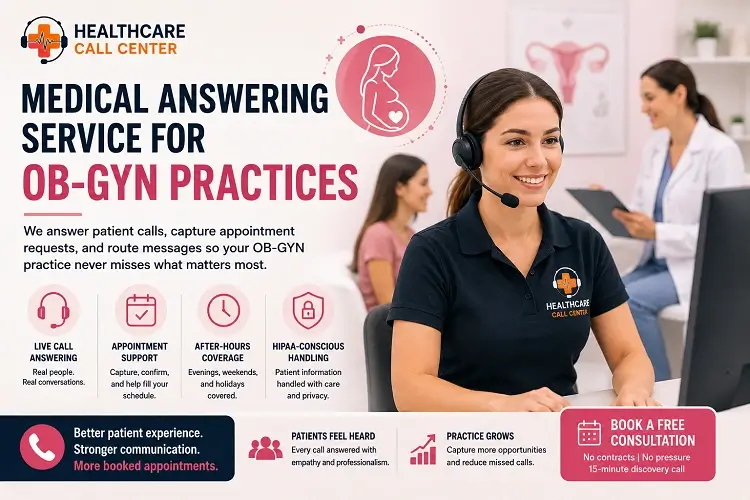
A medical answering service for OB-GYN practices gives women’s health clinics a structured way to answer more patient calls, support after-hours coverage, reduce voicemail gaps, and route messages based on practice-approved instructions. It does not replace the clinical team. It supports the patient communication workflow so the practice can stay responsive without overloading staff.
Women’s health practices often need specialty healthcare call support because patient calls can be sensitive, urgent, or appointment-related.
Why OB-GYN Patient Calls Are Different
OB-GYN calls are not the same as general business calls. The caller may be dealing with pregnancy symptoms, fertility stress, abnormal bleeding, birth control questions, prenatal scheduling, postpartum concerns, or test follow-up anxiety. The tone of the call matters. The speed of response matters. The accuracy of the message matters.
Patients in women’s health often need to know that someone has heard their concern, captured the right details, and can route the message appropriately. A voicemail box does not provide that reassurance. A voicemail box does not provide that reassurance.
This is why an OB-GYN answering service needs more than polite call handling. It needs healthcare-specific scripting, privacy-aware workflows, escalation rules, and a clear understanding that the patient experience begins before the appointment ever happens.
The Agency for Healthcare Research and Quality (AHRQ) identifies timely appointments, access to information, and communication with clinicians and staff as important parts of the patient experience.
The Front Desk Problem in Women’s Health Clinics
Most OB-GYN front desks are not missing calls because they are careless. They are missing calls because the workload is too high. A single receptionist may be expected to answer phones, greet patients, manage forms, verify insurance, communicate with providers, process appointment changes, and handle patient callbacks at the same time.
During peak hours, the phone can become impossible to manage. Calls come in before work, during lunch, after school pickup, after 5 PM, and on weekends. Patients may wait on hold, leave voicemail, or hang up and try another practice.
For a women’s health practice, this creates several risks:
- New patient inquiries may never become booked appointments
- Pregnancy-related messages may be delayed or poorly documented
- Cancellations may not be seen until the schedule has already been affected
- Front desk staff may start the day with a backlog of voicemails
- Patients may feel ignored during sensitive moments
A structured answering service reduces that pressure by giving the practice a second layer of call coverage when the front desk is busy, closed, or unavailable.
How a Medical Answering Service Supports OB-GYN Practices
A medical answering service helps OB-GYN practices by answering patient calls, documenting key details, routing urgent messages, and organizing routine requests for follow-up. The service should follow the practice’s approved workflow, not a generic script.
Common OB-GYN call types include:
- New patient appointment requests
- Pregnancy confirmation and prenatal visit questions
- Appointment cancellations and reschedules
- Medication refill routing
- Postpartum callback requests
- Fertility and cycle-related questions
- Test result callback requests
- After-hours concerns that need escalation based on practice rules
The answering team should not diagnose, give medical advice, or decide what is clinically urgent. Instead, agents gather details, follow approved scripts, and route messages according to the practice’s escalation instructions. That distinction is important for both patient safety and staff efficiency.
After-Hours OB-GYN Calls Need a Clear Process
After-hours OB-Gyn calls are especially important for OB-GYN practices because patients may not know whether their concern can wait. A pregnant patient may be worried about symptoms. A postpartum patient may have a question after discharge. A patient undergoing fertility treatment may need to clarify instructions outside normal hours.
A strong after-hours OB-GYN answering service process does three things. First, it answers the call with a real person. Second, it collects the right information. Third, it routes the message based on the practice’s approved urgency rules.
This creates a better experience than voicemail. The patient knows their message was received. The practice gets a clearer call record. Providers are not interrupted by every routine question, but urgent messages are not buried in an inbox overnight.
OB-GYN Answering Service vs. Voicemail
Many women’s health clinics still rely on voicemail after hours or during busy call periods. Voicemail may seem simple, but it often creates more work for the office and more uncertainty for patients.
| Situation | Voicemail | OB-GYN Answering Service |
| New patient calls after work | Patient may hang up or call another practice | Live answer captures the inquiry and callback details |
| Pregnancy-related concern | Patient leaves an incomplete message | Agent follows script and routes based on practice rules |
| Cancellation or reschedule | Office may not see it until the next day | Request is documented clearly for follow-up |
| Front desk overloaded | Calls stack up during clinic hours | Overflow coverage helps answer more calls |
| After-hours patient anxiety | Patient waits without reassurance | Live answer confirms the message was received |
| Provider escalation | Voicemail may delay urgent routing | Escalation rules help route the right calls |
How Answering Support Helps Capture More Appointments
OB-GYN practices depend on timely appointment scheduling. New patient calls, prenatal appointment requests, annual exam requests, follow-up visits, fertility-related appointments, and postpartum appointments all affect revenue and patient continuity. When these calls go unanswered, the practice may lose the appointment before the team even knows the patient called.
A medical answering service helps protect these opportunities by making sure calls are answered and documented. Even when the final scheduling step happens during office hours, the inquiry is captured while the patient’s intent is fresh.
This matters because patients often search and call several providers in one session. If your practice is investing in SEO, referrals, or paid campaigns, every missed phone call weakens that investment. Call coverage helps convert patient demand into real appointments.
Want to estimate the potential impact of missed calls on your practice? Use our Missed Call Revenue Calculator to estimate appointment and revenue opportunities.
HIPAA-Conscious Call Handling Matters
OB-GYN calls can include sensitive health details. Any answering workflow must treat patient information carefully. That means secure message handling, appropriate access controls, clear documentation, and practice-approved routing procedures.
A healthcare-focused answering service should understand that privacy is not optional. Agents need to know what information to collect, what not to say, when to escalate, and how to document calls without creating unnecessary risk.
The U.S. Department of Health & Human Services (HHS) explains that the HIPAA Privacy Rule establishes national standards for protecting individually identifiable health information and requires appropriate safeguards for protected health information.
This is why OB-GYN practices should connect answering support with HIPAA-compliant medical answering service workflows instead of using a generic answering service that does not understand healthcare communication.
When OB-GYN Practices Should Consider Outsourced Call Coverage
Not every practice needs the same level of support. Some practices need after-hours answering only. Others need daytime overflow. Multi-provider women’s health groups may need both. The right setup depends on call volume, staffing pressure, appointment demand, and how often patients reach voicemail.
OB-GYN practices should consider outsourced call coverage when:
- The front desk regularly misses calls during clinic hours
- Voicemail volume is high every morning
- Patients complain about not reaching the office
- Providers receive messy or incomplete after-hours messages
- New patient demand is strong but appointments are not increasing
- The practice is expanding locations or adding providers
- The team needs better call documentation without hiring another full-time employee
Outsourcing does not mean giving up control. The practice still defines the script, escalation rules, message categories, and handoff process. The answering service simply supports that workflow when the in-house team cannot cover every call.
What to Look for in an OB-GYN Answering Service
Choosing the right provider matters. OB-GYN practices should avoid generic answering services that only take basic messages. Women’s health calls need a more careful process.
Look for a provider that offers:
- Healthcare-specific call handling experience
- Practice-specific scripts and greetings
- After-hours and overflow coverage
- Escalation rules for urgent messages
- HIPAA-conscious message handling
- Appointment request capture
- Clear call summaries for the office team
- Support for single-location and multi-location practices
- A setup process that learns your workflow before calls go live
The best answering service should feel like an extension of the practice. Patients should feel heard. Staff should receive cleaner information. Providers should see fewer unnecessary interruptions and fewer delayed urgent messages.
How Healthcare Call Center Helps OB-GYN Practices
Healthcare Call Center supports women’s health practices with OB-GYN answering service support, after-hours coverage, front desk overflow support, appointment request capture, and practice-specific message routing. Our team follows your approved scripts and communication rules so patient calls are handled consistently. Practices that need additional front-desk coverage can also explore medical virtual receptionist support.
The goal is simple: help your practice answer more calls, reduce voicemail gaps, protect patient trust, and support appointment growth without adding more pressure to the front desk.
Common Mistakes OB-GYN Practices Make With Call Coverage
1. Treating All Missed Calls as Routine
In OB-GYN care, some missed calls are routine, but others may involve sensitive symptoms, medication questions, scheduling urgency, or anxiety around pregnancy. A generic voicemail process does not help the practice separate routine messages from messages that need faster routing.
2. Assuming Online Forms Replace Phone Calls
Online booking helps, but many women’s health patients still want to talk to a person before choosing a provider. This is especially true for new pregnancies, fertility concerns, insurance questions, and visits that feel emotionally sensitive.
3. Pushing More Responsibility Onto the Front Desk
If the team is already handling check-ins, forms, insurance, provider messages, and patient callbacks, telling them to “answer more calls” does not solve the problem. It creates burnout and inconsistent patient communication.
The better approach is to build a layered call coverage system: the in-house team handles the front desk experience, and the answering team supports overflow, after-hours calls, and structured message capture.
Final Thoughts
OB-GYN practices cannot treat missed calls as a small front desk issue. In women’s health, a missed call can mean a missed appointment, a delayed message, a worried patient, or a lost opportunity to build trust.
A medical answering service for OB-GYN practices gives clinics a practical way to answer more calls, support patients after hours, route messages clearly, and protect the patient experience from the first phone call.
If your women’s health practice is losing calls to voicemail, book a free consultation to review your call flow and see where answering support can help.
Frequently Asked Questions
What is a medical answering service for OB-GYN practices?
A medical answering service for OB-GYN practices answers patient calls, documents messages, routes urgent concerns based on practice rules, and supports scheduling-related communication for women’s health clinics.
Can an OB-GYN answering service handle after-hours calls?
Yes. An OB-GYN answering service can answer calls after hours, collect patient details, follow approved scripts, and route urgent messages according to the practice’s escalation process.
Can the answering service give medical advice?
No. Non-clinical answering agents should not diagnose or give medical advice. They collect information, follow scripts, and route calls based on the practice’s instructions.
Does an OB-GYN answering service help with appointments?
Yes. Depending on the practice workflow, agents can capture appointment requests, cancellations, reschedules, and callback details so the office can follow up efficiently.
Is OB-GYN answering service support HIPAA compliant?
A healthcare answering provider should use HIPAA-conscious workflows, secure message handling, access controls, and practice-approved routing. Practices should confirm compliance requirements before launch.
Who needs OB-GYN answering service support?
OB-GYN practices that miss calls, receive after-hours patient concerns, struggle with voicemail backlogs, or need front desk overflow support can benefit from dedicated answering service coverage.