Patients do not only call medical practices between 9 AM and 5 PM.
They call after work. They call during lunch breaks. They call in the evening after talking with a spouse. They call on weekends after finally deciding to schedule. They call when they are anxious, comparing providers, or trying to understand the next step in their care.
For a healthcare practice, those after-hours calls matter.
Some calls are routine. Some are appointment requests. Some need careful message routing. Some need clear next steps based on the practice’s approved workflow. But when every after-hours caller reaches voicemail, the practice creates a gap between patient intent and patient response.
That gap can affect appointment volume, patient trust, referral follow-through, and the value of every marketing channel that sends people to the phone.
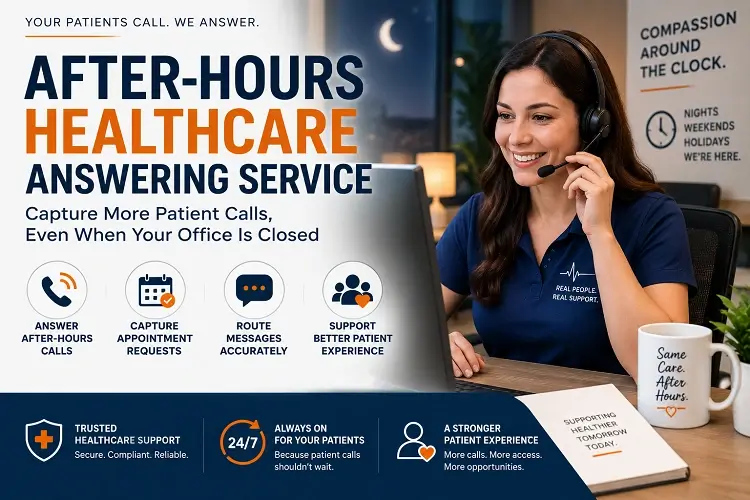
An after-hours healthcare answering service helps medical practices protect patient calls when the office is closed, the front desk is unavailable, or the team needs structured support outside regular business hours.
The goal is simple: make sure important patient calls are answered, captured, documented, and routed instead of disappearing into voicemail.
Why After-Hours Calls Matter for Healthcare Practices
After-hours patient calls often come from people who are already motivated to act.
A patient may have spent the day researching providers and finally decides to call in the evening. A parent may remember to schedule an appointment after the workday ends. A referral patient may call when they find the paperwork. A cosmetic or fertility patient may call after discussing the decision at home.
By the time they call, they may already be close to booking or taking the next step.
If that call reaches voicemail, the practice may still get the message. But the momentum changes. The patient has to wait. The practice has to call back. The caller may miss the return call. The conversation may stretch into another day.
That delay creates friction.
In a competitive healthcare market, friction matters. Patients often compare multiple providers, especially for specialty care, dental services, fertility clinics, plastic surgery, and chiropractic care. If one practice answers and another sends the caller to voicemail, the answering practice creates the stronger first impression.
Medical practice after-hours calls are often the highest-intent calls of the day, because the caller chose that exact moment to act. Reliable after-hours patient call support helps protect that moment.
The Problem With Relying Only on Voicemail
Voicemail is easy to set up, but it is not always a strong patient experience.
When a patient reaches voicemail, several things can happen:
- The patient may hang up without leaving a message.
- The message may be incomplete.
- The caller may not explain the real reason for the call.
- The practice may not know whether the call was urgent, appointment-related, or routine.
- The patient may call another provider before the office reopens.
- The front desk may start the next day with a backlog of unclear messages.
- Staff may spend time calling patients back without enough context.
Voicemail does not guide the patient. It does not ask follow-up questions. It does not capture appointment intent clearly. It does not support patient message routing by urgency or department. It simply asks the caller to leave a message and wait.
For some practices, that may be enough for low-priority calls. But for practices that depend on timely scheduling, patient trust, and clear communication, voicemail alone can create too much leakage.
A strong healthcare answering service gives practices a better option for patient calls that happen outside normal office hours.
What an After-Hours Healthcare Answering Service Does
An after-hours healthcare answering service provides live healthcare call answering support when the practice is closed or unavailable.
Depending on the practice’s workflow, after-hours answering can help with:
- New patient inquiries
- Appointment request capture
- Callback requests
- Reschedule requests
- Cancellation messages
- Referral-related calls
- Provider or department routing
- Location-specific messages
- After-hours message documentation
- Urgent message escalation based on practice-approved rules
This does not mean agents replace clinical staff or make medical decisions. They do not diagnose, advise, or decide what is urgent on their own. Instead, they follow the practice’s instructions.
The practice defines the call flow. The answering team follows it.
That structure matters because healthcare calls need more care than generic business calls. A patient may be anxious, frustrated, worried, or ready to schedule. The person answering needs to be calm, clear, and aligned with the practice’s process.
After-Hours Answering vs Front Desk Overflow
After-hours answering and front desk overflow are related, but they solve different problems.
After-hours answering supports the practice when the office is closed. This includes evenings, weekends, holidays, early mornings, lunch closures, or any time the front desk is not available.
Front desk overflow support supports the practice when the office is open, but the team is too busy to answer every call.
Many practices need both.
For example, a practice may miss calls:
- At 8:15 AM before the team is fully ready
- At 11:30 AM during a scheduling rush
- At 12:45 PM during lunch
- At 4:55 PM when staff are closing out the day
- At 6:30 PM when patients call after work
- On Saturday when someone is finally ready to schedule
If the practice only solves after-hours calls, it may still miss daytime overflow. If it only solves overflow, it may still lose evening and weekend opportunities.
A complete patient call coverage strategy looks at the full call journey, and a patient call answering service can cover both windows when the practice needs it.
Why Appointment Request Capture Is So Important After Hours
Not every after-hours call is urgent. Many are appointment-related.
Patients often call after hours because that is when they finally have time. They may be asking about availability, trying to schedule a consultation, following up on a referral, or checking whether the practice is the right fit.
If those calls go to voicemail, the practice may still get the message. But the appointment intent can weaken.
A live answering workflow can capture details such as:
- Patient name
- Best callback number
- New or existing patient status
- Reason for visit
- Preferred appointment type
- Preferred provider or location
- Best time to call back
- Referral or insurance note if approved by the practice
- Whether the message needs routine follow-up or faster routing
This makes next-day follow-up easier.
Instead of listening to vague voicemail messages, the front desk receives structured information. That helps the team prioritize callbacks, protect appointment requests, and reduce the chance of missing the patient again.
For practices that need more structured scheduling workflows, appointment scheduling support can help connect call answering with appointment request handling.
What Types of Practices Need After-Hours Healthcare Answering?
After-hours call support can help many medical practices, but it is especially useful for practices where patient calls carry high intent or sensitive context.
Strong fits include:
- OB-GYN practices
- Fertility and IVF clinics
- Plastic surgery practices
- Dental offices
- Chiropractic clinics
- Primary care offices
- Specialty practices
- Multi-location healthcare groups
- Practices investing in SEO or paid ads
- Practices with limited front desk capacity
- Practices with high voicemail volume
The common thread is simple: patients are calling because they need a response.
For specialty practices, the first call may shape trust before the patient ever walks in. A fertility patient, plastic surgery lead, OB-GYN patient, or pain-related chiropractic caller may need a more patient, human response than a voicemail greeting can provide.
After-hours support helps protect that first impression.
How After-Hours Call Coverage Supports Marketing ROI
Many practices think of call answering as an operations function. But it also affects marketing performance.
If a practice invests in SEO, Google Business Profile optimization, local service pages, referral partnerships, or content marketing, the phone becomes one of the most important conversion points.
A patient may read a page, check reviews, compare services, and then call. If that call happens after hours and goes unanswered, the practice may lose part of the value created by its marketing.
This is why after-hours call coverage should be part of conversion planning.
Better call coverage can help practices:
- Capture more appointment requests
- Reduce voicemail gaps
- Improve the patient response experience
- Support front desk teams
- Protect referral follow-through
- Improve next-day callback quality
- Reduce missed opportunities from marketing traffic
The goal is not just to answer more calls. The goal is to make sure patient demand does not leak at the phone.
What a Good After-Hours Healthcare Answering Workflow Should Include
A strong after-hours workflow should be clear, simple, and specific to the practice.
1. A Practice-Specific Greeting
Patients should feel like they reached the right place. A generic greeting can create confusion. A practice-specific greeting helps callers understand that their message will be handled through the practice’s process.
2. Clear Call Categories
The answering team should know how to categorize calls. For example:
- Appointment request
- Cancellation
- Reschedule
- Referral question
- Existing patient message
- New patient inquiry
- Location question
- Provider-specific message
- After-hours concern
This helps the practice receive better information.
3. Approved Message Capture Rules
The practice should define what information agents should collect. This prevents incomplete messages and reduces unnecessary back-and-forth the next day.
4. Routing Instructions
Messages should go to the right place. That may be a front desk inbox, scheduling team, provider team, on-call contact, location manager, or secure message workflow.
5. Escalation Rules
If certain types of calls need faster routing, the practice should define that clearly. Agents should not guess. They should follow the escalation instructions approved by the practice.
6. HIPAA-Conscious Handling
Healthcare calls require careful handling. Practices should use workflows that protect patient privacy and avoid unnecessary exposure of sensitive details.
7. Next-Day Follow-Up Process
After-hours answering is only useful if the practice has a follow-up process. Messages should be easy to review, prioritize, and respond to when the office reopens.
A good after-hours setup helps the practice start the next day with organized information instead of a voicemail backlog.
Common After-Hours Call Scenarios
Here are examples of calls an after-hours answering workflow may help capture.
New Patient Inquiry
A patient finds the practice online at night and calls to ask about becoming a new patient. A live answering team can capture the caller’s name, number, reason for calling, and preferred callback time.
Appointment Request
A patient wants to schedule but cannot call during office hours. The answering team can document the request so the scheduling team can follow up with context.
Reschedule or Cancellation
A patient realizes they cannot make an appointment. A live message helps the practice see the change sooner and protect the schedule.
Referral Follow-Up
A referred patient calls after receiving a recommendation. The answering team can capture the referral context and route the message properly.
Location or Provider Question
A caller may need help identifying the right office or provider. The answering team can document the question and direct the next step based on the approved workflow.
After-Hours Concern
Some callers need a message routed according to practice rules. The answering team should follow the practice’s escalation process without giving medical advice.
These situations show why after-hours answering needs structure. The call is not just a name and number. It often carries patient intent.
How After-Hours Support Helps the Front Desk
After-hours calls do not disappear when the office opens. They become next-day workload.
If the practice relies only on voicemail, the front desk may start the day by sorting through unclear messages, returning missed calls, trying to understand urgency, and chasing patients who may not answer.
After-hours answering can reduce that friction.
When messages are captured clearly, the team can see:
- Who called
- Why they called
- Whether they are a new or existing patient
- What they need next
- Which location or provider the message relates to
- When they prefer a callback
- Whether the message should be prioritized
This makes follow-up easier and helps the front desk start the day with better organization.
It also protects patients. Instead of wondering whether anyone heard their voicemail, they spoke with a real person and know the practice has their message.
When Practices Should Consider After-Hours Answering
A practice should consider after-hours answering if it notices any of these patterns:
- Voicemails pile up overnight or over weekends
- New patient calls come in after closing
- Patients say they had trouble reaching the office
- Marketing campaigns generate calls outside business hours
- Referral patients call after work
- The front desk starts the morning behind
- Appointment requests are delayed
- Staff spend too much time returning incomplete messages
- Multi-location messages are hard to route
- The practice wants better patient access without overloading staff
A practice does not need to hand off every call to start. Many begin with evening, weekend, lunch-break, or overflow windows, then expand based on call volume.
For example, a practice in a competitive local market may start with broader coverage through a medical answering service in Florida if patient demand is coming from search, referrals, or multiple service areas.
The best setup depends on the practice’s actual call patterns.
How Healthcare Call Center Helps With After-Hours Call Coverage
Healthcare Call Center helps practices answer more patient calls when the front desk is closed, busy, or unavailable.
Support can include:
- Live patient call answering
- After-hours message capture
- Appointment request capture
- Front desk overflow support
- Custom greetings and scripts
- Message routing by provider, location, or department
- Escalation based on practice-approved rules
- HIPAA-conscious documentation workflows
- Call-flow recommendations before launch
The goal is not to replace the front desk. The goal is to protect the patient call journey around the front desk.
When after-hours coverage is built correctly, patients get a live response, staff get better messages, and the practice reduces the risk of losing appointment intent to voicemail.
Practices that already handle daytime overflow can add structured evening and weekend coverage through an after-hours medical answering service built for medical offices.
For practices that want to review their call flow, book a free consultation and identify where patient calls may be leaking after hours, during overflow, or between front desk coverage windows.
Final Takeaway
After-hours patient calls are easy to underestimate.
A practice may assume most important calls happen during business hours. But patients often call when they have time, when they are anxious, when they are comparing providers, or when they are finally ready to schedule.
If those calls go to voicemail, the practice may still receive a message. But it may lose urgency, context, and appointment momentum.
An after-hours healthcare answering service helps solve that problem by giving patients a live response when the office is closed. It helps capture appointment requests, route messages, reduce voicemail gaps, and support the front desk before the next business day begins.
For growing healthcare practices, after-hours call coverage is not just a convenience.
It is part of patient access, retention, and conversion.
Frequently Asked Questions
What is an after-hours healthcare answering service?
An after-hours healthcare answering service answers patient calls when a medical practice is closed or unavailable. It can help capture appointment requests, document messages, route calls, and follow the practice’s approved after-hours workflow.
How does after-hours answering help medical practices?
After-hours answering helps practices reduce voicemail gaps, capture patient messages, support appointment requests, and organize follow-up before the next business day.
Is after-hours healthcare answering only for urgent calls?
No. Many after-hours calls are appointment requests, callbacks, reschedules, referral questions, or routine patient messages. The answering workflow should route each call based on the practice’s instructions.
Can an after-hours answering service capture appointment requests?
Yes. Agents can capture appointment intent, patient contact information, reason for calling, preferred callback time, provider preference, location needs, and other approved details.
Does after-hours answering replace the front desk?
No. It supports the front desk by covering calls when the team is closed, busy, or unavailable. The practice still controls the workflow, follow-up process, and routing rules.