by Felicia Goodman | Jan 6, 2026 | Healthcare Call Center Services
Telehealth has moved from a convenience option to a core healthcare delivery model. Virtual care services must now provide immediate results through interfaces which offer simple use and instant responses and continuous accessibility to patients. The growing number of patients at Telehealth clinics requires them to improve their patient service quality through team growth expansion. Organizations face an unsolvable problem because they cannot afford to hire more staff because of their current staffing shortages and their increasing labor expenses and their complicated operational systems.
The improvement of telehealth patient experience needs better systems and improved workflows and enhanced communication methods instead of requiring more staff members. The most effective improvements for clinics will develop new patient connection methods which provide complete virtual visit support.
Telehealth clinics can improve patient experience without hiring more staff by streamlining outsource scheduling, improving communication, using automation, simplifying technology, and strengthening follow-up care. These strategies reduce friction while improving satisfaction and retention.
This article explains how telehealth clinics improve patient satisfaction through better care delivery which does not need more staff to achieve. The organization uses strategies which focus on improving operational efficiency and patient-centered design and communication but do not include workforce expansion.
Why Telehealth Patient Experience Is the Primary Growth Driver
Telehealth provides patients with access to healthcare call center services beyond physical locations but it depends heavily on successful communication and coordination between healthcare providers. The staff members and office guidance fail to give patients dependable visual indicators which would enable them to determine their needs. All patient interactions including appointment booking and reminders and technical support and follow-ups determine their assessment of medical service quality.
Patients lose their confidence at a fast pace when their communication delays or when they receive messages that are unclear or irregular. Telehealth patients have even more options than traditional patients, including national platforms and on-demand services. Telehealth operations depend on patient experience as their main differentiator which enables healthcare providers to compete in the market.
Health facilities which focus on patient experience achieve better patient retention and improved care plan compliance and enhanced online reviews without needing to hire more staff.
The Role of Communication in Telehealth Patient Experience
The basic operational framework of Telehealth requires instant and unambiguous communication methods. Patients need to depend on remote care delivery because they must follow instructions while receiving updates and needing immediate responses. The lack of proper communication results in patients missing their scheduled appointments while healthcare providers face technical problems and their patients become unhappy despite delivering excellent medical treatment.
The improvement of Telehealth communication requires organizations to minimize all obstacles which patients encounter during their treatment process. The system needs patients to follow specific instructions which show their treatment advancement. The implementation of improved communication systems at clinics will result in better patient results and higher patient contentment without requiring any personnel increases.
8 Ways Telehealth Clinics Can Improve Patient Experience Without Hiring More Staff
1. Streamline Appointment Scheduling and Access
Scheduling is often the first interaction a patient has with a telehealth clinic. Patients will leave the booking process when they encounter any difficulty or prolonged delay during the process. Telehealth clinics improve patient experience through their scheduling systems which let patients book appointments and modify their bookings and receive appointment confirmation messages.
The combination of automated scheduling tools with particular scheduling workflows helps teams reduce their requirement to exchange multiple messages with each other. The fast appointment scheduling process together with immediate appointment confirmation enables patients to develop better confidence in their medical care. The system reduces administrative work while making it easier for people to obtain services. Telehealth organizations can achieve their most significant communication improvement through scheduling efficiency enhancement which requires no additional staff members.
2. Set Clear Expectations Before the Virtual Visit
The main reason for telehealth system problems exists because users remain unclear about the system. Patients encounter difficulties because they do not understand what preparation they need to do and which technologies they require and how long their medical visits will last. Healthcare facilities need to create appointment expectations which patients must understand before their scheduled visit to achieve better satisfaction results.
The combination of clear pre-visit instructions with automated reminders and basic onboarding materials enables patients to better understand their process which results in reduced feelings of confusion and anxiety. The understanding of treatment sequence by patients will lead to better medical visit outcomes because they need less immediate assistance during their doctor visits. The system provides clear information which leads to higher customer satisfaction because it minimizes the number of questions that need staff assistance.
3. Improve Responsiveness Through Smart Routing and Automation
Patients need quick responses from their healthcare providers although they understand that complex questions might require longer answer times. Telehealth clinics can decrease their response time through three vital features which consist of smart message routing and automated acknowledgments and structured follow-up systems.
Automated responses reassure patients that their message was received and explain when they can expect a reply. The correct routing system enables messages to reach their destination departments and service providers through a quick process. The system enhances telehealth patient satisfaction through delayed perception management which does not require additional staff effort.
4. Simplify Technology and Reduce Technical Friction
Telehealth users experience the most frequent reason for dissatisfaction because of technical problems. The experience at clinics will improve through the process of making technology requirements easier to understand and by providing patients with detailed instructions for each step.
The system should use easy-to-use interfaces which should have few steps to log in and basic help options for patients to reduce their feelings of annoyance. The operation of technology enables patients to concentrate on their medical needs because it handles all administrative tasks. The system eliminates technical obstacles which leads to fewer support requests so clinics can provide excellent service without needing to hire more staff.
5. Use Automated Reminders and Follow-Ups
The combination of patient no-shows and uncompleted follow-up procedures results in negative effects which harm both medical outcomes and healthcare facility operational efficiency. The system produces automated reminders through text messages and email communications which help patients stay on schedule without needing human assistance.
Our automated post-visit follow-ups deliver care instructions, next steps, and satisfaction surveys, helping patients stay engaged without additional staff involvement. Automated communication serves as an effective telehealth communication improvement method which helps build stronger relationships while reducing the need for staff members to spend time on this task.
6. Improve Continuity Through Consistent Communication
Patients value consistency. The breakdown of clear communication through repeated messages leads to a decrease in confidence levels. Telehealth clinics provide patients with better experiences because they use standardized communication systems which unite all their patient interaction channels.
The delivery of straightforward patient information becomes possible through the implementation of standardized communication methods and automated workflow systems and pre-designed templates. The system removes confusion which enables people to build trust with each other. The system operates with consistency which prevents human errors and incorrect data transmission that leads to faster operational speed without requiring additional staff members.
7. Leverage Data to Anticipate Patient Needs
Telehealth platforms collect important data which shows how patients behave and what they prefer and what problems they encounter most frequently. The collected data enables clinics to identify potential issues which they can resolve before these problems develop into major problems.
The identification of patterns which include appointment changes and technical problems allows clinics to enhance their operational systems and their communication methods. The implementation of proactive improvements leads to better telehealth patient results and decreases the need for reactive technical support. Healthcare delivery can expand its capabilities through data-driven optimization systems which represent the most effective method for improvement.
8. Strengthen Post-Visit Engagement and Support
The virtual visit experience extends beyond the virtual consultation which the patient finishes. The patient will experience higher satisfaction when healthcare providers give them specific directions for their future care and provide them with simple ways to reach their follow-up appointments and maintain supportive communication.
The delivery of structured post-visit summaries which include instructions and contact details enables patients to receive enhanced support throughout their medical care. The process decreases the need for additional inquiries because it provides clear answers. Organizations which use proper post-visit engagement methods will achieve better performance results while maintaining employee loyalty without requiring additional staff members.
When Telehealth Clinics See the Greatest Impact on Patient Experience
The strategies we have put in place will bring the greatest value to telehealth clinics because they need to handle more patients while competing with other clinics and providing additional support services. The expansion of clinics which offer new services and operate between different states leads to major advantages from experience improvement scalability.
The optimization of systems instead of staffing allows clinics to preserve their operational flexibility while keeping their expenses under control. The increasing number of patients has resulted in rapid growth of operational delays because each minor system breakdown creates additional problems which lengthen patient wait times and reduce patient satisfaction.
The optimization of systems instead of staff numbers enables clinics to stay adaptable while controlling expenses because patients maintain access to prompt answers and straightforward instructions and dependable assistance throughout all their interactions no matter where they are or what time it is.
Building a Patient-Centered Telehealth Experience for the Future
Telehealth will achieve success in the future because patients require trust in the service and they need to find it fulfilling. Health facilities which focus on clear communication and accessible services and efficient operations will achieve better results than facilities that base their success on medical expertise alone.
Improving telehealth patient experience is not about doing more, it’s about doing things better. Patients will judge their healthcare providers through their assessment of system accessibility and their provider response times and their ability to deliver continuous patient care. Telehealth patient experience improvement requires organizations to create efficient workflows which eliminate obstacles while delivering a smooth and dependable and supportive healthcare experience to patients.
Conclusion
The present team structure of telehealth clinics achieves better patient results through their current personnel without needing to hire more staff. The combination of streamlined scheduling with clear communication and automation and consistent practices will enable clinics to deliver improved patient satisfaction and medical results.
Telehealth communication improvement strategies enable clinics to establish sustainable growth while delivering present-day care to their patients. Telehealth clinics which want to succeed in their competitive digital healthcare market should focus on delivering exceptional patient experiences because this approach requires no additional personnel.
Improving telehealth patient experience does not require expanding staff. By focusing on communication, automation, and efficient workflows, telehealth clinics can deliver better care, improve satisfaction, and scale sustainably in a competitive digital healthcare environment.

by Felicia Goodman | Dec 10, 2025 | Healthcare Call Center Services
Healthcare organizations need to handle unavoidable seasonal changes in patient numbers because these patterns show predictable patterns. Medical practices experience major increases in patient calls throughout different times of the year because of flu season and allergy waves and RSV outbreaks and insurance deadline periods. The front desk staff receives rising numbers of patient calls during peak times which leads to longer wait times and operational inefficiencies that harm both patient satisfaction and medical facility operations.
Medical practices require specific call center personnel to manage their highest volume of patient communication. Medical practices can maintain patient access to help services through peak months by using specialized call center teams which prevent resource exhaustion. Medical facilities operating with seasonal patient volume changes must establish dedicated call center teams because this has become essential for their operational success.
Understanding the Seasonal Call Volume Challenge in Medical Practices
The healthcare industry experiences regular patient behaviors which produce changing needs for communication. The patient volume at primary care facilities and urgent care centers and pediatric clinics and specialty practices reaches its highest point during particular times of the year. The front office staff at medical facilities faces an impossible task when dealing with excessive phone calls during peak periods.
The rapid increase in phone calls results in abandoned calls and dissatisfied patients while the administrative team becomes completely overwhelmed. Medical facilities face a common communication problem because their current operational capacity does not support the increasing number of patients.
Multiple clinics fail to recognize the actual financial impact which occurs when they do not answer their calls during busy times. Healthcare organizations lose thousands of dollars every month because their staff fails to answer all incoming calls and complete all scheduled appointments. Patients who experience delayed communication with their doctors will receive inferior medical care while simultaneously harming their clinic reputation and resulting in lower patient review scores.
High Call Volume Clinic Support: Why In-House Teams Struggle
Medical practice front desk personnel execute various duties which exceed their basic job requirements. The front desk staff at medical facilities handle patient registration and insurance processing and physician coordination and clinical message management and patient care support within the clinic. The current workload of front desk staff becomes impossible to handle when they receive an excessive number of incoming calls.
Staff members who have achieved advanced administrative skills encounter problems when handling seasonal business expansion because they do not possess.
The staff faces two major challenges when they need to keep wait times brief and handle non-stop appointment requests and clinical inquiries and prescription refill requests and insurance and billing support and correct call routing.
The combination of staff trying to handle phone calls and serve patients in person leads to negative patient experiences because patients on the phone experience long delays and patients in the office feel ignored.
A dedicated call center team takes over all communication duties which enables your internal staff to dedicate their time to delivering patient care.
The Impact of Medical Call Center Seasonal Spikes
All medical specialties face identical communication challenges when their phone lines become overwhelmed and their schedules become full and their staff members experience increased stress levels. Medical call centers experience sudden communication demand increases which we refer to as medical call center seasonal spikes.
These spikes lead to:
- Increased abandoned call rates
- Delayed or missed appointments
- Scheduling errors
- Patient dissatisfaction
- Low online review ratings
- Staff burnout
The practice experiences two major long-term effects from these accumulated problems which result in lost revenue and decreased patient retention.
The team provides continuous communication support throughout all seasons to prevent demand spikes from happening. The team responds immediately to all calls and manages messages based on their schedule while following all rules of the scheduling system.
Why Dedicated Call Center Teams Are the Strategic Solution
Medical practices can manage seasonal growth through dedicated call center staff instead of permanent hires to preserve operational stability. Healthcare organizations reach their peak performance through operational methods which use dedicated call center teams because these teams achieve maximum efficiency at lower costs while providing superior patient care.
1. Consistent Availability and Faster Response Times
Patients develop strong dissatisfaction when they need to wait for long periods and receive recorded messages instead of speaking with someone. The practice provides ongoing support through its dedicated call center teams which maintain professional communication during busy periods.
The system delivers quick medical care to patients through its same-day scheduling system which also provides immediate response to urgent questions. The quick response time from healthcare providers leads to better patient trust and satisfaction which serve as essential factors for long-term practice success.
2. Professional Handling of Clinical and Administrative Inquiries
Medical facilities need more than basic telephone support because they require specialized assistance. The team requires agents who possess this knowledge.
- How to triage symptoms properly
- When to escalate calls to clinical staff
- Insurance requirements
- Appointment protocols
- Clinic-specific workflows
Healthcare-trained call center teams operate as dedicated personnel who manage complex medical and administrative customer service operations. The team minimizes errors while preventing communication breakdowns which becomes essential when patients show signs of anxiety or sickness or confusion about their medical treatment.
3. Reduced Healthcare Appointment Overload
Healthcare facilities experience their most significant challenge through appointment overload because patient numbers increase during seasonal periods. The wrong handling of calls leads to practice schedules reaching maximum capacity while patients must wait longer and healthcare providers reach their limits.
Call center teams ease this burden by:
- Balancing appointment distribution
- Avoiding double-booking
- Offering alternative solutions (telehealth, urgent slots, next-day scheduling)
- Managing cancellation lists to keep schedules full without overflow
This leads to a smoother, more consistent patient flow.
4. Improved Revenue Capture and Lead Management
Healthcare providers lose revenue because their phone system fails to answer incoming calls. The practice faces a high risk of losing new patient opportunities because they depend on their internal staff to handle calls during busy times.
Outsourced teams specializing in lead management ensure:
- Every new patient inquiry is captured
- Urgent requests are prioritized
- Consultations are scheduled promptly
- Referrals are followed up
- No opportunity is overlooked
This directly supports practice growth during critical seasons where demand is highest.
5. Enhanced Staff Productivity and Morale
The seasonal peak period creates excessive work stress for administrative staff which results in burnout that causes them to leave their jobs. The call center operates under call pressure to support staff members in their ongoing performance of critical duties.
The workplace environment becomes more positive while administrative work becomes more precise and clinics experience less disorganization during their busiest time of year.
Outsourced Phone Support for Clinics: A Scalable and Cost-Efficient Model
The process of hiring seasonal workers through internal recruitment methods proves to be both expensive and unproductive. The search for new employees followed by their training and management needs significant resources and extended periods of time.
Outsourced teams provide:
- Immediate onboarding
- No HR overhead
- Predictable monthly costs
- Highly trained healthcare communicators
- Flexibility to scale up or down
This level of scalability is crucial for medical practices experiencing unpredictable seasonal surges.
Medical facilities need to establish enhanced call support systems which should operate for several months until patient volumes return to typical levels without needing to maintain additional staff members.
Real-World Scenarios Where Dedicated Call Centers Make a Difference
Pediatrics and Back-to-School Rush
The late summer period brings excessive patient traffic to pediatric clinics because parents need their children to receive physical exams and vaccine updates and sports clearance forms. Parents repeatedly contact the clinic because they need urgent assistance to fulfill school requirements. The call center exists to provide instant solutions and precise information to families.
Family Medicine During Flu and RSV Season
Medical facilities experience three times their typical number of incoming calls when flu season arrives. The call center agents perform three essential tasks which include scheduling flu shot clinics and providing symptom information and triage management and preventing front-desk staff from reaching maximum capacity.
Allergists and ENT Clinics need to manage rising patient numbers during spring and fall pollen peak seasons.
Allergists and ENT Clinics During Spring and Fall Allergy Waves
The system processes more than 1000 patient inquiries because patients need to use their benefits before their deductibles expire. The practice receives substantial advantages from additional support during this time.
A well-designed call system enables patients to experience a smooth and patient-focused interaction. Patients who visit during peak times already experience stress because of their illness so extended waiting times combined with confusing communication make their situation worse.
End-of-Year Insurance and Deductible Deadlines
The team supports patients through information delivery and appointment scheduling and complete patient care through their dedicated approach.
The practice develops a positive reputation through this method which leads to better patient retention and improved online ratings.
Patients who receive excellent care from their healthcare providers tend to stay with the practice and share their positive experiences with others.
How Dedicated Call Centers Improve the Patient Experience
Medical practices need to choose outsourcing partners who prove their HIPAA compliance and their ability to handle healthcare calls and their expertise in EHR system integration and their capacity to generate detailed reports and their support for multiple languages and their availability to provide 24/7 call center service and their ability to manage high-volume periods and their understanding of appointment protocols.
The perfect outsourcing partner will function as your organization’s additional staff members by delivering professional services that match your brand standards.
Preparing Your Practice for Seasonal Call Spikes: Best Practices
Organizations need to actively work on their call center partnership to achieve maximum benefits from this specialized service.
- Analyze historical call data to identify seasonal patterns.
- The call agents need to understand their escalation procedures through established communication protocols.
- The practice should modify its website and portal content to show seasonal requirements.
- The practice management system needs to have either access or integration capabilities with the call center.
- The practice should schedule ongoing meetings with call center leaders to track performance and implement changes when demand reaches its highest point.
Medical practices can maintain continuous patient care through preparation work which enables them to manage increased patient visits during seasonal periods.
FAQ
What causes seasonal call volume spikes in medical practices?
The combination of illness outbreaks and flu and RSV season and back-to-school requirements and allergy waves and year-end insurance deadlines results in increased call volume during specific times of the year.
How do dedicated call center teams reduce high call volume?
The team provides immediate call responses while handling scheduling needs and symptom assessment and administrative questions and prevents any lost call opportunities.
Do call centers help with healthcare appointment overload?
Yes. The agents at these centers perform scheduling duties and prevent overbooking and distribute appointments evenly to maintain continuous patient flow.
Are outsourced call centers HIPAA compliant?
Healthcare call centers which operate with integrity maintain HIPAA compliance through their strict protocols and specialized training and secure communication systems.
Can call centers manage peak seasons like flu season?
The team maintains readiness to handle unexpected patient call increases which happen during times of highest hospital volume.
Conclusion
Medical practices experience seasonal demand fluctuations but they do not need to deal with phone system overload and staff exhaustion. Dedicated call center teams bring essential structure and scalability and specialized expertise to handle annual seasonal call volume increases for medical practices. The system delivers instant support to patients while clinics maintain their appointment schedules and administrative staff continue their work without interruptions.
A professional call center operates as a vital operational tool which your practice should implement to handle flu season and allergy spikes and year-end insurance deadlines.
by Felicia Goodman | Dec 1, 2025 | Healthcare Call Center Services
A multi-specialty clinic functions as multiple independent medical practices which share common facilities. The different departments at the clinic maintain their own phone systems and operational procedures and scheduling protocols and communication patterns. The current system generates excessive disorganization because patients face extended wait times and their calls get directed to wrong numbers and staff members receive excessive messages while patients become angry and staff members experience exhaustion.
A centralized call center for medical clinics functions as an organized answer to communication problems. The consolidation of all communication functions into one system enables medical facilities to decrease their mistakes and enhance their scheduling precision and provide uniform care to all their patients.
The research shows how different specialty clinics experience communication breakdowns and explains how centralized healthcare call centers solutions solve these problems and demonstrates AI-based call centers will become the future standard for healthcare management.
Why Multi-Specialty Clinics Experience Daily Communication Chaos
Medical clinics experience natural operational complexity because they combine different medical specialties into one facility. The independent operation of cardiology and orthopedics and internal medicine and dermatology and imaging and urgent care services leads to unavoidable communication failures.
Key reasons chaos happens:
- Multiple departments = multiple phone lines
Patients call the wrong line, get transferred repeatedly, or reach voicemail.
- Front-desk overload
Staff juggle calls, check-ins, paperwork, insurance issues, and provider support simultaneously.
- Inconsistent communication methods
Some departments text patients; others leave voicemails; some use email inconsistently.
- Internal message errors
A mislabeled referral or lost phone note can delay care across multiple providers.
- Long hold times
Medical facilities front-desk personnel manage walk-in patients and clinical duties before they can serve patients who are currently waiting in line.
Real example
A cardiology patient attempts to change their stress test appointment through a phone call. The ortho line incorrectly answers the call which leads to two phone transfers before the patient disconnects after spending 10 minutes on the line.
The situation occurs numerous times throughout each week. The system fragmentation produces chaos instead of staff performance being the cause.
What a Centralized Call Center for Medical Clinics Actually Is
A centralized call center operates as a single coordinated hub which handles all communication channels. The call center team handles all phone calls for scheduling appointments and triage operations instead of having different departments answer their own lines.
Core functions include:
- Appointment scheduling & rescheduling
- Centralized scheduling for healthcare providers across departments
- Insurance verification support
- Referral intake
- Voicemail processing
- Patient reminders & follow-ups
- Message routing to clinical teams
- Waitlist management
- Patient instructions & pre-visit guidance
The team provides standardized care through scripts and workflows and protocols which connect each specialty to deliver uniform care throughout the entire clinic.
How Centralization Immediately Reduces Chaos in Multi-Specialty Clinics
Centralizing communication allows clinics to replace unpredictable chaos with structured efficiency.
1. Faster Response Times
When call volumes surge, individual departments become overwhelmed.
A centralized system distributes calls across multiple trained agents, reducing wait times dramatically.
Typical improvements:
- 40–60% fewer missed calls
- 20–30% faster average response time
- Drastically reduced patient complaints about hold times
Patients appreciate being answered promptly, and are more likely to follow through with appointments.
2. Consistent Patient Instructions
Decentralized systems often give conflicting information. One department may say fasting is required, another says it’s optional.
A call center eliminates this by using:
- Unified scripts
- Standardized scheduling rules
- Verified pre-visit instructions
- Multispecialty clinic support protocols
Every patient receives the same accurate information, regardless of who handles the call.
3. Accurate Internal Message Routing
Lost messages are a major pain point in multi-specialty clinics.
Centralization solves this by:
- Logging every message
- Timestamping communication
- Routing to the correct clinical team automatically
- Tracking completion
- Reducing human hand-offs that cause mistakes
Providers receive complete, accurate information, not handwritten notes or incomplete voicemails.
4. Less Disruption for Clinical Staff
Front-desk and medical assistants are constantly interrupted in decentralized clinics.
A centralized call center:
- Removes phone pressure from clinical areas
- Reduces noise and interruptions
- Helps staff focus fully on in-person patients
- Improves wait times and visit flow
- Lowers staff burnout
This directly improves in-office patient experience.
Real Examples of Problems Solved Through Centralization
Example 1: Long Hold Times
Before:
A patient calls dermatology, waits 12 minutes, gets transferred twice, then disconnected.
After centralization:
A trained agent answers in 30 seconds, schedules the visit, sends prep instructions, and confirms via SMS.
Example 2: Incorrect Instructions Given
Before:
One receptionist tells patients to arrive fasting; another says it’s unnecessary.
After:
Care instructions come from a single standardized database, eliminating confusion.
Example 3: Lost Voicemails
Before:
Voicemails sit unchecked until the end of the day, delaying urgent calls.
After:
The call center processes all voicemails right away while it starts immediate escalation when needed.
Centralized Scheduling in Healthcare: A Major Advantage
Centralized scheduling healthcare teams understand:
- Appointment lengths by specialty
- Provider-specific preferences
- Prep requirements (e.g., fasting, labs, imaging)
- Linked appointments (e.g., imaging → orthopedics follow-up)
- High-demand times
Benefits include:
- Fewer double bookings
- Reduced appointment mistakes
- Better provider utilization
- Smoother patient flow through departments
- Faster filling of cancellations
- More accurate time allocation for complex visits
For multi-specialty environments, this is transformative.
What Centralized Call Centers Support Clinic Communication Outsourcing
Many clinics use centralization as a form of clinic communication outsourcing, either fully or partially.
Why outsourcing works well for busy clinics:
- No need to hire additional front-desk staff
- Extended hours become possible
- Bilingual or multilingual agents available
- Reduced operational costs
- Professional call coverage even during peak hours
- Lower staff turnover
- Improved patient satisfaction scores
Outsourced partners specializing in healthcare already understand:
- HIPAA requirements
- Medical terminology
- Specialty-specific workflows
- Urgency triage
This ensures professionalism and accuracy.
Medical Clinic Workflow Improvement Through Centralization
A centralized communication model improves nearly every workflow inside the clinic.
Key workflow improvements:
- Streamlined intake
Patient data is entered consistently, reducing duplicate work.
- Better preparation for providers
Providers receives complete messages, helping appointments run smoothly.
- Reduced backlogs
The call center absorbs surges in volume, protecting clinic staff from overload.
- Coordination between specialties
Linked visits and referrals are handled efficiently.
- Clear escalation protocols
Urgent requests reach the right provider without delay.
- More predictable patient flow
Efficient scheduling reduces bottlenecks and delays.
The result is a calmer, more efficient clinic, even during peak hours.
Benefits for Patients, Providers, and Administrators
Patients
- Shorter hold times
- Faster scheduling
- Clear instructions
- Improved satisfaction
- Fewer appointment mistakes
Providers
- Fewer interruptions
- Better-prepared patients
- Higher on-time arrivals
- More accurate clinical messages
- Improved productivity
Administrators
- Centralized reporting
- Scalable staffing
- Clear oversight
- Reduced operational waste
- Higher patient retention
Centralization creates measurable improvements at every level.
AI Technology: The Future of Centralized Call Centers
Modern call centers increasingly use AI and large language models to support patient communication.
Current capabilities include:
- AI-powered call routing
- Conversational AI for basic patient questions
- Predictive scheduling based on historical data
- Automated appointment reminders
- AI triage suggestions
- Smart documentation assistance
- Sentiment analysis to identify unhappy callers
These tools assist, not replace, human staff. The result is faster response times and better accuracy while keeping empathy at the forefront.
AI-enhanced call centers provide:
- Real-time data for administrators
- Reduced call lengths
- Higher first-call resolution
- More personalized communication
- Better scalability during peak times
AI doesn’t remove the human touch; it strengthens it by eliminating repetitive work. At this stage, many clinics also explore AI tools for healthcare communication to improve accuracy and reduce staff workload.
Why Centralization Is No Longer Optional for Large Clinics
Multi-specialty clinics today face unprecedented pressure:
- Higher patient expectations
- Increased competition
- Growing call volume
- More complex scheduling demands
- Staff shortages
A centralized call center is no longer a convenience; it’s a strategic necessity for clinics wanting to:
- Reduce operational chaos
- Improve patient satisfaction
- Support staff retention
- Modernize workflow
- Increase appointment conversions
- Strengthen communication quality
The clinics that thrive are the ones that unify communication instead of fragmenting it.
Conclusion
A centralized call center for medical clinics creates major operational changes for multi-specialty practices. The system decreases disorganization while shortening wait times and enhancing appointment management and unifies patient interactions and produces a peaceful environment for both patients and medical staff. Modern AI technology enables clinics to create structured communication systems through trained agent deployment for patient need fulfillment.
Multi-specialty clinics should select centralization for their expansion because it enables better operational efficiency and maintains doctor availability and produces superior patient results.

by Felicia Goodman | Nov 28, 2025 | Healthcare Call Center Services
Telehealth has become a major part of the American healthcare system, especially after 2020, when virtual care saw enormous growth. Patients today expect faster communication, easier access, and a smoother experience when connecting with their healthcare providers online. Telehealth now plays a huge role in primary care, mental health, dermatology, urgent care, and many specialty practices.
But as telehealth grows, so do the communication challenges. Many clinics now struggle with high call volume, limited staff, slow patient support, and inconsistent follow-up. These issues interrupt patient flow, reduce satisfaction, and create gaps in virtual care.
This is where a telehealth call center services becomes valuable. Clinics that outsource telehealth communication support are able to manage larger patient volumes, reduce administrative pressure, and deliver a more organized experience from start to finish.
Why Telehealth Clinics Need Strong Communication Systems
Telehealth operates differently compared to in-person care. Every part of the visit, scheduling, intake, technology setup, the actual appointment, and the follow-up, depends on clear and reliable communication. If even one step breaks down, the clinic’s workflow slows.
1. Overloaded Phone Systems and Limited Staff
Most telehealth clinics rely on a small in-house team to manage a wide range of tasks:
- Patient questions
- Basic tech support
- Insurance verification
- Digital intake forms
- Appointment scheduling
- General care coordination
During peak times, marketing campaigns, or seasonal illness surges, phone lines quickly overload. This leads to:
- Missed calls from new patients
- Frustration among existing patients
- Disorganized virtual visits
- Negative online reviews
One missed call can mean one missed appointment, and for a clinic, that means lost revenue and reduced trust.
2. Patients Need More Guidance During Telehealth
Unlike in-person care, telehealth requires patients to handle technology and communication steps on their own. Many patients struggle with:
- Logging into the platform
- Using the right device
- Accessing their telehealth link
- Handling audio/video issues
- Understanding what to do if the connection drops
- Submitting digital forms before the visit
A virtual clinic patient support team helps guide patients through these steps, making the visit smoother and reducing delays.
3. Telehealth Requires Precise Timing
Virtual appointments depend heavily on timing. Providers must stay on schedule, and clinics need intake forms and consent documents completed in advance. If one patient is delayed or unsure how to join the visit, it affects the entire day’s schedule.
Follow-Up Is More Important in Virtual Care
Telehealth clinics must maintain consistent follow-up to ensure patients continue their treatment plans. This includes:
- Lab result callbacks
- Prescription renewals
- Medication reminders
- Chronic care check-ins
- Post-visit instructions
Without a structured follow-up system, patients get lost in the process, leading to missed treatments and lower retention.
How a Telehealth Call Center Improves Patient Flow
A telehealth call center provides specialized communication services that help clinics operate more efficiently. These services directly support patient flow, reduce administrative pressure, and allow providers to focus on clinical care.
Below are the key functions that strengthen a telehealth operation.
1. Professional Telehealth Appointment Scheduling
A dedicated scheduling team helps the clinic by managing:
- New patient appointments
- Follow-up visits
- Same-day telehealth requests
- Provider availability
- Platform instructions
This reduces scheduling errors, keeps slots filled, and improves patient convenience. When scheduling becomes more efficient, clinics see higher completion rates and fewer gaps in the day.
2. Virtual Intake & Patient Onboarding
Telehealth requires intake to be done before the appointment begins.
A telehealth call center supports:
- Patient registration
- Insurance and eligibility checks
- Consent forms
- Tech support
- Visit reminders
- Pre-visit instructions
When the intake process is smooth, providers can start appointments on time and see more patients without delays.
3. 24/7 Virtual Clinic Patient Support
Patients may need help at night, early in the morning, or during weekends. Outsourced telehealth support provides:
- After-hours phone coverage
- Weekend availability
- Basic medication questions (non-clinical)
- Portal/login troubleshooting
- Technology assistance
- General patient FAQs
This improves patient trust and increases successful appointment completion.
4. Automated Calls, Texts & Email Reminders
Telehealth no-shows tend to be higher than in-person visits. A strong reminder system is essential. Call centers handle:
- SMS reminders
- Automated voice calls
- Email confirmations
- Day-before instructions
- Tech setup guidance
These reminders reduce no-shows by 30–55%, depending on the clinic.
5. Post-Visit Follow-Up & Care Coordination
Many telehealth clinics struggle to keep up with follow-ups. A call center handles:
- Post-visit follow-up calls
- Lab result notifications
- Medication reminders
- Care plan instructions
- Refill reminders
- Chronic care check-ins
This improves compliance and helps patients stay engaged in their treatment.
6. Overflow Support During High Volume Periods
Telehealth clinics experience spikes during:
- Morning hours
- New service launches
- Marketing campaigns
- Flu seasons
- Schedule changes
Overflow support ensures every call is answered, even during the busiest times.
7. Multichannel Telehealth Communication Services
Patients prefer different ways of communication. Call center teams handle:
- Phone support
- SMS text support
- Email
- Live chat
- Patient portal messages
- Secure messaging
Offering multiple channels improves accessibility and patient satisfaction.
8. Reduced Administrative Burden on Providers
Telehealth providers often spend too much time on administrative tasks:
- Returning patient calls
- Fixing technical issues
- Managing messages
- Clarifying instructions
A telehealth call center removes these responsibilities, allowing clinical teams to focus on delivering care.
The ROI of Using a Telehealth Call Center
Clinics that outsource telehealth communication support experience:
- Higher patient retention
- More completed appointments
- Reduced staffing costs
- Better online reviews
- Improved workflow efficiency
- Easier scaling during growth
- By improving communication, clinics reduce stress for both patients and providers.
Real-World Scenarios: How Clinics Benefit
Scenario 1: High Demand With Limited Staff
A 3-provider urgent care telehealth clinic received 300 calls per day but had only one receptionist.
Problems included:
- 40% missed calls
- Scheduling delays
- Negative feedback
After partnering with a telehealth call center:
- Call answer rate improved to 94%
- Scheduling became smoother
- Patient satisfaction increased noticeably
Scenario 2: Mental Health Telehealth Practice
Patients often forgot login links before their appointments.
A call center provided:
- Text message links
- Automated reminders
- Clear preparation instructions
No-shows dropped by 52%.
Scenario 3: Virtual Primary Care
The clinic struggled with follow-ups and refill requests. After outsourcing:
- All follow-up tasks were completed consistently
- Patient compliance improved
- Care continuity increased
How Outsourced Telehealth Support Streamlines the Patient Journey
Outsourced teams help clinics by providing:
- Better first contact with trained agents
- Accurate and efficient scheduling
- Faster intake and preparation
- Real-time support during the telehealth visit
- Strong post-visit follow-up
- Consistent communication across all channels
This creates a smoother experience for both patients and providers.
Choosing the Right Telehealth Call Center
A reliable telehealth call center should offer:
- HIPAA compliance
- Trained healthcare agents
- 24/7 availability
- Experience with telehealth platforms
- Multichannel communication
- EMR/EHR integration
- Custom scripts
- Reporting and analytics
Red flags include communication barriers, long hold times, lack of medical terminology knowledge, and unclear processes.
Conclusion
Telehealth continues to grow quickly across the United States, and clinics must keep up with rising communication demands. A professional telehealth call center helps improve patient flow, reduce no-shows, and enhance the virtual care experience.
By outsourcing telehealth communication and patient support, clinics operate more efficiently, scale faster, and offer a smoother experience for patients. In today’s digital healthcare environment, strong communication systems are essential for growth, patient retention, and high-quality virtual care.

by Erika Sanchez | Aug 15, 2025 | Healthcare Call Center Services
Summary Highlights:
- Patients in crisis need calm, fast, and trained phone support from professionals.
- Healthcare Call Center helps psychiatry clinics handle urgent mental health calls safely.
- Appointment setting is done with empathy, accuracy, and EMR integration.
- Call agents are trained to follow crisis protocols and escalate life-threatening calls.
- Practices can scale support and improve patient safety without hiring new staff.
Why Crisis Calls in Psychiatry Must Be Handled Carefully
Psychiatry patients may call when they feel sad, scared, or unsafe. These calls are very different from typical clinic questions. Someone might be having a panic attack. Another caller could be thinking about self-harm or experiencing a mental health emergency.
Healthcare Call Center has trained agents who listen calmly, ask the right questions, and take the proper steps, without making the situation worse. Our team is ready 24/7 to support people in their most vulnerable moments.
The Role of Appointment Setting for Psychiatry During a Crisis
When someone calls a psychiatric practice, they may be ready to talk to a professional. They might not know how to book a visit or be unsure what to say. That’s where trained appointment setting for psychiatry comes in.
What Happens During a Crisis Appointment Setting?
- A live agent answers the phone with kindness and patience.
- They check for danger signs like suicidal thoughts or confusion.
- If the caller is stable, they offer the next available appointment.
- If urgent care is needed, the call is routed to 988 or the clinic’s emergency line.
- Notes and details are sent to the provider securely through EMR integration.
This process helps the patient feel heard and connected to care—quickly and safely.
Best Practices for Psychiatry Call Centers Handling Crisis Calls
The following are best practices every mental health call center should follow when managing psychiatric crisis calls:
1. Use Warm Transfers for Emergency Calls
In true emergencies, never leave the caller alone. Our team uses warm transfers to connect patients directly to:
- Suicide prevention lines (like 988)
- On-call psychiatrists
- Local crisis response teams
This ensures the caller speaks with someone who can assist them immediately.
2. Follow a Clear Crisis Call Protocol
Healthcare Call Center trains agents using scripts developed with mental health experts. These scripts help agents:
- Stay calm and avoid panic
- Ask non-judgmental, open-ended questions
- Avoid triggering words
- Stay on the line until the next person takes over
Every call follows a strict safety checklist.
3. Make the Patient Feel Safe and Heard
Agents are trained in verbal de-escalation. They talk slowly and clearly. They validate what the caller is feeling without rushing or pushing. This helps the patient trust the process and feel supported.
4. Offer a Follow-Up or Future Appointment
If the caller is not in immediate danger, our team helps schedule the earliest available appointment. We also send out:
- Appointment reminders by text or email
- Directions or telehealth links
- Intake forms, if needed
This helps turn a moment of crisis into the start of ongoing care.
5. Document the Call and Sync With the Practice
Using EMR integration, all appointment details, call notes, and flags are shared with the provider in real time. This keeps the psychiatric team informed before the first session even begins.
Why Healthcare Call Center Is Built for Mental Health Clinics
Psychiatric practices trust Healthcare Call Center because we understand the delicate nature of mental health communication.
We offer:
- 24/7 live call answering with trained mental health agents
- Secure and HIPAA-compliant appointment setting for psychiatry
- Custom call routing to on-call providers and crisis hotlines
- Warm, clear scripting that puts patient safety first
- Integration with your clinic’s calendar and communication system
Whether your practice focuses on adult psychiatry, teen behavioral care, trauma therapy, or medication management, we handle every call with the same care your team would give in person.
FAQs About Healthcare Call Center
What is a Healthcare Call Center, and how does it help my practice?
A Healthcare Call Center is a HIPAA-compliant communication service that manages calls, schedules appointments, and engages leads for medical practices. It acts as an extension of your front desk, reducing administrative burden and helping convert inquiries into loyal patients.
Are Healthcare Call Centers HIPAA-compliant?
Yes. Reputable call centers like Healthcare Call Center are fully HIPAA-compliant, meaning all patient data, calls, and follow-ups are securely managed to ensure PHI (Protected Health Information) confidentiality.
How can a call center reduce no-show appointments?
Our service reduces patient no-shows by up to 30% by sending automated phone, text, and email reminders, and by following up personally. This improves scheduling efficiency and increases practice revenue.
What services does a medical answering service typically include?
Standard features include 24/7 live call answering, appointment scheduling, missed call recovery, GMB optimization, follow-ups, and post-treatment patient check-ins, all tailored to medical workflows.
How fast will my leads be contacted?
How fast will my leads be contacted?
Our call center responds within 1 minute of lead capture, significantly increasing your chance of converting prospects before they call a competitor.
Does your call center integrate with my existing scheduling system?
Yes. We integrate directly into your practice management software or EMR to book patient appointments seamlessly, with no disruption to your current workflow.
Can a call center handle after-hours patient inquiries?
Absolutely. Our 24/7 US-based team ensures that no lead or urgent patient request goes unanswered, whether it’s 2PM or 2AM.
Do you serve all types of medical practices?
Yes. We work with dentists, chiropractors, nurse practitioners, and other specialties like orthopedics, plastic surgery, and functional medicine clinics.
How does a Healthcare Call Center support practice growth?
By improving lead-to-patient conversion, reducing staff overload, and nurturing every potential patient with multiple touchpoints, we help grow your clinic’s patient base and recurring revenue.
What makes Healthcare Call Center different from other medical answering services?
We offer American-based operators, rapid response times, deep industry experience, and specialty-focused scripting for better call quality. Our system is results-driven, with transparent reporting and ongoing GMB optimization to boost visibility.
Why Trust Healthcare Call Center
Healthcare Call Center is a patient-focused, HIPAA-compliant virtual call center dedicated to helping dentists, chiropractors, nurse practitioners, and healthcare professionals streamline patient communication, reduce no-shows, and fill appointment slots effortlessly.
Founded with the mission of enabling medical professionals to grow confidently while focusing on patient care, Healthcare Call Center bridges the gap between lead generation and patient retention through high-touch, data-driven communication strategies. Our U.S.-based, trained agents function as an extension of your practice, delivering compassionate, prompt, and professional call support while managing appointment scheduling, lead nurturing, and follow-ups.
We are trusted by over 300 medical and dental practices nationwide, generating more than $2 million in new patient revenue while improving lead-to-patient conversion rates and lowering no-show rates by up to 30% with our automated, personalized engagement systems.
At Healthcare Call Center, we believe every patient inquiry is an opportunity to build trust, and every call is a chance to enhance your practice’s reputation while increasing revenue. Our 24/7 call center support ensures no patient inquiry goes unanswered, while our advanced lead management and appointment systems transform potential leads into loyal patients.
Let Healthcare Call Center be the trusted extension of your practice, so you can focus on what you do best—delivering exceptional care.
Ready to elevate your patient communication and practice growth? Call (629) 231-1103 or schedule your free consultation today.
by Felicia Goodman | Jul 29, 2025 | Healthcare Call Center Services
Summary Highlights:
- Healthcare Call Center enables medical practices to grow without hiring more staff by handling scheduling, calls, and follow-ups with trained professionals.
- Outsourcing reduces administrative overload, prevents missed revenue from unanswered calls, and improves patient retention with consistent communication.
- Scalable systems replace the need for additional hires, allowing practices to expand patient volume while maintaining high-quality care and low overhead.
The Staffing Challenge in Growing Medical Practices
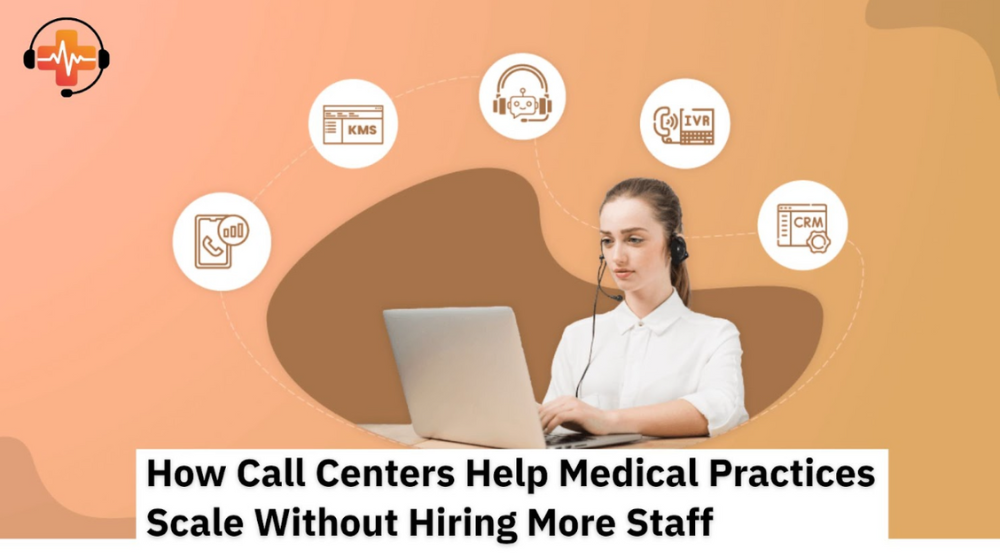
Most medical practices eventually reach a critical point—more patient calls, appointment requests, and administrative tasks than the current team can handle. As demand rises, so does the pressure on front desk staff, leading to missed calls, long hold times, and patient frustration. While hiring more staff might seem like the only solution, it’s often expensive, time-consuming, and adds long-term HR responsibilities. That’s why many clinics are now partnering with Healthcare Call Center to handle overflow communication and routine operations. With 24/7 live answering, appointment scheduling, insurance verification, and patient follow-up services, our call center becomes an extension of your team—without the need for extra desks, payroll, or training time. This model helps medical practices scale without hiring more staff, giving them the freedom to grow sustainably while still delivering a smooth, high-quality patient experience.
What Makes Scaling Difficult Without Support?
As your practice grows, so do patient expectations, communication needs, and administrative demands. But expanding your physical staff to match that growth isn’t always realistic—or efficient. Without a reliable system to absorb that growth, even well-run clinics start to feel the pressure.
Rising Staff Workload
Your in-house team is the heartbeat of your clinic, but even they have limits. Balancing incoming calls, checking in patients, handling referrals, updating the EMR, and answering insurance questions can lead to burnout. As responsibilities pile up, the quality of patient interactions—and employee satisfaction—begins to suffer.
Missed Calls and Lost Revenue
Every missed call can mean a lost appointment, a frustrated patient, or a missed opportunity to convert a lead. In busy practices, even one missed call per hour can add up to thousands in lost annual revenue. When phones are constantly ringing, patients end up on hold—or worse, give up and call another provider. This is especially true in high-volume settings like dental clinics, where call support for dental practices ensures every inquiry is captured and converted into booked appointments.
Gaps in Follow-Up and Retention
Maintaining patient relationships after the visit is key to long-term success. Without a system for timely follow-ups, appointment reminders, post-visit care calls, or review requests, practices risk losing patients to competitors. Retention drops, rebooking slows down, and brand trust weakens. Healthcare Call Center solves these pain points by delivering a cost-effective, fully staffed communication solution that works in sync with your internal systems. We help medical practices scale without hiring more staff by managing the most time-consuming patient touchpoints—without compromising the quality of care your clinic is known for.
How Healthcare Call Center Enables Lean Practice Management
A lean operation prioritizes efficient use of existing resources without compromising care. Healthcare Call Center integrates directly into your workflows and fills key gaps:
- 24/7 live call answering for inbound inquiries
- Appointment scheduling into your existing system
- No-show prevention through reminders and confirmations
- Patient communication systems to handle callbacks and education
- GMB support to improve local visibility and drive new leads
This structure removes the need to train, hire, and manage more team members to handle administrative demands.
Reducing Admin Overload Through Outsourcing
When phones are ringing nonstop and inboxes are overflowing, your front desk team is stretched too thin. By outsourcing non-clinical communication tasks, medical practices can immediately lighten the load. This not only reduces stress and burnout but also allows your on-site staff to stay focused on delivering quality care where it matters most—at the bedside or exam room. Instead of juggling appointments, voicemails, and paperwork, your team gets to concentrate on patient relationships and in-clinic operations, improving both efficiency and satisfaction. For many growing clinics, medical call center outsourcing is a necessity in modern healthcare to stay competitive, responsive, and compliant.
Admin Outsourcing Services Include:
- Scheduling and rescheduling
- Referral tracking
- Patient intake support
- Missed call follow-up
- Review generation and post-visit outreach
Healthcare Call Center becomes your virtual front desk—handling the bulk of patient communication without adding to your payroll or infrastructure. It’s how modern medical practices scale without hiring more staff while maintaining a high standard of patient service.
More Calls, More Patients, No Extra Hires
Many healthcare clinics feel stuck—wanting to grow but fearing the stress of hiring, training, and managing more staff. The reality is that growth doesn’t have to mean more overhead. With the right communication systems and support in place, practices can scale smartly and sustainably. A reliable call center can absorb rising patient demand without overwhelming your internal team.
- Expand your patient base
- Maintain or improve care quality
- Keep your overhead flat
- Increase revenue and retention
With Healthcare Call Center, practices handle more calls, care for more patients, and grow their bottom line—without ever needing to expand their internal staff.
Scalable Growth Is Built on Smart Systems, Not More People
Whether you’re a solo provider or managing a multi-location clinic, real growth doesn’t come from simply adding more staff—it comes from optimizing your operations. When your front desk is backed by streamlined systems, your practice can handle more patients, more inquiries, and more revenue-generating opportunities without missing a beat. By partnering with Healthcare Call Center, you’re not just adding a service—you’re adding a virtual extension of your team that’s trained, reliable, and always available. We adapt to your workflow, EHR platform, and practice goals so you can scale on your own terms. It’s not about hiring more—it’s about doing more with what you already have. Smart practices grow by leveraging efficient systems, not bloated payrolls. Let us help you grow lean, strong, and patient-focused.
FAQs About Healthcare Call Center
What is a Healthcare Call Center, and how does it help my practice?
A Healthcare Call Center is a HIPAA-compliant communication service that manages calls, schedules appointments, and engages leads for medical practices. It acts as an extension of your front desk, reducing administrative burden and helping convert inquiries into loyal patients.
Are Healthcare Call Centers HIPAA-compliant?
Yes. Reputable call centers like Healthcare Call Center are fully HIPAA-compliant, meaning all patient data, calls, and follow-ups are securely managed to ensure PHI (Protected Health Information) confidentiality.
How can a call center reduce no-show appointments?
Our service reduces patient no-shows by up to 30% by sending automated phone, text, and email reminders, and by following up personally. This improves scheduling efficiency and increases practice revenue.
What services does a medical answering service typically include?
Standard features include 24/7 live call answering, appointment scheduling, missed call recovery, GMB optimization, follow-ups, and post-treatment patient check-ins, all tailored to medical workflows.
How fast will my leads be contacted?
How fast will my leads be contacted?
Our call center responds within 1 minute of lead capture, significantly increasing your chance of converting prospects before they call a competitor.
Does your call center integrate with my existing scheduling system?
Yes. We integrate directly into your practice management software or EMR to book patient appointments seamlessly, with no disruption to your current workflow.
Can a call center handle after-hours patient inquiries?
Absolutely. Our 24/7 US-based team ensures that no lead or urgent patient request goes unanswered, whether it’s 2PM or 2AM.
Do you serve all types of medical practices?
Yes. We work with dentists, chiropractors, nurse practitioners, and other specialties like orthopedics, plastic surgery, and functional medicine clinics.
How does a Healthcare Call Center support practice growth?
By improving lead-to-patient conversion, reducing staff overload, and nurturing every potential patient with multiple touchpoints, we help grow your clinic’s patient base and recurring revenue.
What makes Healthcare Call Center different from other medical answering services?
We offer American-based operators, rapid response times, deep industry experience, and specialty-focused scripting for better call quality. Our system is results-driven, with transparent reporting and ongoing GMB optimization to boost visibility.
Why Trust Healthcare Call Center
Healthcare Call Center is a patient-focused, HIPAA-compliant virtual call center dedicated to helping dentists, chiropractors, nurse practitioners, and healthcare professionals streamline patient communication, reduce no-shows, and fill appointment slots effortlessly.
Founded with the mission of enabling medical professionals to grow confidently while focusing on patient care, Healthcare Call Center bridges the gap between lead generation and patient retention through high-touch, data-driven communication strategies. Our U.S.-based, trained agents function as an extension of your practice, delivering compassionate, prompt, and professional call support while managing appointment scheduling, lead nurturing, and follow-ups.
We are trusted by over 300 medical and dental practices nationwide, generating more than $2 million in new patient revenue while improving lead-to-patient conversion rates and lowering no-show rates by up to 30% with our automated, personalized engagement systems.
At Healthcare Call Center, we believe every patient inquiry is an opportunity to build trust, and every call is a chance to enhance your practice’s reputation while increasing revenue. Our 24/7 call center support ensures no patient inquiry goes unanswered, while our advanced lead management and appointment systems transform potential leads into loyal patients.
Let Healthcare Call Center be the trusted extension of your practice, so you can focus on what you do best—delivering exceptional care.
Ready to elevate your patient communication and practice growth? Call (629) 231-1103 or schedule your free consultation today.