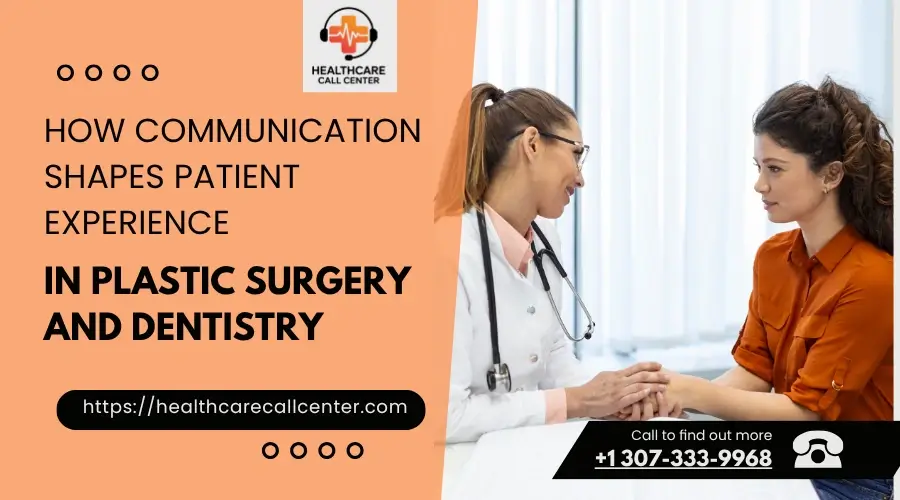
A patient may forget exact words from a phone call. People tend to remember the emotions they felt during a conversation more than the details of what was said.
This is especially true in fields like plastic surgery and dentistry, where people often feel nervous, self-conscious, or intimidated before they even start their treatment.
A nervous cosmetic surgery patient asking about a consultation is not simply booking an appointment.
A dental patient calling after severe tooth pain is not just checking availability. These conversations carry emotion and in healthcare communication, emotion changes everything.
This is one reason empathy has become one of the most important and most overlooked parts of patient experience.
In cosmetic clinics and dental offices, communication is not just operational support. It is part of patient care itself, especially for practices that rely on a professional plastic surgery call answering services to support patient interactions.
Why Empathy Matters in Patient Communication
Empathy improves patient communication by helping patients feel understood, respected, and emotionally supported during vulnerable healthcare interactions. In plastic surgery and dental care, compassionate communication often influences trust, patient comfort, and appointment conversion.
Why Communication Feels More Emotional in Plastic Surgery and Dental Care
Patients often feel emotionally vulnerable before contacting a healthcare provider. Some healthcare conversations are very private and personal, such as those around plastic surgery and dental procedures. Before making the initial contact with a healthcare provider, patients often feel vulnerable for a number of reasons.
All these emotions have an impact on the initial interactions between the patient and the practice; as a result, the communication on the front desk cannot be sterile, fast, or robotic.
The initial conversation regarding appointment scheduling can have an impact on how patients perceive the practice from that point on.
Empathy Starts Before the Consultation
Many health care providers believe the experience with patients begins in the exam room (the treatment room). However, the average consumer will start their evaluation of the practice long before the patient is handed a chart. A caller will generally develop their first impression with their initial phone call.
During that initial phone call, a patient will readily identify:
- Voice inflection
- Patience
- Warmth
- Listening skills
- Professionalism
- The speed at which the call is being handled
An interaction that exhibits empathy creates rapport during the call.
Conversely, a conversation that lacks empathy creates immediate emotional distance between the caller and the practice.
Empathy is an important factor in reducing emotional barriers, and without empathy, it is likely that the patient will contact another provider for information and/or treatment.
Why Patients Remember Emotional Interactions
Patients tend to have stronger memories of their emotional moments than factual and administrative items. This suggests that the quality of communication can affect patient loyalty and retention just as much as the clinical skills of their provider.
Patients may not fully understand all the technical aspects of their treatment. However, they will recall:
- If the staff sounded concerned
- If they felt they were being hurried or rushed
- If their questions were welcomed
- If the communications provided them with less anxiety
- If the staff communicated with them patiently
The emotional memories impact:
- Online review ratings
- Whether the patient refers others to the practice
- The patient’s retention in the practice
- Whether patients show up for their scheduled appointments
- The trust patients have in the practice
At times, practices will underestimate how much the communication occurring in the front office impacts their reputation; however, for many patients, the reception and communication provided to them are part of the plan for care.
Cosmetic Surgery Patients Need Emotional Reassurance
Cosmetic surgery conversations are often deeply personal and emotionally sensitive.
Your patient may have:
- appearance concerns
- insecurity due to age
- low body confidence
- concern about scarring
- concern over body weight
questions regarding sensitive procedures
These are all topics that demand compassion & sensitivity.
When patients contact our clinics, they’re usually experiencing some anxiety or apprehension. Many patients worry about being judged when discussing cosmetic procedures or asking sensitive questions during the scheduling process. Many feel like they have asked “too many questions.” Many patients compare various clinics/physicians before booking an actual procedure time.
Having empathy at this point is critical.
Providing a warm, friendly conversation helps to make the patient feel:
- Secure
- Comfortable
- Valued
- connected to the physician
That emotional connection directly correlates to whether or not a consultation occurs.
This is why practice-based communication and a reliable call center for cosmetic surgery clinics can be very effective for cosmetic surgeon offices.
Most patients are not only looking for procedural information they also want to feel comfortable with the clinic and the people handling their care.
Dental Patients Often Carry Fear and Anxiety
Many people have dental anxiety. Many patients put off going to the dentist for months or even years because of;
- Pain
- Embarrassment
- Trauma from previous dental visits
- Financial Constraints
- Fear of judgement
Some patients get anxiety when they are just making the call to schedule their appointment.
This highlights how important calm, supportive communication can be in reducing patient anxiety even before the appointment begins.
An empathetic conversation can help to calm someone nervous before they arrive for their appointment.
Simple ways you can communicate show a greater level of consideration and respect for the needs of your patients:
- Speaking in a calm tone of voice
- Taking your time and listening to your patient
- Not answering in a hurried manner
- Reassuring nervous patients
- Explaining processes step by step
- Showing empathy
Patients tend to base their comfort level in a dental or cosmetic office during their initial contact, which is why many practices invest in quality dental call center services.
Human Communication Builds Trust Faster
Trust is one of the most valuable assets in healthcare.
Patients feel more at ease when their experience with you is a genuine encounter, not a scripted one.
This is where using humans to answer incoming calls through a trusted call center for dental clinics can help greatly in plastic surgery and dentist offices.
At Healthcare Call Center (HCC), we have designed your communication around making a real connection with patients, not just quickly answering a call.
Patients who are calling to look for services provided by aesthetic medical clinics or dentist offices will typically need:
- Reassurance
- Patience
- Emotional understanding
- Human warmth
You cannot replicate these feelings through automated services/auto systems.
Technology can support workflows, but emotional reassurance still depends heavily on human interaction.
Why Patients Still Value Real Human Interaction
Communication in healthcare has evolved.
Patients want:
- Quick responses
- Immediate assistance
- Clear answers
- Personalised communication
Meanwhile, many practices have started to automate more of their communication.
Patients notice and will differentiate when communication is too transactional.
In many cases, this is very true when dealing with patients in trauma/emotional distress.
Therefore, the majority of practices today are focusing on:
- Live support to answer questions
- Empathy and compassion when communicating with patients
- Providing service based on patient needs/preferences
- Providing real-time conversations with patients
The practices that successfully combine efficiency with empathy will generally cultivate long-term patient loyalty.
Caring Communication Improves Appointment Conversions
Empathy isn’t only great for patient experience; it’s also a natural enhancement to business performance.
When patients feel comfortable and emotionally supported during early interactions, they are naturally more likely to move forward with consultations, return for follow-up care, and recommend the practice to others.
This can be especially important for:
- Cosmetic Surgery Clinics
- Dentists’ Offices
- Medical Spas
- Orthodontists’ Offices
- Oral Surgeons’ Offices
- Aesthetic Medicine Practices
Almost every patient will contact several different health care providers before making a decision about their treatment.
The practice with the greatest degree of warmth, patience, and professionalism will almost certainly be at the top of the patient’s list from the outset.
The quality of a practice’s communication has more impact on the patient’s choice than many practices realize.
The Qualities That Make Patient Communication More Compassionate
One reason why Healthcare Call Centers place an emphasis on caring communication is due to the fact that empathy cannot be completely scripted.
Many of the best patient communication specialists already possess certain characteristics or traits that will elicit a positive response from patients:
- Patience
- Warmth
- Good Listening Skills
- Ability to be Aware of Emotions
- Ability to Communicate Calmly
- Nurturing Conversational Style
Stay-at-home moms with strong emotional intelligence and caregiving experience often perform exceptionally well in patient communication roles.
- Managing Emotional Situations
- Calming Multitasking
- Compassionate Communication
- Helping People Feel Comfortable
- Attentive Listening
The above qualities are very important in the field of healthcare communication.
When a patient has a caring conversation with an employee, they tend to be much more receptive to the conversation than the patient who has a transactional type of conversation with an employee.
By approaching the conversation first with a human point of view, patients have a better experience whether the practice is a dental office or cosmetic practice.
Balancing Technology With Human Patient Support
Automation plays an integral role in the communication of health care.
AI and automation systems, as well as scheduling assistance, can provide increased:
- Efficiency
- appointment reminder
- Organization
- Responsiveness
- administrative assistance.
However, health care communications are fundamentally emotional.
Patients not only remember the speed of a response to their inquiry. They recall how the individual who answered their call cared for them.
Technology can improve efficiency, but genuine human interaction is what makes patients feel cared for.
The best health care communication systems incorporate both.
Patient Experience Plays a Major Role in Practice Reputation
The dental and plastic surgery industries are very competitive.
Patients often compare ratings, website experience, pricing, before-and-after results, and the overall quality of communication before choosing a provider.
When patients have similar experiences, they will use the patient experience to differentiate between them.
Empathy establishes long-lasting memories.
Patients who receive emotional support are far more likely to:
- Provide positive reviews
- Refer family & friends.
- Remain loyal for long periods.
- Trust their provider more.
This is why the communication quality aspect of patient experience also represents a part of modern healthcare branding.
Patients Respond Better to Personalised Communication
Today’s patients struggle with being treated like a person rather than being just another number on the processing line. Healthcare communication strengthens when a patient feels:
- Personally acknowledged
- Emotional support
- Comfortable asking questions
- Respected in their vulnerable states.
Using empathy is how practices can consistently provide those feelings for the patient.
In addition, in healthcare, emotional trust plays a major role in how patients choose and stay loyal to a healthcare provider.
Frequently Asked Question!
Q. Why is empathy important in patient communication?
Empathy helps patients feel understood, respected, and emotionally supported, which improves trust and overall patient experience.
Q. Why do cosmetic surgery patients need empathetic communication?
Cosmetic surgery patients often discuss sensitive appearance-related concerns and may feel emotionally vulnerable during early conversations.
Q. How does empathy improve dental patient communication?
Empathy helps reduce dental anxiety, improves patient comfort, and creates more positive experiences before treatment begins.
Q. Can better communication improve patient retention?
Yes. Patients who feel supported and respected are more likely to return, follow treatment plans, and recommend the practice.
Q. What makes patient communication feel more human?
Warm tone, active listening, patience, emotional understanding, and personalized responses help communication feel more human.
Q. Why do patients prefer human communication over automation?
Human conversations provide emotional reassurance, flexibility, and empathy that fully automated systems often struggle to deliver.
Q. How does communication affect healthcare reviews?
Patients frequently mention communication quality in online reviews because it shapes their overall perception of care.
Q. What is human-first healthcare communication?
Human-first communication focuses on empathy, emotional intelligence, patient comfort, and genuine interaction rather than purely transactional communication.
Why Human-Centered Communication Matters in Modern Healthcare
As healthcare communication becomes more automated, patients increasingly value practices that still provide empathy, reassurance, and genuine human interaction during stressful or emotional situations.
Conclusion
The way we communicate with people in the fields of cosmetic and dental care can be very significant because it tends to be more than just an administrative matter, it is an emotional matter.
Patients often reach out many times over the course of their relationship with a practice, sometimes even long before they have received any treatment. How a practice communicates with its patients during these early interactions helps to establish their level of trust and enhances that trust very quickly after they have made contact.
When a practice is able to demonstrate empathy towards each patient, they will feel safe to proceed with their treatment.
In healthcare, communication often shapes patient trust before treatment even begins.
At Healthcare Call Centers, patient conversations are conducted by real, live persons who are trained on how to communicate with warmth, professionalism and empathy. Practices that prioritize empathetic and human-centered communication often create stronger patient trust and long-term loyalty.
While technology improves operational efficiency, empathetic communication is what makes patients feel genuinely supported throughout their experience.
For cosmetic and dental practices, the emotional connection between the patient and the practice is frequently what patients will remember most.