A patient takes three days to decide whether or not they should reach out to an orthopedic clinic regarding their ongoing shoulder pain. They finally call the orthopedic office during their lunch break.
They call.
No one answers.
They leave a voicemail.
Two hours later, still no response.
They end up calling a different provider later in the day.
This type of situation happens frequently in healthcare, much to the surprise of many healthcare executives.
Many healthcare organizations are losing out on patients even after making significant investments into their marketing efforts, improving the patient experience, and developing the practice because they do not answer the phone when prospective patients are calling. As the phone continues being one of the major ways that patients schedule appointments and ask questions, missed calls typically mean that those patients will not get scheduled for an appointment.
A HIPPA-complaint medical answering service helps healthcare organizations answer patient calls, schedule appointments, recover missed opportunities, and provide support when internal staff are unavailable. For many practices, improving call coverage is one of the fastest ways to increase appointment conversion and improve patient accessibility.
Why Every Missed Call Represents More Than a Missed Conversation
When patients look for a new doctor (primary care doctor, dentist, mental health provider, surgeon, or urgent care), they often will contact multiple offices in a short period of time. The office that answers their call first will typically get the appointment.
People who do not currently have a patient/provider relationship will generally not wait long for a call back. Therefore, established patients (loyal, long term), are usually more tolerant of delays, while new patients have little loyalty and many other options.
Missed calls can affect:
- Acquiring new patients
- Converting appointments
- Provider utilization
- Revenue
- Patient satisfaction
A missed call represents someone that actively wants to receive health care. Therefore, the true cost of each missed call opportunity is probably greater than one would initially think.
The Link Between Patient Communication and Conversion Rates
Provider reputation and marketing are not the only factors influencing patient conversion; responsiveness plays a significant role.
These types of questions ultimately determine whether a patient books an appointment with a healthcare provider.
Effective communication with patients minimizes uncertainty, builds trust, and facilitates the transition from inquiry to addressing their healthcare needs upon appointment confirmation.
How a Medical Answering Service Helps Capture More Appointment Opportunities
By providing a solution that allows for better ways to communicate with patients, a medical answering service increases the number of ways patients can contact their doctor’s office; it is no longer limited to just what an office staff can handle during normal business hours.
Instead of allowing a patient to receive a voicemail during peak workloads, trained representatives can assist patients and answer their questions in real-time.
Higher conversion rates are also attributed to several operational benefits of using a medical call center.
Reduced Hold Times
During spikes in call volume, the use of answering service support will help minimize long wait times and abandoned calls.
Better Patient Experience
Acknowledging a patient is something a patient appreciates. Often, an immediate and professional response will present a stronger initial contact for the practitioner than marketing materials, or online reviews.
Most practices use ways to improve conversion performance through improved accessibility.
Appointment Scheduling Support That Converts Calls Into Patients
The ability to assist with appointment scheduling is one of the most important roles of healthcare communication support. Any additional hurdle a potential patient encounters between making an inquiry and receiving an appointment confirmation is an impediment and raises risks to the provider.
If potential patients have to leave messages and wait for a return call, some of them may lose interest in making an appointment or may seek to go elsewhere before the staff respond. If scheduling assistance is provided during the initial inquiry call, it will make the scheduling process much easier and quicker.
The lower the time between the patient’s inquiry and the patient’s appointment confirmation, the better the chance for that patient to convert.
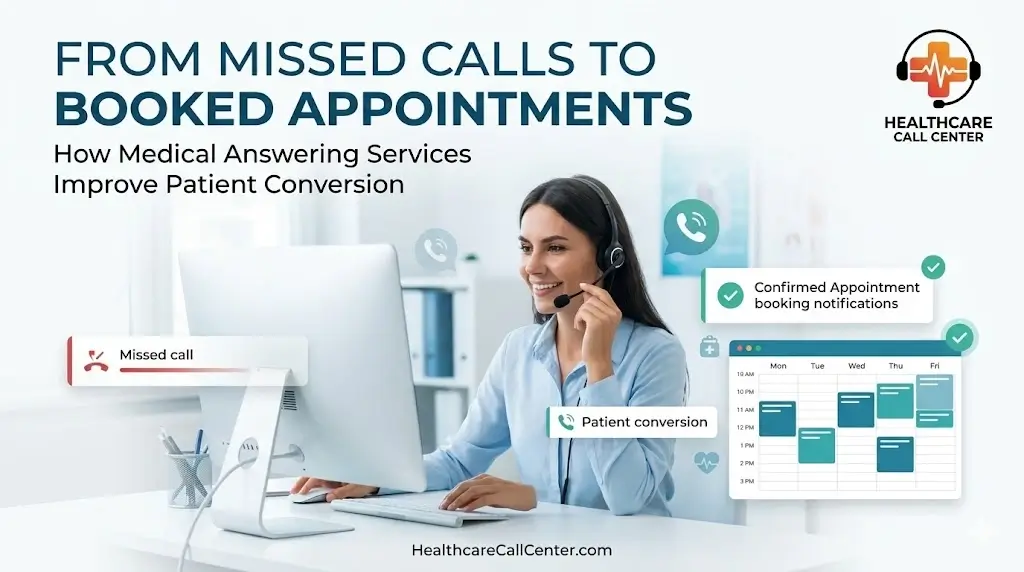
Missed Call Recovery: Turning Lost Opportunities Into Booked Appointments
Many perfect world examples of great practices will have trouble with the calls they’re receiving.
Many practices process issues related to staff meetings, unexpected surges in patient care, emergency issues, and other variations in workload and resource availability. This is where missed call recovery has incredible value.
Missed Call Recovery is defined as a systematic process allowing practices to re-establish contact with those callers who could not successfully reach them initially.
Rather than allow a missed call to drop off the radar or never hear from that patient again, practices implement prompt initiatives to reach out to those patients after the initial missed connection.
Missed call recovery programs typically will include all or some of the following components for the successful recovery of patients from missed calls:
- Immediate notification of a missed call
- Quick follow-up call processes
- Text-based follow-up
- Providing appointment support
Why Healthcare Answering Services Matter for Busy Medical Practices
Healthcare operations seldom adhere to a defined pattern.
Staffing issues resulting from this provide another level of complexity to the situation.
Front desk personnel are often responsible for:
- Checking in patients
- Verifying insurance information
- Coordinating referrals
- Responding to provider requests for information
- Completing paperwork associated with patients
- Answering incoming calls from patients
Healthcare answering services help alleviate some of these demands on the front desk staff and free up the practice from being under-staffed all year round due to these fluctuations.
This allows the organization to continue to provide access to care for its patients and prevents their internal staff from experiencing burnout and increasing the amount of work they do at one time.
The Role of a Medical Call Center in Patient Retention and Growth
Although getting new patients into care is essential to long-term growth, maintaining your current patients is just as important.
Through a medical call center, you will meet both of these goals.
Your existing patients may call you for many reasons, including:
- Appointment Follow-up
- Prescription Questions
- Referral Status
- Appointment Confirmations
- General Questions
By responding in a consistent and timely manner, you will enhance the relationship with your patients and help build their trust
Patients who feel confident in their ability to reach and communicate with their providers tend to report higher levels of satisfaction and continue to be patients of the practice for an extended period of time.
Consistently communicating provides stability, and having stability supports long-term patient retention.
Signs Your Practice May Be Losing Patients Due to Call Handling Gaps
Many healthcare leaders underestimate communication problems because the impact is not always visible.
Several warning signs can indicate underlying issues.
High Voicemail Volume
Large numbers of voicemail messages often suggest patients are struggling to reach live staff.
Unreturned Calls
When callbacks are delayed or missed entirely, conversion opportunities decline.
Frequent Busy Signals
Patients encountering busy signals may simply stop trying.
Low Appointment Conversion Rates
Strong inquiry volume combined with weak booking performance often points toward communication bottlenecks.
Front Desk Overload
When reception teams appear constantly overwhelmed, incoming calls may not receive the attention they require.
Monitoring these indicators can help practices identify operational weaknesses before they begin affecting patient growth significantly.
What Healthcare Providers Should Look for in an Answering Service Partner
Not all service providers offer the same level of healthcare expertise.
When evaluating options, healthcare organizations should focus on several key areas.
HIPAA Compliance
Patient information must be handled according to strict privacy and security standards.
Healthcare-Trained Agents
Representatives should understand medical terminology, patient sensitivity, and healthcare workflows.
Appointment Scheduling Capabilities
Scheduling support should align with the practice’s existing processes and systems.
Reporting and Analytics
Access to performance data helps administrators identify trends and evaluate service effectiveness.
Scalability
The solution should accommodate growth, seasonal fluctuations, and changing operational needs.
Workflow Integration
The service should complement existing procedures rather than creating additional administrative burdens.
A strong partnership should feel like an extension of the practice rather than an external vendor.
Conclusion
A vast number of healthcare entities are spending a great deal of time trying to obtain new patients. Unfortunately, a significant portion of those potential new patients are lost to missed calls prior to ever being able to schedule an appointment with a doctor.
Though missed calls may not appear to be critical alone, collectively they create an environment of missed patients and, in turn, create a diminished number of appointments being made. This leads to the decline of clinic acquisition activity, impacting future growth.
One of the easiest ways to improve a clinic’s conversion success rate is to provide better communication with patients. If a patient is able to contact someone who has the knowledge to answer their questions, they can get help quickly and conveniently schedule an appointment, they are more likely to continue in their care.
Whether the assistance comes through expanded availability or support in scheduling your appointments or recovering missed calls, answering services can help healthcare practices connect patients who have expressed interest with the actions required to obtain care. Often, the only differentiator between a missed call and a scheduled appointment is the simple fact of being available when a patient wants to speak to you.
Frequently Asked Questions
1. What does a medical answering service do?
An answering service is a provider of healthcare answering services that takes care of calls received from patients on behalf of the health care provider. The services provided by the answering service may include answering calls, taking messages, scheduling appointments, providing after-hours support, and assisting in patient communication.
2. How do healthcare answering services improve patient conversion?
The primary purpose of a healthcare answering service is to ensure that the inquiries made by patients are answered quickly. Prompt responses to patient inquiries will allow for quicker appointment bookings and reduce abandonment rates because of the convenience of being able to schedule an appointment during the initial call.
3. What is missed call recovery in healthcare?
Missed call recovery involves identifying unanswered patient calls and initiating timely follow-up communication to reconnect with callers and recover potential appointment opportunities.
4. Can a medical call center schedule appointments for patients?
Yes. Many medical call center providers offer appointment scheduling support, allowing patients to book appointments during their initial call rather than waiting for a callback.
5. How can practices determine if they need answering service support?
Common indicators include high voicemail volumes, frequent missed calls, overloaded front desk staff, delayed callbacks, patient complaints about accessibility, and lower-than-expected appointment conversion rates.