Every time your front desk misses a call, a potential patient dials the next surgeon on their list. Plastic surgery is not like other medical specialties. Patients calling about procedures are nervous, excited, and full of questions. When that call goes to voicemail, they do not leave a message. They hang up and call someone else.
A plastic surgery call center service solves this problem. Trained agents answer every call, handle patient concerns with empathy, and book consultations directly into your schedule. No missed calls. No lost revenue. No patients slipping away to competitors.
If you are comparing providers, start with our guide to choosing an after-hours plastic surgery answering service that fits your call volume, scheduling workflow, and patient communication needs.
What Is a Plastic Surgery Call Center and What Does It Do?
A plastic surgery call center is a specialized patient communication service built specifically for cosmetic and reconstructive surgery practices. Unlike a generic answering service that takes messages, a plastic surgery call center team is trained to handle the unique flow of cosmetic patient inquiries.
These calls are different from typical medical calls. Patients ask about pricing, recovery timelines, financing options, before-and-after results, and whether a procedure is right for them. They need reassurance, not just information. A receptionist juggling in-office patients cannot give these calls the attention they deserve.
A dedicated call center changes that. Agents trained in plastic surgery patient communication answer every call within seconds. They understand the emotional weight of a rhinoplasty inquiry versus a reconstructive surgery question. They know when to schedule a consultation, when to route to clinical staff, and when to handle the question themselves.
The American Society of Plastic Surgeons reports that cosmetic procedures continue to grow year over year, which means more patients are calling practices to explore their options. The practice that answers the phone first captures that patient.
Why Plastic Surgery Practices Lose Patients to Missed Calls
Missed calls are the single biggest revenue leak in a plastic surgery practice. Here is why it happens and what it costs.
Front desk staff cannot answer every call. They check in patients, handle payments, manage schedules, and assist with in-office procedures. When three calls come in during a consultation check-in, two of those go unanswered.
After-hours Plastic Surgery calls go straight to voicemail. Most plastic surgery offices close at 5 or 6 PM. Patients who research procedures in the evening call after work. If nobody answers, that patient moves on.
New patient inquiries require time and empathy. A patient calling about a facelift may spend ten minutes asking questions before feeling comfortable enough to book. A rushed receptionist cannot provide that level of attention while managing a waiting room.
Want to estimate the potential revenue impact for your own practice? Use our Patient Lead Response Time Calculator to estimate how missed or delayed patient inquiries may affect appointments and revenue.
Weekend calls are another blind spot. Prospective patients spend Saturdays and Sundays researching procedures, looking at before-and-after photos, and calling practices. If your office is closed, those calls go to voicemail. By Monday morning, the patient has already booked a consultation with a competitor who answered.
How Missed Plastic Surgery Calls Affect Consultation Conversion
A missed plastic surgery call is not simply a missed conversation. It can represent a lost consultation, a lost procedure opportunity, and a patient who may never return to your practice.
Plastic surgery patients often compare multiple surgeons before choosing where to schedule a consultation. They may call after seeing a procedure page, reviewing before-and-after photos, or researching a surgeon’s credentials. If they reach voicemail, the next call may go to another practice.
The faster a practice responds to a new inquiry, the more opportunity it has to answer basic questions, build trust, and move the patient toward a consultation. Live call coverage helps remove the delay between patient interest and appointment scheduling.
Plastic surgery consult calls need high-value patient call handling because callers are often comparing providers before booking.
Core Services a Plastic Surgery Call Center Provides
A plastic surgery call center does more than answer phones. It functions as an extension of your practice. Here is what the service covers.
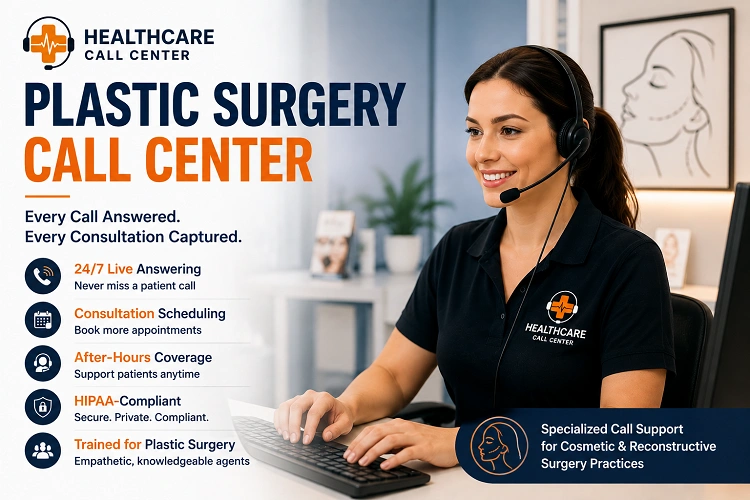
24/7 Live Answering
Every call is answered by a trained agent, day or night. Whether a patient calls at noon or midnight, they speak with a real person. No voicemail. No automated menus. No waiting on hold.
The agent follows your practice protocols for call handling, message taking, escalation, and scheduling. Patients feel like they reached your office, not a third-party service.
Consultation Scheduling
This consultation scheduling capability removes the delay between a high-intent inquiry and the next available appointment. They use your scheduling rules, availability windows, and intake requirements. A patient who calls at 9 PM can leave the call with a confirmed appointment for Thursday morning.
This eliminates the callback delay that kills conversions. Patients who have to wait for a callback often lose interest, book elsewhere, or forget they called.
After-Hours Coverage
The hours between 5 PM and 9 AM are prime time for patient inquiries. People research procedures after work, discuss options with family, and pick up the phone when the office is closed.
A plastic surgery answering service ensures these calls get answered. Agents capture new patient leads, handle urgent post-operative questions, and schedule consultations for the next business day.
New Patient Intake
First-time callers have questions. Lots of them. What does the procedure cost? How long is recovery? Is financing available? Does the surgeon have experience with their specific concern?
Trained agents walk patients through these questions using information you provide. They do not give medical advice. They give the information patients need to feel confident booking a consultation.
Call Routing and Escalation
When a call requires clinical attention, agents route it immediately. A post-operative patient with a concern goes straight to your clinical team. A media inquiry reaches your front office. A billing question gets directed to your billing department.
No message slips lost in a stack of papers. No patient transferred three times before reaching the right person.
How a Plastic Surgery Call Center Differs from a Generic Answering Service
Many practices already use an answering service and assume that is enough. It is not. Generic answering services take messages. They do not understand plastic surgery patient psychology.
Here is the difference:
- Generic Answering Service: Answers the call. Takes a name and number. Sends a message. Patient waits for a callback. Patient may not answer the callback. Patient books elsewhere.
- Plastic Surgery Call Center: Answers the call. Engages the patient. Answers basic questions using practice-approved information. Schedules the consultation on the spot. Patient leaves the call with an appointment.
The first model captures a name. The second model captures a patient.
This distinction matters because cosmetic patients are self-pay. They are spending their own money, which means they shop around. The practice that makes them feel heard and valued on that first call earns their trust and their business.
Who Needs a Plastic Surgery Call Center?
This service is built for practices that cannot afford to miss calls. That includes:
Single-surgeon practices where the surgeon and one receptionist handle everything. Calls go unanswered during consultations, procedures, and lunch breaks.
Multi-provider practices with high call volume. Three surgeons, two nurse practitioners, and one front desk mean calls pile up fast.
Practices offering high-value procedures. A single rhinoplasty, tummy tuck, or mommy makeover can represent significant revenue. Missing that one call is expensive.
Practices in competitive markets. If five plastic surgeons operate in your city, the one who answers the phone wins the patient.
The math is simple. If your practice misses five calls per week from potential new patients, and your average procedure value is significant, the revenue loss is substantial. A call center costs a fraction of what those missed calls cost you.
Read – Why Los Angeles plastic surgery practices need dedicated call center services?
What to Look for in a Plastic Surgery Call Center
Not every call center is built for plastic surgery. When evaluating services, look for these essentials:
1. Specialty Training
Agents should understand plastic surgery terminology, common procedures, patient concerns, and the consultation booking process. A generic call center will not know the difference between a consultation and a pre-op appointment.
2. HIPAA Compliance
Patient information must be handled with strict HIPAA-compliant protocols. According to the U.S. Department of Health and Human Services, covered entities must ensure that business associates handling protected health information comply with privacy and security rules. Your call center should document its compliance procedures, use encrypted systems, and train staff on privacy requirements.
3. Custom Call Protocols
Your practice is unique. The call center should follow your scripts, your scheduling rules, your escalation pathways, and your intake questions. Cookie-cutter protocols lead to mistakes.
4. Bilingual Capability
Plastic surgery serves diverse communities. Bilingual agents ensure you never miss a call from a patient who prefers to speak in their native language.
5. Integration with Your Systems
The call center should integrate with your practice management software, EHR, or scheduling tool. Manual message-passing creates delays and errors.
What Changes When a Plastic Surgery Practice Uses a Call Center
Practices that implement a dedicated plastic surgery call center service see measurable changes:
More consultations booked. When every call is answered, consultation volume increases. Patients who would have gone to voicemail now have appointments on the calendar.
Higher patient satisfaction. Patients reach a real person every time. They feel heard, not processed. That first interaction sets the tone for their entire surgical journey.
Recovered revenue. Calls that previously went unanswered now convert to paying patients. The return on investment is direct and measurable.
Better staff focus. Your front desk team can focus on in-office patients instead of juggling phones. The practice runs smoother.
Improved online reviews. Patients who have a positive first call experience are more likely to leave positive reviews after their procedure. That first phone interaction ripples through your entire reputation.
Why Now Is the Time
The cosmetic surgery market is growing. More patients are researching procedures online and calling practices to ask questions. The practice that answers the phone first wins the consultation.
If your competitors are using voicemail after 5 PM, you have an opportunity. If they are missing calls during the day, you have an advantage. A plastic surgery call center turns that advantage into revenue.
Every day without one is a day you are losing patients to practices that pick up the phone.
Our medical answering service is built for healthcare providers who need reliable, empathetic patient communication at every hour. For plastic surgery practices specifically, our plastic surgery call center services deliver customized call handling that matches your practice voice and protocols.
Ready to Capture Every Patient Call?
Healthcare Call Center provides specialized call center services for plastic surgery practices, staffed by trained agents who understand cosmetic patient communication. From after-hours coverage to full-time answering, we make sure no patient call goes unanswered.
Book a Free Consultation
Frequently Asked Questions
What is a plastic surgery call center?
A plastic surgery call center is a specialized patient communication service that answers calls for cosmetic and reconstructive surgery practices. Trained agents handle patient inquiries, schedule consultations, and provide after-hours coverage.
How much does a plastic surgery call center cost?
Costs vary based on call volume and service level. Most practices find that the revenue recovered from previously missed calls far exceeds the monthly cost. Contact us for a custom quote based on your practice needs.
Can the call center schedule consultations directly?
Yes. Agents book appointments directly into your practice management system using your scheduling rules and availability windows.
Is the service HIPAA-compliant?
Yes. All patient information is handled with strict HIPAA-compliant protocols, including encrypted messaging and secure scheduling access.
What hours does the call center cover?
Our service provides 24/7 coverage, meaning every call is answered whether your office is open or closed.
Will patients know they are speaking to a call center?
Our agents answer calls using your practice name and follow your custom protocols. Patients experience seamless communication that feels like they reached your office directly.