Ranking on Google does not book appointments. Answering patient calls does. A healthcare practice can invest in SEO, paid ads, and great service pages, but if patient calls go unanswered, those marketing wins quickly become lost appointments.
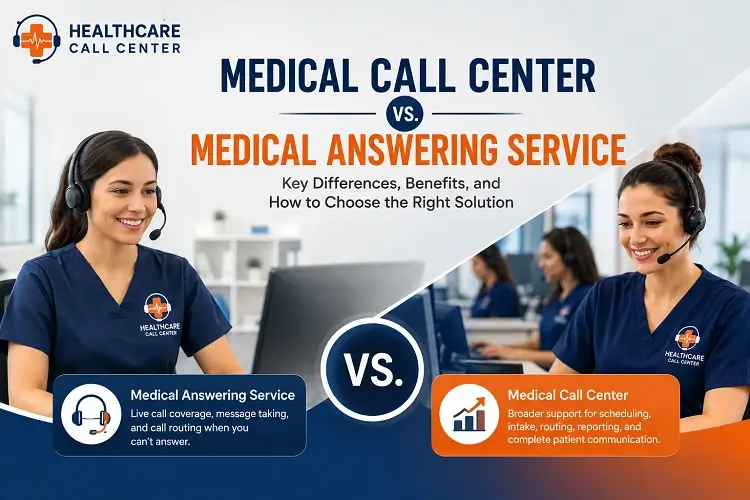
That is why many practices compare a medical call center vs. a medical answering service. The terms sound similar, but they do not always mean the same thing. A medical answering service usually helps answer calls, take messages, and route patient requests when the front desk is busy or closed. A medical call center can support a larger communication system, including scheduling, intake, front desk overflow, after-hours coverage, reporting, and routing by location or provider.
The better question is not which term sounds stronger. The better question is what your practice needs after the phone rings.
If your issue is missed calls, you may need a medical answering service. If your issue is call flow, routing, scheduling, and visibility, you may need a medical call center model. For many growing practices, the best answer is a combination of both.
Quick Answer: What Is the Difference?
A medical answering service is usually focused on live call coverage. It answers calls when your internal team cannot, captures caller information, documents the reason for the call, and follows your routing instructions.
A medical call center is broader. It may include live answering, appointment scheduling support, new patient intake, patient call routing, overflow handling, after-hours coverage, and reporting. It is designed to manage patient communication more systematically.
Simple breakdown:
- Medical answering service: best for missed calls, voicemail reduction, after-hours coverage, and front desk overflow.
- Medical call center: best for scheduling workflows, intake, reporting, multi-location routing, and higher call complexity.
- Blended model: best for practices that need both live answering and structured patient call management.
This distinction matters because answering the phone is only the first step. The call still needs to be documented clearly, routed correctly, and connected to the right next action.
What Is a Medical Answering Service?
A medical answering service gives healthcare practices live call coverage when the front desk is busy, closed, or overloaded. It can cover lunch hours, weekends, holidays, after-hours calls, and high-volume periods during the business day.
A basic answering service may only take a name and number. A strong medical answering service should do more. It should use practice-approved scripts, capture whether the caller is a new or existing patient, document the reason for the call, and route messages based on your rules.
For example, a new patient asking about availability should not be handled the same way as an existing patient asking for a provider callback. A scheduling request should not be documented like a billing question. Good answering support captures these differences so your team can follow up faster and with more context.
This is especially important because patients do not always leave voicemail. A new patient who reaches voicemail may call another practice. Live answering helps keep that opportunity inside your practice.
What Is a Medical Call Center?
A medical call center is a broader patient communication operation. It may include answering service coverage, but it also supports more complete workflows.
A medical call center can help with inbound patient calls, appointment requests, new patient intake calls, call routing, front desk overflow, after-hours messages, follow-up workflows, multi-location routing, and reporting. The goal is consistency. Each call is answered, categorized, documented, and sent to the correct next step.
This matters for practices with more complex call needs. A fertility clinic may need sensitive intake handling. An OB-GYN practice may need pregnancy-related call routing. A plastic surgery practice may need fast response for consultation leads. A dental practice may need scheduling support and urgent-call routing. A multi-location group may need calls routed by location, provider, or appointment type.
A healthcare call center is not only about answering more calls. It is about building a better patient communication system.
The table below highlights the practical differences between the benefits of medical answering service and a medical call center so you can choose the right solution for your practice.
Comparison Table: Medical Call Center vs Medical Answering Service
| Category | Medical Answering Service | Medical Call Center |
| Main purpose | Answer missed or overflow calls | Manage broader patient call workflows |
| Best for | Practices needing live coverage | Practices needing routing, intake, scheduling, and reporting |
| Coverage | After-hours, weekends, holidays, overflow | Business hours, after-hours, overflow, multi-location support |
| Call handling | Message capture and routing | Categorization, routing, intake, scheduling support, reporting |
| Scheduling | May capture appointment requests | Can support deeper scheduling workflows |
| Reporting | Often basic | Usually more detailed by call type or outcome |
| Best fit | Simple coverage gaps | Growing practices and specialty clinics |
The right option depends on the complexity of your calls. If most calls are simple messages, answering service coverage may be enough. If calls require intake, routing, scheduling, and reporting, a call center model may be stronger.
When a Medical Answering Service Is the Right Fit
A HIPAA-compliant medical answering service is often the right starting point when the practice is losing calls to voicemail.
You may need one if:
- Patients often reach voicemail
- Calls are missed during lunch or peak hours
- The front desk is busy with in-office patients
- New patient calls are not answered consistently
- After-hours calls need live coverage
- Appointment requests need to be captured clearly
- Staff spend too much time returning incomplete voicemails
For many practices, this solves the most urgent problem quickly. More calls get answered, patients hear a live human voice, and the front desk receives cleaner messages.
The important point is to choose a healthcare-focused provider. Generic answering services may answer the phone, but they may not understand medical office workflows, patient privacy expectations, scheduling intent, or provider routing instructions.
When a Medical Call Center Is the Better Fit
A medical call center is usually better when the practice needs more than basic message taking.
You may need a medical call center model if:
- You manage multiple locations
- You need appointment scheduling support
- You need new patient intake support
- You want call routing by provider, location, or service line
- You need reporting on call reasons and outcomes
- You want to standardize call handling across the practice
- You are using SEO or paid ads to drive more patient calls
This model helps leadership understand what is happening on the phones. It can show whether calls are about scheduling, new patient inquiries, after-hours needs, provider callbacks, or other categories. That visibility is valuable when the practice is trying to grow.
Signs Your Practice Has Outgrown a Basic Answering Service
Your current call support may not be strong enough if:
- Messages only say “patient called”
- Staff have to call back just to understand the request
- New patient inquiries are not separated from routine messages
- Appointment requests are not clearly labeled
- Callers are not asked whether they are new or existing patients
- Providers receive messages that should have gone to the front desk
- The front desk receives messages that should have been escalated
- You cannot report how many appointment opportunities were captured
These problems usually mean the practice does not only need someone to answer the phone. It needs a better call workflow.
According to the Agency for Healthcare Research and Quality (AHRQ), choosing between a medical answering service and a medical call center starts with understanding how your practice currently handles patient calls.
How to Choose the Right Option
Start with a simple call-flow audit.
Ask:
- When are calls missed most often?
- Are missed calls happening after hours or during the day?
- Do patients leave voicemail?
- Are voicemail messages complete?
- Do calls need routing by provider, location, or urgency?
- Do you need appointment scheduling support?
- Do you need reporting by call type or outcome?
If the main issue is unanswered calls, start with a medical answering service. If the issue is workflow, routing, intake, scheduling, and reporting, choose a medical call center model.
Example: How One Patient Call Can Change the Outcome
Imagine a new patient calls at 4:55 p.m. after finding your practice through Google. They want to know if you accept new patients and whether an appointment is available next week.
If the call goes to voicemail, the patient may call the next provider. If a basic answering service only writes “patient called,” your front desk still has to call back and restart the conversation. If a healthcare-focused answering workflow captures the caller name, phone number, patient status, reason for call, preferred appointment time, and next step, your team can follow up with confidence.
A medical call center model can take this further by tagging the call as a new patient scheduling request, routing it to the correct location, and reporting it as a conversion opportunity.
That is why the difference matters. The same call can become a lost lead, a vague message, or a clear appointment opportunity.
What to Ask Before Choosing a Provider
Before choosing a medical answering service or medical call center, ask practical questions:
- Do agents use healthcare-specific scripts?
- Can they capture appointment requests clearly?
- Can they separate new patient calls from existing patient calls?
- Can they route by provider, location, call type, or urgency?
- Can they support after-hours and front desk overflow?
- Can they document messages in a way staff can act on?
- Can they provide reporting on call types and outcomes?
The answers will tell you whether the provider is simply answering phones or helping your practice improve patient communication.
Final Recommendation
A medical answering service is best when your practice needs reliable live coverage for missed calls, after-hours calls, or front desk overflow.
A medical call center is best when your practice needs a more structured system for patient calls, scheduling requests, intake, routing, and reporting.
For many healthcare practices, the best solution is a blended model: live answering for coverage, plus structured workflows for clear documentation and routing.
Healthcare Call Center helps medical practices answer more calls, protect patient trust, and route conversations clearly so fewer opportunities are lost to voicemail or confusion.
Find the Right Call Support for Your Practice
Whether you need a medical answering service, a medical call center, or a combination of both, Healthcare Call Center can review your current call flow and identify where patient calls are being lost.
Book a free consultation and discover how better call handling can protect more appointments.
Frequently Asked Questions
Which is better: a medical answering service or a medical call center?
Neither is universally better. A medical answering service is ideal for practices that need reliable live call coverage, while a medical call center is better for practices that also need appointment support, patient intake, call routing, reporting, and more structured communication workflows.
Is a medical call center the same as a medical answering service?
No. A medical answering service usually focuses on live answering, message capture, and call routing. A medical call center is broader and may include scheduling support, intake, overflow coverage, reporting, and multi-location workflows.
Which one should a small medical practice choose?
If the main issue is missed calls or after-hours coverage, start with a medical answering service. If the practice also needs routing, intake, scheduling workflows, or reporting, a medical call center model may fit better.
Can a medical answering service help with appointment requests?
Yes. A healthcare-focused answering service can capture appointment intent, caller details, preferred times, new or existing patient status, and next-step notes for the front desk.
Why does live call support matter for SEO leads?
SEO can bring patients to the website, but the phone call often decides whether they book. If the call goes to voicemail, the practice may lose the lead to another provider.
What should a practice look for in a call support partner?
Look for live human answering, healthcare-specific scripts, and having HIPAA Privacy Rule workflows, clear message documentation, appointment request capture, escalation rules, after-hours coverage, and useful reporting.