Dental practices run on appointments. When the schedule is full, the practice thrives. When chairs sit empty because of missed calls, no-shows, and last-minute cancellations, revenue disappears quietly.
The problem is not that patients stop calling. They call during lunch, after hours, while your front desk is checking in a patient, or while someone else is on hold. Those calls go unanswered, and unanswered calls do not come back.
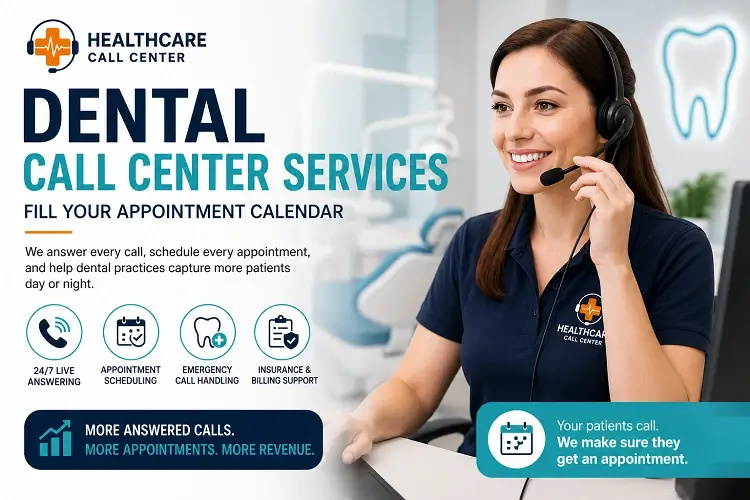
Dental call center services can fix your missed call issues and book more appointments for you. A trained team answers every patient call, schedules appointments directly into your system, handles rescheduling, and captures emergency inquiries before they walk to the competitor down the street.
This article explains what dental call center services do, why your practice needs them, and how they directly impact your bottom line.
What Are Dental Call Center Services?
Dental Answering services are specialized patient communication solutions built for dental practices. Unlike a generic answering service that takes messages, a dental-focused call center team understands how dental practices operate.
They know the difference between a routine cleaning and a dental emergency. They understand insurance pre-authorizations, financing questions, and new patient intake. They can follow your scheduling rules, manage cancellations, and route urgent clinical questions to the right person.
Every call is handled by a real person who treats patients with empathy and professionalism. No automated menus. No hold music for five minutes. No voicemail that patients hang up on.
According to the American Dental Association, patient communication is one of the top factors influencing case acceptance and retention. Practices that respond quickly to patient inquiries consistently outperform those that do not.
Why Dental Practices Lose Patients to Missed Calls
Many dental practices miss calls when front-desk staff are handling patients, insurance, payments, and scheduling simultaneously.
Your front desk is pulled in multiple directions. They check patients in, collect payments, verify insurance, manage the schedule, and assist the clinical team. When two patients are at the front desk and the phone rings, the call goes unanswered.
Lunch breaks create gaps. Many practices stagger lunch coverage poorly. Calls during the lunch hour often go to voicemail, and lunch hour is prime time for patient inquiries.
After-hours dental calls go nowhere. Dental offices typically close between 5 and 6 PM. Patients who experience tooth pain in the evening or think about scheduling an appointment after work cannot reach anyone. They either wait and forget, or they call a competitor who advertises 24/7 availability. In this case, only a dedicated After-Hours Dental Answering Service can help you book more appointments.
Emergency calls get lost. A patient with a cracked tooth at 8 PM does not want to leave a voicemail. A trained agent documents the concern, follows the practice’s approved emergency protocol, and routes or escalates the call to the appropriate dental team member.
Each missed call represents a patient who wanted your services and could not reach you. That is revenue walking out the door.
Core Services a Dental Call Center Provides
A dental call center functions as a seamless extension of your front desk. Here is what the service covers.
24/7 Live Answering
Every call is answered by a trained agent. Day, night, weekends, holidays. Patients always reach a real person who can help them.
The agent follows your practice protocols for call handling, message taking, emergency triage, and scheduling. Patients experience the same level of care they would get from your best front desk team member.
Appointment Scheduling
Agents book appointments directly into your practice management system. They use your dental appointment scheduling rules, operator preferences, hygiene recare intervals, and new patient protocols.
A patient who calls at 10 PM with a toothache can leave the call with a confirmed emergency appointment for 8 AM the next morning. No callback delay. No lost lead.
Emergency Call Triage
Dental emergencies do not follow business hours. A trained agent can assess whether the call requires immediate attention, schedule a same-day emergency slot, or provide home care guidance until the office opens.
This is where practices differentiate themselves. Patients remember the practice that answered at midnight during a dental emergency. They become loyal, long-term patients.
New Patient Intake
First-time callers have questions about insurance, financing, office location, parking, and the dentist’s experience with specific procedures. Agents walk through these questions using practice-approved information.
They do not give clinical advice. They provide the details patients need to feel confident booking their first appointment.
Insurance and Billing Assistance
Agents can answer basic insurance questions, verify coverage details using your provided scripts, and direct complex billing questions to your billing team. This reduces the number of calls pulled away from your in-office staff.
How Dental Call Center Services Differ from a Generic Answering Service
Many dental practices already have an answering service and think the problem is solved. It is not.
- Generic Answering Service: Takes a name and number. Sends a message. Patient waits. Patient books elsewhere.
- Dental Call Center Service: Engages the patient. Answers questions. Schedules the appointment. Patient leaves the call with confirmation.
The difference is conversion. A message-taking service captures data. A dental call center captures patients.
Think about the patient journey. Someone searching for a dentist calls three practices. The first goes to voicemail. The second answers but says they will call back. The third answers, answers the patient’s questions, and books the appointment on the spot. That third practice wins the patient every time.
Who Needs Dental Call Center Services?
These services are built for practices that want to grow without adding overhead.
Solo practitioners who cannot afford to miss a single new patient call. Every missed call is a patient who goes to the practice down the street.
Multi-doctor practices with high call volume that overwhelms front desk staff during peak hours.
DSOs and multi-location groups that need consistent call handling across all locations with unified protocols and reporting.
Specialty practices such as oral surgery, orthodontics, periodontics, and endodontics where calls involve complex scheduling, referrals, and insurance verification.
Emergency-focused practices that need after-hours coverage for urgent patient concerns.
If your practice misses more than two or three calls per day, the revenue lost from those calls exceeds the cost of a dental call center service.
What to Look for in Dental Call Center Services
Not all call centers understand dental. When evaluating providers, check for these essentials.
Dental Specialty Training
Agents should understand dental terminology, common procedures, insurance basics, and the difference between a hygiene recare and a comprehensive exam. Generic call centers confuse patients and create scheduling errors.
HIPAA Compliance
All patient information must be handled with strict HIPAA-compliant protocols. Encrypted messaging, secure access to your scheduling system, documented compliance training, and signed business associate agreements are non-negotiable.
Custom Practice Protocols
Your practice has specific scheduling rules, fee schedules, insurance plans, and communication preferences. The call center must follow your scripts, not theirs.
Bilingual Agents
Dental practices serve diverse communities. Bilingual agents ensure every patient receives clear communication regardless of language preference.
Reporting and Analytics
You should receive detailed call reports showing volume, outcome, appointment conversion rate, after-hours activity, and emergency call frequency. Data drives better decisions.
What Dental Practices Can Improve With Call Center Support
Practices that implement dental call center services see consistent improvements:
More new patient appointments booked. When every call is answered, new patient acquisition increases. Patients who would have gone to voicemail now have confirmed appointments.
Reduced no-show impact. When agents follow up with appointment reminders and handle rescheduling, no-show rates drop. Open slots get filled faster.
Higher patient satisfaction. Patients reach a helpful person every time. That positive first interaction builds trust before the patient ever sits in the chair.
Increased emergency capture. After-hours emergency calls that previously went to voicemail now convert to scheduled appointments. These are often high-value cases.
Better front desk efficiency. With the phone handled, your in-office team can focus on patients standing in front of them instead of juggling calls.
Stronger online reputation. Patients who have positive phone experiences are more likely to leave reviews. Your phone answering quality directly affects your star rating.
The Connection Between Call Answering and Revenue
Every dental practice owner knows the math. A missed new patient call represents the lifetime value of that patient, not just one appointment.
Want to estimate what missed calls could be costing your practice? Use our Missed Call Revenue Calculator to estimate the potential appointment and revenue impact.
A new patient who comes in for a cleaning and exam may return twice a year for decades. They may refer family members. They may accept treatment plans for crowns, implants, or orthodontics.
When that first call goes unanswered, all of that future revenue disappears. The patient simply calls the next dentist on Google Maps.
Dental call center services exist to make sure that first call is answered. Every time. By someone who can help.
Why Now Is the Right Time
The dental industry is competitive. Patients have more choices than ever. Online directories, insurance provider lists, and Google Maps make it easy for patients to call multiple practices in minutes.
The practice that answers first wins. The practice that sends patients to voicemail loses.
If your competitors are missing calls, you have an opportunity to capture their patients. If you are the one missing calls, you are feeding them patients every day.
Every week without a dental call center is a week of missed revenue. The cost of the service is recovered many times over by the appointments it captures.
Ready to Fill Every Chair in Your Practice?
Our HIPAA-compliant healthcare call center services provides specialized dental call center services that keep your schedule full and your patients cared for. From 24/7 live answering to emergency triage and appointment scheduling, we handle every patient communication with professionalism and empathy.
Our dental answering service is built specifically for dental practices. We understand your workflow, your patients, and your goals.
Book a Free Consultation
Frequently Asked Questions
What are dental call center services?
Dental call center services are specialized patient communication solutions for dental practices. Trained agents answer calls, schedule appointments, handle emergency triage, and provide after-hours coverage using the practice’s own protocols.
How much do dental call center services cost?
Costs vary based on call volume and service level. Most dental practices find that the revenue recovered from previously missed calls far exceeds the monthly cost. Contact us for a custom quote.
Can the call center schedule appointments directly into our system?
Yes. Agents book appointments directly into your practice management software using your scheduling rules, provider availability, and appointment type protocols.
What happens with after-hours emergency calls?
Trained agents assess the urgency of the situation using your protocols. They can schedule emergency appointments, provide home care guidance, or escalate to the on-call dentist when necessary.
Is the service HIPAA-compliant?
Yes. All patient information is handled with strict HIPAA-compliant protocols, including encrypted communication, secure system access, and documented staff training.
Can the service handle multi-location dental practices?
Yes. Our service supports multi-location groups with unified protocols, location-specific scheduling, and consolidated reporting across all offices.