The first call from a new patient is not just an administrative task. It is often the moment when the patient decides whether your practice feels organized, responsive, and trustworthy.
A new patient may be calling from Google search, a referral, an ad, a directory, or a recommendation. They may be anxious, comparing providers, or trying to schedule quickly. If the call is missed, rushed, or poorly documented, the patient may move on.
That is why new patient intake calls deserve a clear workflow. The goal is to capture the right details without making the call feel robotic.
Quick Answer: What Should a New Patient Intake Call Capture?
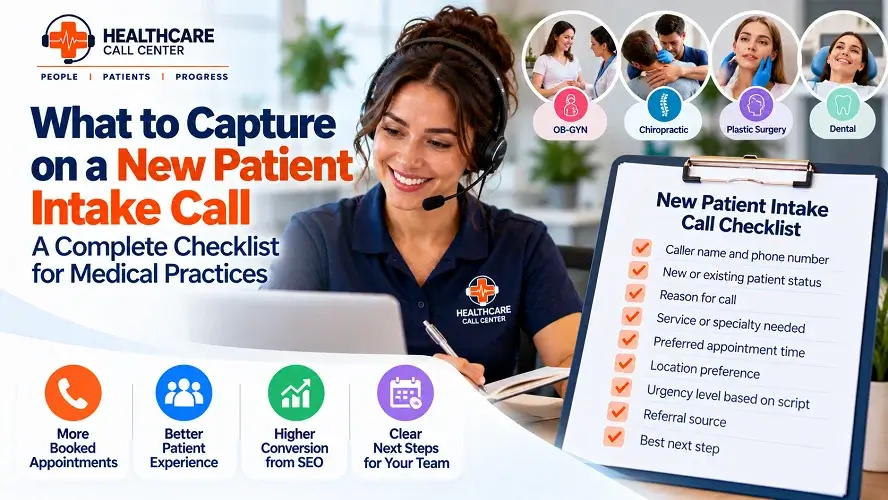
A strong new patient intake call should capture the caller’s name, phone number, new or existing patient status, reason for call, service needed, preferred appointment time, location preference, urgency level based on practice rules, referral source, and best next step.
The goal is not to ask too many questions. The goal is to capture enough information so the practice can move the patient toward the right appointment or follow-up.
New Patient Intake Call Checklist
| Information to Capture | Why It Matters |
| Caller name and phone number | Allows accurate follow-up |
| New or existing patient status | Helps route the call correctly |
| Reason for call | Shows what the patient needs |
| Service or specialty needed | Connects the patient to the right team |
| Preferred appointment time | Supports faster scheduling |
| Location preference | Important for multi-location practices |
| Urgency level based on script | Helps prioritize follow-up |
| Referral source | Helps track marketing and referral performance |
| Best next step | Makes the handoff actionable |
This checklist helps turn a phone call into a clear next step.
Why Name and Number Are Not Enough
Many answering services capture only basic details. That is better than a missed call, but it is not enough for strong conversion.
If a message only says “new patient called,” the front desk has to call back and start from zero. If the patient does not answer, the opportunity stalls.
A better intake note explains why the person called, what service they need, whether they are ready to book, and what should happen next.
How Intake Calls Support SEO and Conversion
SEO brings patients to the site. Intake calls help convert them.
A patient may read a service page, decide the practice looks credible, and call instead of filling out a form. If that call goes to voicemail, the SEO win may be lost. A medical answering service can help practices capture those calls, document the right information, and route the next step based on the practice’s workflow.
New patient intake is where content strategy, call handling, and patient experience meet.
Intake Calls for Fertility Clinics
Fertility calls are often emotionally sensitive. Patients may be nervous, private, or unsure what to ask.
A fertility intake workflow should capture the reason for the call, treatment interest, appointment timing, preferred contact method, and best next step. The tone should feel calm and respectful. A fertility clinic answering service can support this process with specialty-specific call handling and appointment request capture.
For fertility clinics, the call experience can influence whether the patient feels safe moving forward.
Intake Calls for OB-GYN Practices
OB-GYN intake calls may involve pregnancy questions, annual visits, postpartum concerns, provider preference, or women’s health needs.
The answering process should help the patient feel supported while capturing details needed for scheduling or callback. OB-GYN answering services can provide specialty-specific call handling while following the practice’s approved scripts and escalation rules.
A clear workflow also helps route calls correctly so patients are not left repeating sensitive information.
Intake Calls for Plastic Surgery Practices
Plastic surgery intake calls are often consultation-driven. A caller may ask about procedures, availability, pricing expectations, recovery, or next steps.
A strong intake call should capture procedure interest, timeline, preferred contact method, consultation request details, and best time to follow up.
These calls are high value. A missed or vague intake call can mean a lost consultation.
Intake Calls for Dental Practices
Dental intake calls often involve appointment availability, urgent pain, insurance questions, location preference, and scheduling needs.
New dental patients often want fast answers. If nobody answers, they may call another office.
A dental intake workflow should capture appointment intent and urgency clearly so the practice can respond quickly.
Intake Calls for Chiropractic Practices
Chiropractic callers may be looking for help with back or neck concerns, appointment availability, insurance questions, or a specific provider.
The chiropractic missed call intake workflow should capture the service needed, scheduling preference, and any practice-approved escalation information without asking agents to make clinical judgments.
What Makes Intake Calls Feel Human
A good intake call should not sound like an interrogation. It should feel like a helpful conversation.
The answering team should use natural language, listen carefully, and explain the next step. Patients should feel heard, not processed.
This matters because many healthcare calls are emotional. The patient may be worried, embarrassed, excited, or frustrated. A calm human response can make the practice feel more trustworthy.
What Intake Agents Should Not Do
A new patient intake workflow should help the practice capture information without turning the answering team into a clinical decision-maker. Agents should follow the practice’s approved script and escalation rules rather than diagnose symptoms, recommend treatment, or independently determine medical urgency.
The workflow should also limit the information collected to what is reasonably necessary for the purpose of the call. HIPAA’s minimum-necessary standard requires reasonable efforts to limit PHI use, disclosure, and requests to what is needed for the intended purpose. HHS.gov
For example, an agent may need a caller’s name, callback number, reason for the call, appointment preference, and other practice-approved details. They do not need to collect a complete medical history simply because the caller mentioned a symptom.
Common New Patient Intake Mistakes
Many practices lose new patient opportunities because the intake process is too thin or due to front desk staffing gaps. The call is answered, but the message does not contain enough information to move the patient forward.
Common mistakes include:
- Capturing only name and phone number
- Missing the reason for the visit
- Not asking whether the caller is new or existing
- Forgetting location preference
- Not documenting urgency or timing
- Missing the referral source
- Leaving follow-up ownership unclear
These mistakes create delays. The front desk has to call back, ask the same questions, and hope the patient still answers.
A Simple New Patient Intake Call Flow
1. Welcome the caller
Identify the practice and make the conversation feel personal.
2. Confirm basic information
Capture the caller’s name and best callback number.
3. Understand the reason for the call
Ask what the patient is looking for without unnecessarily probing into medical details.
4. Identify the service or specialty needed
Determine which appointment type, provider, location, or service the caller needs.
5. Discuss scheduling
Offer available appointment options according to the practice’s scheduling rules.
6. Follow approved escalation rules
If the caller describes an issue that requires provider review, follow the practice’s written escalation protocol.
7. Confirm the next step
End with a clear appointment, callback commitment, or other defined next step.
Intake Calls by Marketing Source
A patient from Google may behave differently from a patient referred by another provider. A patient from a plastic surgery page may be comparing consultations. A fertility patient may be looking for reassurance. A dental patient may want the first available appointment.
Capturing the referral source helps the practice understand which pages and channels are producing calls. It also helps marketing teams measure whether SEO content is turning into real patient inquiries.
This is why intake calls should include referral source when possible. It connects the phone conversation back to growth strategy.
How to Make Intake Feel Warm, Not Scripted
A strong intake workflow should guide the call without making the patient feel processed. Agents should ask clear questions in a natural order, listen for emotional context, and explain what happens next.
The tone matters. Healthcare decisions are personal. A patient who feels rushed may not trust the practice. A patient who feels heard is more likely to continue toward scheduling.
The best intake calls combine structure and empathy. The structure protects the practice. The empathy protects the patient experience.
Implementation Checklist for the Practice
To improve new patient intake, the practice should create a short intake script that feels natural. The script should capture the caller’s name, phone number, patient status, reason for visit, preferred appointment time, location preference, urgency based on practice rules, referral source, and next step.
The team should also decide which details are required and which are optional. Too many questions can make the call feel stiff. Too few questions can leave the front desk without enough information. The best intake process balances warmth and structure.
Finally, the practice should review intake outcomes.
How many new patient calls came in?
How many turned into appointments?
Which service pages or campaigns produced the calls?
These answers help connect SEO, patient experience, and scheduling performance.
Reader Takeaway
The main takeaway is simple: the call is not finished when someone answers. The call is finished when the right information reaches the right person, and the patient knows what happens next.
That is the difference between basic phone coverage and a useful patient communication workflow. For practices trying to grow through SEO, service pages, and local visibility, this final step matters because it turns search demand into real appointment opportunities.
The content should stay concise, but it should not skip the business reason behind the workflow. The reader needs to understand both the patient experience problem and the revenue impact. That balance makes the article more useful, more persuasive, and more likely to support rankings across Google, SGE, and LLM-driven answers.
Final Recommendation
New patient intake calls should be treated as conversion opportunities, not routine messages.
The right workflow captures enough information to move the patient forward, while keeping the tone warm and human. It helps the practice respond faster, route calls correctly, and understand which marketing channels are producing new patient inquiries.
Healthcare Call Center helps practices answer new patient calls with human support, clear scripts, and specialty-aware workflows.
Book a free consultation to review your new patient intake call flow.
Frequently Asked Questions
What is a new patient intake call?
A new patient intake call is the first call where a potential patient shares why they are contacting the practice and what next step they need.
What should a healthcare practice capture during intake?
Caller name, phone number, patient status, reason for call, service needed, preferred time, location preference, urgency, referral source, and next step.
Why are intake calls important for conversion?
They are often the first human interaction with the practice. A strong call can move the patient toward booking, while a missed or rushed call can lose the opportunity.
Can an answering service help with intake calls?
Yes. A healthcare-focused answering service can capture intake details and route them based on practice-approved workflows.
Which specialties benefit most from better intake calls?
Fertility, OB-GYN, plastic surgery, dental, and multi-location practices often benefit because each new patient call can be high value.