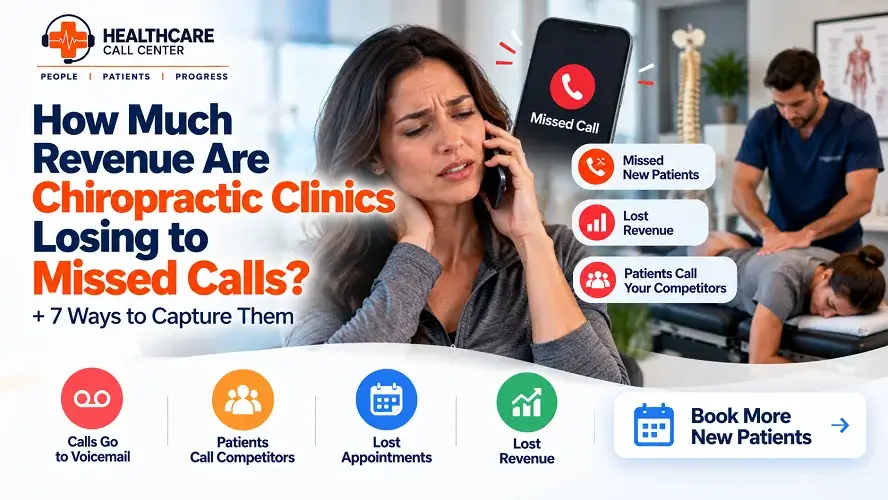
A new patient calls a chiropractic clinic in pain. Nobody answers. The front desk is at lunch, the doctor is mid-adjustment, or it’s 7 p.m. on a Tuesday. The caller doesn’t leave a voicemail. They don’t call back tomorrow. They dial the next clinic on Google, and whoever answers first gets the appointment.
That scenario plays out every day in practices that provide excellent care. The problem is rarely the medicine. It’s the phone. This blog explains where chiropractic clinics lose calls, what those calls are actually worth, and seven practical ways to capture them without hiring another front-desk person.
Quick Answer
Most chiropractic clinics lose new patients to missed calls, not bad care. Industry research consistently shows most callers who reach voicemail hang up without leaving a message and call the next clinic instead. Capturing them comes down to three things: answer every call live (or return it within minutes), cover evenings and weekends when pain flares up, and make booking effortless once the caller reaches a human.
What Happens When a Chiropractic Patient Call Goes Unanswered?
Chiropractic patients are usually calling because something hurts right now. They are not researching for next month. They want the earliest available appointment. That urgency changes their behavior in three predictable ways and creates opportunities for dedicated chiropractic call center services.
First, they rarely leave voicemails. Industry studies have repeatedly found that a large majority of callers who reach a voicemail box hang up without leaving a message. In a 2026 consumer survey by CallHero, 80% of callers who reached voicemail did not leave one. Second, many do not wait for a callback the same day. They move to the next clinic on the search results page. Third, the first practice that answers live usually wins the booking, regardless of reviews.
For the clinic, this means every unanswered ring is not a neutral event. It is a new-patient appointment quietly handed to a competitor, plus the referral and care-plan revenue that would have followed it.
Why Chiropractic Calls Are Different From Other Medical Calls
Chiropractic calls behave differently from general medical calls, and clinics that understand this capture more of them.
They are pain-driven. Most new patients call because of back pain, a neck issue, a sports injury, or an accident- problems that worsen without care and motivate same-week, sometimes same-day, action.
They are comparison calls. Because chiropractic care is often cash-pay or partially covered, new patients frequently call two or three clinics in a row asking the same questions: how much is the first visit, do you take my insurance, how soon can I come in? The clinic that answers with confidence and books them on the spot usually ends the shopping.
They are high lifetime value. A new chiropractic patient is not a one-visit relationship. Typical care plans run 6 to 12 visits, and a retained patient often returns for maintenance care. Depending on your pricing, a single captured new patient is commonly worth $1,200 to $3,000 or more over their first year.
Put those together, and the phone stops being an administrative task. It becomes the front door to your revenue.
The Real Cost of Missed Calls at a Chiropractic Clinic (With the Math)
Let’s put conservative numbers on it. Suppose your clinic misses 10 new-patient calls in a week. Across lunch breaks, busy treatment blocks, evenings, and weekends, that is a very normal number for a single-location clinic.
Not every missed caller would have booked. Industry benchmarks suggest roughly 30% of missed medical callers intended to schedule. So:
- 10 missed calls per week x 30% intent = 3 lost new patients per week
- 3 per week x 4.3 weeks = about 13 lost new patients per month
- 13 patients x $1,500 average first-year value = roughly $19,500 in missed monthly revenue
Run that annually, and the clinic is quietly losing six figures of capacity it already paid to generate through ads, referrals, and rankings. If you want clinic-specific numbers, HCC’s missed-call revenue calculator lets you plug in your own call volume and patient value in about two minutes.
Illustrative monthly cost of missed calls (single-location chiropractic clinic)
| Scenario | Missed calls/week | Intended to book | Patients lost/mo | Value lost/mo ($1,500 LTV) |
| Quiet phone, small clinic | 5 | 30% | 6 to 7 | about $9,750 |
| Typical single location | 10 | 30% | 13 | about $19,500 |
| Busy clinic, 2 providers | 20 | 30% | 26 | about $39,000 |
When Chiropractic Clinics Miss the Most Calls
Missed calls are not random. In chiropractic clinics, they cluster in five predictable windows:
Mid-treatment hours: When the doctor is hands-on with a patient, the front desk is often checking patients in and out alone. Second and third calls ring out.
Lunch coverage gaps: A closed desk between 12 and 1 p.m. is standard in many clinics, and convenient for patients calling on their own lunch break.
Evening Hours Coverage: Back pain typically flares after work. Calls between 5 and 8 p.m. are common and almost always hit an empty office.
Weekends Call Coverage: Weekend sports injuries and Saturday-morning flare-ups generate high-intent calls that reach voicemail until Monday, by which point the caller has already booked elsewhere.
When the phone is simply busy. Appointment confirmations, insurance calls, and walk-ins pull the front desk away from ringing lines.
None of these are staffing failures. They are structural gaps, and structural gaps need a system, not a lecture about answering faster.
What This Means for Solo and Multi-Provider Clinics
The fix looks slightly different depending on the size of the clinic.
A solo provider should prioritize the two windows with the highest intent: treatment blocks and after-hours. Overflow answering during hands-on hours, plus live evening coverage, covers most of the leakage without touching the front desk structure.
A two- or three-provider clinic usually has enough call volume that partial coverage stops working. At that size, the practice benefits from defined routing rules: new-patient calls always answered live, scheduling handled in the practice system, and pain escalations routed to the on-call doctor per written protocol.
Multi-location practices should apply one standard across locations, so a caller gets the same experience on every line, and the owners get clean call data they can actually compare.
7 Ways to Capture Missed Calls (Without Hiring More Front Desk Staff)
1. Set a five-minute callback rule
When a call is missed, the clock starts. Returning a new-patient call within five minutes dramatically improves the chance the patient has not yet booked with a competitor. Make the rule explicit, put it in writing, and track it.
2. Add overflow answering during treatment blocks
Your busiest treatment hours are your busiest call hours. An overflow service answers the calls your front desk cannot reach in real time, so rings never go to voicemail mid-adjustment.
3. Put live humans on evenings, weekends, and holidays
Pain does not keep office hours, and neither do the callers ready to book. Live after-hours chiropractic answering converts those calls while the intent is hot, and hands the schedule to you full for Monday morning.
4. Send an automatic text-back within 60 seconds
A missed-call text-back (“Sorry we missed you. Book here, or reply, and we’ll call you right back.”) recovers a meaningful share of callers who won’t leave voicemails. It buys time for a human callback.
5. Track calls with dedicated numbers
You cannot fix what you don’t measure. Call tracking on your Google Business Profile, website, and ads shows exactly how many calls each source produces, and how many are slipping through.
6. Make the callback path effortless
When someone does reach voicemail, the greeting should offer a text-to-book link or direct line to a live service, not a dead-end recording. Reduce the steps between “I called” and “I’m booked.”
7. Script the front desk for capture, not just service
New-patient calls need different handling than refill or billing calls: capture the name and number first, offer two appointment times, and never end a new-patient call without a booked visit or a firm callback commitment.
How an Answering Service for Chiropractors Works
A dedicated chiropractic answering service slots into these gaps. Calls that your front desk cannot reach, during treatment blocks, lunch, evenings, and weekends, are answered live, in your clinic’s name, by agents trained on chiropractic call flows: new-patient intake, insurance questions, reschedules, and pain escalations that need the on-call doctor.
- The best services do more than take messages: They book directly into your scheduling system, route urgent calls the way you define, and log every interaction so nothing falls through.
- HIPAA compliance should be non-negotiable: a signed Business Associate Agreement, trained agents, and documented handling of protected health information.
- HCC’s approach is built for exactly this: 100% US-based agents, trained stay-at-home moms whom American patients find easy to trust, specialty-trained on chiropractic call flows, with a 90%+ answer-rate guarantee.
It functions like a front desk that never goes to lunch and always ready as your call cneter services for chiropractic clinics.
Human vs AI for Chiropractic Calls: An Honest Take
AI phone tools have improved, and they handle simple tasks well, after-hours FAQs, basic reminders, and after-hours message capture. For a solo clinic on a tight budget, an AI layer is better than voicemail.
But pain calls are emotional calls. Anxious patients describe symptoms, ask follow-ups, and want reassurance that a real person will see them soon, and that is where AI-only systems lose bookings that a trained human would have saved. The practical answer for most chiropractic clinics is a hybrid: live humans on every patient call, with automation handling reminders and simple routing underneath.
What to Look for in a Chiropractic Answering Provider (Checklist)
Before signing with any provider, verify:
- Chiropractic-specific call scripts, not generic medical scripts
- Live booking into your practice management software (ChiroTouch, Jane, etc.)
- A signed HIPAA Business Associate Agreement
- A published answer-rate guarantee. Ask for the actual number.
- 100% US-based agents patients can understand on the first call
- True after-hours, weekend, and holiday live coverage
- Call logs and recordings you can review monthly
A provider that hesitates on any of these is telling you something.
Ready to Stop Losing Patients to Voicemail?
Want to know what missed calls are actually costing your clinic?
Run your numbers in two minutes with HCC’s free missed-call revenue calculator or book a 15-minute discovery call, and we’ll walk through your call flow together.
Frequently Asked Questions
How many patients do chiropractors lose from missed calls?
It depends on volume, but the math adds up quickly. A clinic missing 10 calls a week, with about 30% of those callers intending to book, loses roughly 13 new patients a month, often $15,000 to $20,000 in first-year value at typical care-plan pricing.
What should a chiropractor do when they can’t answer the phone?
Layer coverage: overflow answering during treatment hours, live after-hours and weekend service, and an automatic missed-call text-back. The goal is that no patient call ever ends in a dead-end voicemail.
Do answering services book directly into chiropractic software?
Quality providers do. Ask specifically about integration with your system (ChiroTouch, Jane, Genesis, or others), and request a demo call where the agent books a test appointment.
Is an answering service HIPAA compliant for chiropractic clinics?
It must be. Require a signed Business Associate Agreement, confirm agents receive HIPAA training, and ask how protected health information is stored and transmitted. Any hesitation is a red flag.
How fast should a chiropractor return a missed patient call?
Within five minutes whenever possible. New-patient callers frequently book with the next clinic on their list while waiting, so speed is the difference between a recovered patient and a lost one.