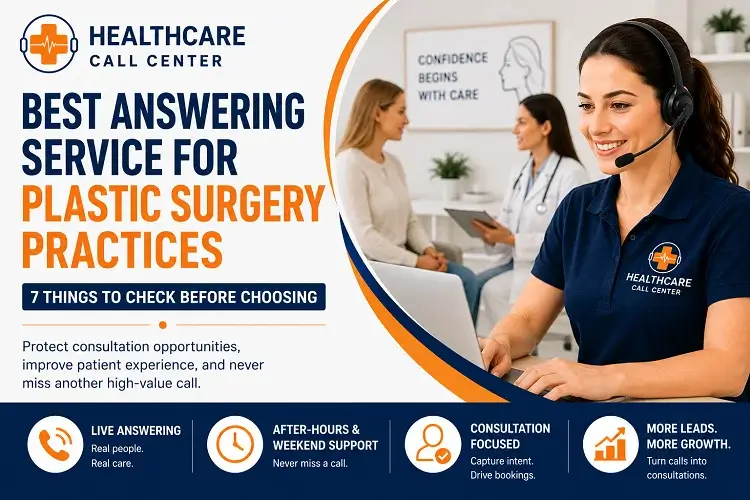
Plastic surgery patients rarely contact only one practice. They compare websites, reviews, photos, pricing signals, and how quickly someone responds. That means your answering service is not just taking messages. It may be the first human touchpoint between a high-value consultation lead and your practice.
If your practice is comparing providers, explore our 24/7 plastic surgery answering service to understand how specialized call coverage protects consultation opportunities.
Why Do Plastic Surgery Calls Need A Different Standard
Plastic surgery leads are often elective, competitive, and high-intent. A caller may be ready to ask about a consultation, financing, recovery, availability, or a specific procedure. If they hit voicemail or receive a cold response, they may move to the next surgeon.
A plastic surgery answering service should be built around speed, warmth, and consultation momentum.
1. Check whether they understand the consultation intent
A generic answering service may take a name and number. That is not enough for plastic surgery. Your team needs to know what procedure the caller is interested in, whether they are looking for a consultation, what timeline they have in mind, and how urgent the follow-up should be. The right provider captures useful context without making the caller feel interrogated.
2. Look for warm, polished call handling
Plastic surgery is a trust-based decision. The caller may feel nervous, excited, embarrassed, or unsure. The person answering should sound polished and calm. They should create confidence, not friction. A rushed or robotic call can damage the premium feel of your practice before the patient ever walks in.
3. Ask how quickly leads are routed
Speed matters in cosmetic surgery. If your practice follows up too late, the patient may have already booked a consultation elsewhere. Ask how the answering service sends call details, who receives them, and how urgent consultation leads are flagged.
4. Confirm they can support busy hours and after-hours demand
Many cosmetic patients call during lunch, after work, evenings, or weekends. If your front desk is busy with in-office patients, the phone can become a lead leak. A strong plastic surgery call center helps cover those gaps so interested patients are not forced into voicemail.
5. Make sure they do not overpromise on your behalf
Your answering service should not quote medical advice, guarantee outcomes, or speak beyond approved practice information. The goal is to guide the caller toward the next step, not to replace the consultation. This is especially important for elective procedures where expectations must be handled carefully.
6. Ask about reporting and missed-call visibility
You should know whether call coverage is protecting opportunities. Look for reporting that helps you understand call volume, captured inquiries, consultation opportunities, and patterns in patient questions. This helps the practice improve both marketing and front-desk operations.
7. Evaluate how well they fit your brand
A premium plastic surgery practice cannot sound like a generic call center. The answering team should adapt to your tone, patient experience, and service standards. Patients should feel like they reached your practice, not an outsourced script.
Questions to ask before choosing a provider
Ask: Do you handle cosmetic surgery calls? How do you identify consultation intent? How do you route urgent leads? Can scripts be customized? How do you protect sensitive information? What reports will we receive? How do you help prevent lost consultation opportunities?
The Cost of One Missed Plastic Surgery Consultation Call
Plastic surgery calls are not low-value inquiries. In many cases, one missed consultation call can represent thousands of dollars in potential revenue. A caller asking about breast augmentation, rhinoplasty, liposuction, or body contouring is often already deep into the decision-making process.
Most practices underestimate how much revenue is lost through missed patient calls. They have researched options, compared before-and-after galleries, read reviews, and narrowed down their choices.
When that patient finally calls your practice, speed matters.
If the call reaches voicemail or the response feels slow, the consultation opportunity may disappear within minutes. Unlike general healthcare calls, cosmetic leads are often comparison shopping in real time. They may contact multiple practices in one afternoon and move forward with the first team that feels responsive, professional, and easy to reach.
That is why missed calls in plastic surgery are more than operational issues. They directly impact consultation volume, procedure bookings, and revenue growth.
Common Mistakes Plastic Surgery Practices Make with Call Handling
Many plastic surgery practices invest heavily in marketing but overlook what happens after the phone rings. Paid ads, SEO, social media, and referral campaigns all aim to generate consultation inquiries. But if the call experience is weak, that marketing investment loses value quickly.
Common mistakes include:
- Relying too heavily on voicemail during lunch or after hours
- Using generic answering services with no understanding of the cosmetic industry
- Delayed callback times for new consultation inquiries
- Poor documentation of procedure interest and caller intent
- Inconsistent call handling across the front desk staff
Even small call-handling gaps can create major leakage in a highly competitive market. The strongest practices treat call coverage as part of the patient experience, not just front-desk support.
A well-trained specialized answering service helps reduce those gaps and ensures that every inquiry receives a professional first response.
Why does a Healthcare Call Center fit plastic surgery practices
Healthcare Call Center helps plastic surgery practices protect consultation opportunities with real human call coverage, warm patient handling, and clear handoffs. The goal is to help your practice respond like a premium brand even when your front desk is busy.
Final Thoughts
The right plastic surgery answering service should not feel like a generic message-taking service. It should help protect patient trust, capture real appointment intent, and give your team clearer follow-up information.
If your practice is ready to improve call coverage, Healthcare Call Center can help you understand where calls may be slipping through and what better coverage could look like.
Frequently Asked Questions
What is a plastic surgery answering service?
A plastic surgery answering service provides call coverage for cosmetic and plastic surgery practices, helping answer inquiries, capture consultation intent, and route information to the practice.
Why do plastic surgery practices need specialized answering services?
Plastic surgery leads are often high-value and involve comparison shopping. Specialized call coverage helps protect consultation opportunities and improves the first human interaction with the practice.
Can an answering service help book more plastic surgery consultations?
It can help protect more consultation opportunities by answering calls, capturing caller intent, and giving the practice clear follow-up information.
What should plastic surgeons look for in an answering service?
They should look for polished tone, fast handoffs, consultation-focused call capture, privacy-aware workflows, and reporting on call opportunities.