New patient inquiries are the primary focus of most dental practices. To attract more patients, clinics invest heavily in SEO, Google Ads, social media marketing, referral campaigns, website optimization, and local marketing strategies designed to increase visibility and generate more appointment inquiries.
However, many practices still overlook what happens after the phone rings. Delayed callbacks, missed calls, weak follow-up, and inconsistent communication often cause patients to leave before an appointment is ever scheduled.
The loss of new patients, high-value procedures, long-term patient retention, and opportunities for referrals and revenue occurs during that gap, often without practice owners being aware of them occurring at all.
Why Dental Clinics Lose Patients Before Appointments
Dental clinics often lose patients before appointments because of missed calls, delayed callbacks, weak follow-up systems, poor communication, and slow response times during the inquiry stage.
The Hidden Gap Between Inquiry and Booking
Many dental clinics think that if a potential patient calls their office, they’ve completed the most difficult task. However, without a reliable call center for dental clinics, many inquiries are still lost before they turn into scheduled appointments. In fact, after patients inquire about dental services is one of the highest times for patients to drop from your inquiry to schedule process.
Patients do not automatically move from inquiry to appointment.
Between the following emotions and operational elements of being a patient, there is a gap.
- Interest
- Trust
- Schedule
- Commitment
Why Dental Patients Hesitate Before Booking
Many people have dental anxiety.
They may feel:
- Degree of fear in relation to experiencing pain
- Embarrassment in relation to their dental problem
- Concerns about the cost
- Fear as a result of their previous dental experience
- Some uncertainty about their dental treatment needed.
Delayed Callbacks Lose Patients Faster Than Clinics Realize
Dental patient conversion is heavily dependent upon speed. Patients have grown accustomed to receiving responses quickly.
When a potential patient calls your office and they have waited for several hours or until the next day to receive a call back, trust begins to decline instantly.
This will be a common practice with respect to:
- Cosmetic Dentistry
- Emergency Dentistry
- Invisalign consultations
- Dental Implants
- Elective Procedures.
A delayed call back creates uncertainty for the potential patient.
Missed Calls Often Mean Lost Revenue
Many dental clinics do not appreciate how much each incoming phone call is worth.
Each missed call could represent:
- A potential new patient
- An inquiry about a cosmetic procedure
- An emergency appointment
- A long-term patient relationship
- Many thousands of dollars for future treatment
Patients do not wait around for a call back like they used to. They go to the next practice that they can get through to.
Busy offices miss a lot of calls because staff are doing:
- Scheduling patients
- Answering insurance questions
- Making scheduling changes
- Clinical coordination with dental staff
- General office administration
Many patient inquiries are lost because communication systems are inconsistent or overloaded.
When a patient calls you, and the call is not answered, it will almost always be a revenue loss to you without ever letting you know that it happened.
Poor Follow-Up Hurts Dental Conversion Rates
Many clinics have only one response, then nothing else happens. However, converting a patient often requires multiple follow-ups, as patients considering veneers, implants, or cosmetic dentistry may need time to commit.
And just because they aren’t ready to book at the time of inquiry doesn’t mean the lead is lost!
Unfortunately, many inquiries completely go by the wayside due to a lack of organized follow-up systems.
Patients may get distracted, feel uncertain or forget to call back and schedule an appointment, feel nervous again, or choose to go to another clinic after a few months.
Consistent and caring follow-ups keep patients engaged.
Good follow-up communication includes friendly reminders, scheduling assistance, answering remaining questions, and helping patients feel comfortable about the next step.
Finally, patients must know that follow-up does not constitute pressure; instead, it provides patient support.
Dental Patients Judge Clinics Before Visiting
Before patients even walk into a dental office, they have already started to form opinions about a clinic. The first phone call to the clinic sets expectations for the patients very quickly.
Patients observe:
- Tone of voice
- Wait times, friendliness, patience
- Professionalism/Organization, and clarity of communication
These types of things quickly establish a level of trust.
When a patient has a caring, organized conversation with the dental office staff, it is much easier for them to feel comfortable about proceeding with treatment.
On the other hand, if the patient experiences an interaction where they feel rushed and unorganized, they are left with feelings of doubt.
This is important because for many patients, there is emotional resistance to receiving dental care. Effective communication lessens the level of that resistance.
Why Human Communication Matters in Dental Practices
Emotional rather than transactional communication occurs during dentistry.
Patients do not make appointments based on a transactional basis; there are many patients who are feeling anxious, embarrassed, confused, and even overwhelmed.
If patients receive patient-centered communications, then they will feel like:
- Heard
- Comfortable
- Reassured
- Supported
- Less Nervous
Providing patients with emotional comfort increases the number of patients who will change from being anxious to converted to dental patients.
Patients respond more positively when communication feels:
- Warm
- Patient-centered
- Professional
- Understanding
- Genuine
This is also why dental call centers that are human-based continue to outperform fully automated systems at many dental practices.
Technology creates efficiencies, while human interaction builds trust.
The Inquiry-to-Appointment Gap Is Costing Clinics Revenue
While there are many marketing efforts aimed at leading patients into a practice, often they are not taken further once an inquiry is made; that creates a significant business challenge for a practice. For example, even though a marketing campaign may create:
- Website Traffic
- Phone Calls
- Online Forms
- Consultation Requests.
The opportunity to book a new patient may be lost due to the lack of a good communication system.
Thus, as a result of poor lead handling, practices can spend a lot of money on marketing and lose potential patients during the conversion process.
The majority of new patients’ revenue will be lost before they ever set foot in the office. Typically, the problem is not in lead generation. The problem is in lead handling.
How Dental Call Centers Improve Patient Conversion
A dental practice can close the gap between inquiry and appointment through a professional dental call center.
The typical call center provides support for front desk staff who are overwhelmed.
The call center provides support for:
- Live call answering
- Appointment scheduling
- Inquiry handling
- Follow-up communications
- Overflow calls
- After-hours support
- Patient reassurance
This creates a more responsive and consistent patient experience.
- Patients receive quicker acknowledgment of their inquiries.
- Patient inquiries receive a faster response.
- Scheduling appointments is made easier.
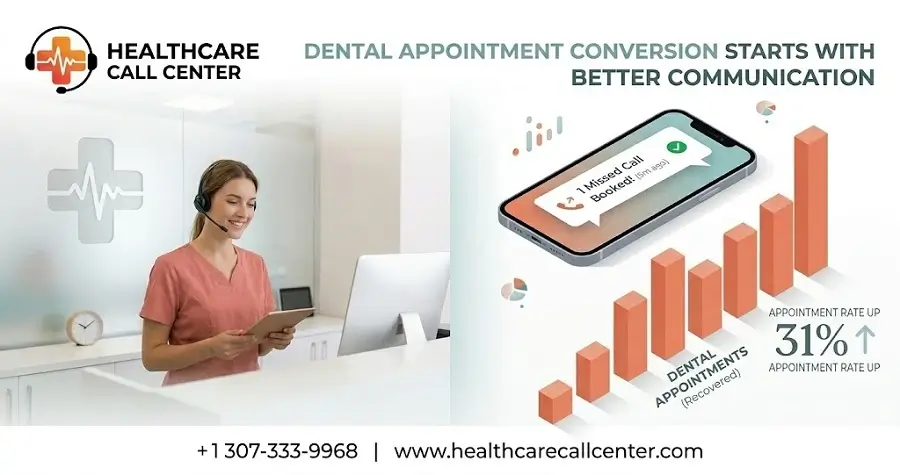
As a result of this smooth patient experience, the conversion rate of inquiries to appointments tends to increase.
After-Hours Communication Matters More Than Ever
There is significant contact from individuals with dental clinics outside the normal operating hours of the practice.
People do a lot of research about dentists at night, on weekends, after work, and/or during an emergency. If these inquiries are not answered, the clinic loses out on potential new patients.
Using after-hours communication support allows a dental practice to remain accessible while the office is closed.
Ultimately leading to:
- A better patient experiences
- More responsive to patients
- Greater patient trust
- Increased opportunity to make appointments
Patients appreciate being able to communicate with clinics when they are open or closed and receiving timely responses.
Why Empathy Improves Dental Appointment Scheduling
When patients have a positive emotional experience, they are more likely to book appointments with health care providers. Empathy reduces uncertainty and contributes to a good emotional experience for patients.
Examples of patients who might require reassurance include:
- A nervous patient needing reassurance about pain
- An embarrassed patient who has a dental problem needing patience from their provider
- A parent bringing in a child for treatment needs calming communication from their provider
All of these situations require the application of emotional intelligence. Patients respond more positively to human-like interactions than scripted ones.
This principle is particularly true of patients who are seeking treatment for:
- Cosmetic dentistry
- Oral surgery consultations
- Pediatric dentistry
- Emergency care for dentists
- Sedation dentistry
The quality of communication that the dental provider delivers will directly impact the success of booking an appointment.
The Best Dental Practices Treat Communication as Part of Patient Care
By understanding the importance of communicating with patients, dental clinics can dramatically improve their overall patient experience; this includes evaluating various factors like responsiveness, professionalism, friendliness, organization, communication skills, and many other critical components of the patient experience, before treatment commences.
Surprisingly, dental clinics that emphasize communication typically experience improved appointment conversion rates, increased patient satisfaction, enhanced online reviews, increased retention rates and increased referral growth.
Why Healthcare Call Center Support Makes a Difference
At HCC, communicating with patients goes beyond answering calls or texts.
When you engage a dental inquiry at HCC, we provide:
- Professional scheduling assistance
- Confident and compassionate care
- Prompt responses
- Availability 24 hours a day, 7 days a week
- US Agents
Patients who contact dental offices generally require both support with scheduling their appointment, but typically will also require reassurance.
Communication using a human-centered approach enhances the trust created between the patient and the provider during that first interaction.
FAQs About Dental Patient Conversion
Why do dental clinics lose patients before appointments?
Many clinics lose patients because of delayed callbacks, missed calls, poor follow-up, slow scheduling, and weak communication during the inquiry stage.
What is dental patient conversion?
Dental patient conversion refers to turning inquiries, calls, or consultation requests into scheduled and completed appointments.
Why are fast callbacks important for dental practices?
Fast callbacks improve patient trust, reduce hesitation, and prevent patients from contacting competing dental offices.
How does communication affect dental appointment scheduling?
Good communication helps patients feel comfortable, informed, and reassured, making them more likely to schedule appointments.
Why do patients hesitate before booking dental appointments?
Patients may feel anxious about pain, cost, embarrassment, treatment uncertainty, or past dental experiences.
What does a dental call center do?
A dental call center helps manage patient calls, appointment scheduling, follow-up communication, and after-hours support for dental practices.
How does follow-up improve dental patient conversion?
Follow-up helps keep interested patients engaged, answers remaining questions, and encourages scheduling decisions.
Why is empathy important in dental communication?
Empathy reduces anxiety, builds trust, and helps patients feel more comfortable discussing dental concerns.
Communication Directly Impacts Dental Practice Growth
Strong communication systems help dental clinics improve patient trust, increase appointment conversion rates, reduce missed opportunities, and create more consistent patient experiences from the very first inquiry.
Conclusion
Attraction of new patient inquiries is typically the primary focus for many dental practices. Unfortunately, many practices lose patients before they ever have an appointment. Missed calls, delayed call-backs, poor follow-ups and rushed communication consistently contribute to reducing conversion rates on a daily basis.
In today’s dental practice, the quality of communication has a direct impact on generating revenue growth. In addition to scheduling assistance, patients want to feel reassured, adequately responded to and have human interaction that makes them feel good about the next step in their health and well-being. This is why the importance of strong patient communication for dental practices is so very important.
Practices that prioritize fast, empathetic, and consistent communication are often far more successful at converting inquiries into long-term patient relationships.
Often, the difference between losing a potential patient and scheduling them for an appointment can be attributed to one single conversation.