Dental practices do not lose patient trust only inside the operatory. They can lose it before a patient ever sits in the chair. A parent calling about a child with tooth pain, a working adult trying to book a crown consultation during lunch, or a new patient comparing offices after moving to the area is usually looking for one simple thing: a real person who can answer the phone, understand the request, and help them take the next step.
That is why 24-hour dental call center services are becoming more important for practices that still depend on voicemail, callbacks, or overloaded front desk teams. Voicemail may feel like a safety net, but patients do not always treat it that way. Many callers hang up, search for another dental office, or delay care because the first point of contact did not feel responsive. A dental answering service gives practices a more reliable way to answer live calls, capture appointment requests, route urgent messages, and support patient communication when the front desk is busy or the office is closed.
This article explains why dental practices are moving from voicemail to live answering, what dental call center services should actually include, and how to choose a support model that improves patient experience without making the practice feel impersonal.
Why voicemail is weak for dental patient calls
Voicemail works when a caller is patient, comfortable leaving details, and confident someone will respond quickly. Dental callers often do not fit that pattern. They may be anxious, in pain, price-shopping, embarrassed about a dental issue, or trying to coordinate a visit around work and school schedules. If they reach voicemail, the question is not just whether they leave a message. The bigger question is whether they still feel confident in the practice.
Dental care is personal. Patients want to know that someone heard them. A live answering experience can immediately acknowledge the concern, collect the right information, explain the next step, and help the caller feel that the practice is organized. Voicemail cannot reassure a patient. It cannot clarify whether the concern is urgent. It cannot capture a preferred appointment window. It cannot answer basic location or scheduling questions. It simply asks the patient to wait.
That delay matters most when the patient is new. Existing patients may leave a message because they already trust the office. New patients have no reason to wait if another dental office answers live. For practices investing in SEO, Google Ads, referrals, or local visibility, the call experience after the click is just as important as the traffic source itself.
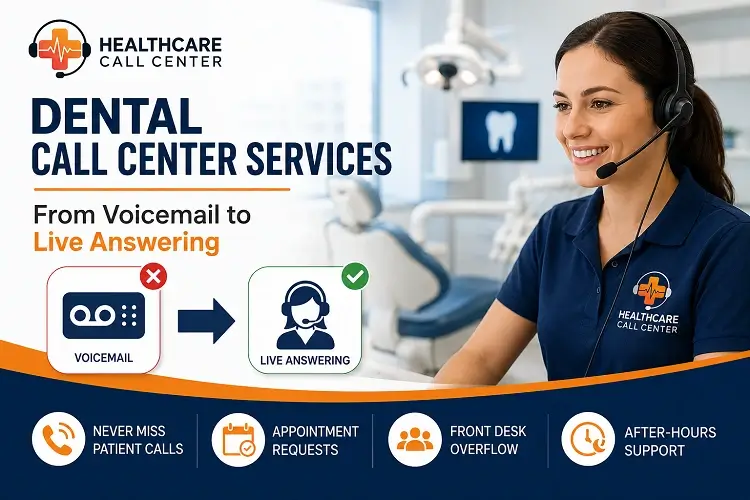
Voicemail Vs Live Dental Call Answering
| Voicemail | Live Dental Answering |
| Patient waits | Patient speaks to a live person |
| Missed appointment requests | Appointment requests captured |
| Limited information | Structured intake |
| No urgency assessment | Practice-approved escalation |
| No reassurance | Immediate human interaction |
What Dental Call Center Services Should Include
A good dental call center service is not just a generic receptionist script with the word dental added. Dental callers have specific needs, and the answering process should reflect that. At minimum, dental call center services should support live call answering, new patient intake, appointment request capture, after-hours message handling, emergency routing, insurance question routing, and front desk overflow during busy hours.
The goal is not to replace the dental team. It is to make sure every patient call is acknowledged while giving in-office staff more time to focus on patients already in the practice. At the same time, it protects the front desk from call overload and helps ensure patients are not left waiting while staff assists patients in the office.
The best dental answering service for Texas or any city should also understand the difference between routine and time-sensitive requests. A chipped tooth, severe pain, swelling, post-procedure concern, or question after oral surgery needs a different workflow than a cleaning request. The call center does not diagnose, but it can follow practice-approved escalation rules so the right message reaches the right person.
A Quality Dental Call Center Should Include
- Live U.S.-based answering
- New patient intake
- Appointment request capture
- After-hours support
- Front desk overflow
- Emergency message routing
- Practice-specific scripts
- HIPAA-conscious workflows
- Follow guidelines of ADA (American Dental Association)
When Dental Practices Benefit Most from Live Answering
Live answering can improve several moments in the patient journey. The first is new patient acquisition. A caller who reaches a person is easier to convert into a scheduled visit than a caller who reaches voicemail. The second is front desk overflow. Dental front desks are asked to greet patients, verify details, collect forms, explain next steps, coordinate providers, and answer phones at the same time. During peak hours, even a strong team can miss calls.
The third moment is after-hours coverage. Dental concerns do not always happen between 9 and 5. A patient may call after work, over the weekend, or after a procedure. An after-hours dental answering service can capture the message and route urgent issues according to the practice’s protocol. The fourth moment is lunch breaks and staffing gaps. If the entire patient experience depends on one or two people being available at all times, missed calls become predictable.
Dental practices should think of live answering as capacity support. It gives the front desk more room to focus on patients already in the office while still protecting calls from patients trying to get in.
How Live Answering Supports SEO And Paid Traffic
Ranking for dental call center services, dental answering service, or call center for dentists is useful only if the practice can turn interest into conversations. The same principle applies to a dental office trying to rank locally for treatment terms. A search visitor who clicks, calls, and reaches voicemail may never become a patient. That makes call handling a conversion factor, even though it does not appear directly inside a keyword report.
For practices running Google Ads or investing in local SEO, every call should be treated like a conversion opportunity. Live answering helps protect that investment by making sure the call is acknowledged quickly. It also creates cleaner intake data for the practice. Instead of a voicemail that says, “Hi, call me back,” the team can receive a structured message with the caller’s reason, preferred time, and urgency.
How to Choose the Right Dental Answering Service
Before choosing a dental answering service, practice leaders should ask how the provider handles training, scripting, escalation, secure message delivery, appointment request capture, and after-hours workflows. The provider should be able to work from practice-approved instructions rather than improvising clinical answers. Dental answering should be empathetic, but it must also stay within safe boundaries.
Ask whether humans answer calls, whether the team can follow specialty-specific scripts, how urgent messages are identified, how messages are delivered, and how changes to scripts are managed. If the service will collect patient information, ask how patient privacy is protected and whether the workflow aligns with HIPAA-conscious communication standards. The right provider should make the practice feel more organized, not less in control.
Also ask how the service works during high-volume times. A practice may not need the same support all day. Some offices need help during lunch, early morning, late afternoon, evenings, weekends, campaign periods, or staff shortages. Flexible coverage matters because the goal is to support the practice’s real call patterns.
Signs Your Practice May Need a Dental Call Center
- Calls frequently go to voicemail
- Staff struggle during peak hours
- New patient calls are missed
- Patients complain about callbacks
- After-hours messages pile up
Why Dental Practices Choose Healthcare Call Center (HCC)
Healthcare Call Center (HCC) is a HIPAA-compliant medical call center that specializes in healthcare communication, helping dental practices answer patient calls, capture appointment requests, manage front desk overflow, and support after-hours communication with trained live agents.
The strongest use case is not simply answering every phone call. It is supporting the moments when the dental office is most vulnerable to missed opportunities: new patient calls, overflow during busy front desk hours, after-hours concerns, and appointment requests that need a fast response. When live answering is set up with the right scripts and escalation rules, it becomes an extension of the practice’s patient communication system.
Dental practices do not need more voicemail. They need a call experience that feels professional, calm, and responsive. That is the real reason more practices are switching from voicemail to live answering.
Ready to Improve Your Dental Patient Call Experience?
Missed calls can quickly become missed appointments and lost revenue. If your practice is struggling with voicemail, front desk overload, or after-hours patient calls, Healthcare Call Center can help.
Book a free consultation to see how our dental call center services can support your practice.
👉 Schedule a Free Consultation
Final Takeaway For Practice Leaders
The right dental call center services strategy is not about adding another vendor for the sake of it. It is about protecting patient access at the exact moments when communication usually breaks down. Healthcare practices work hard to earn patient trust through clinical care, but that trust can weaken when callers cannot reach anyone, cannot explain what they need, or do not know what happens next.
A better call experience gives the practice more control. Patients reach a person. Messages arrive with context. Staff can focus on the patients in front of them. After-hours and overflow calls do not disappear into voicemail. The practice can create a calmer, more reliable communication system without asking the in-office team to do everything at once.
Frequently Asked Questions
What are dental call center services?
Dental call center services help dental practices answer patient calls, capture appointment requests, route urgent messages, support after-hours communication, and reduce front desk overload.
Is a dental answering service different from regular voicemail?
Yes. Voicemail records a message and makes the patient wait. A dental answering service gives callers a live human response, collects structured information, and routes messages based on the practice’s workflow.
Are dental call center services HIPAA compliant?
They can be, but it depends on the provider and how the service is managed. Dental practices should choose a call center that follows healthcare communication workflows, protects patient information, and uses practice-approved procedures for handling calls and messages.
Can a dental call center schedule appointments?
Some dental call center services can support appointment requests or scheduling workflows, depending on the practice’s systems and permissions. At minimum, they should capture preferred appointment times and call reasons clearly.
When should a dental practice use live answering?
Live answering is useful during office hours, lunch breaks, staff shortages, after-hours periods, weekends, and any time the front desk cannot reliably answer every call.
Does a dental answering service replace the front desk?
No. The best model supports the front desk by handling overflow, after-hours calls, and structured intake so in-office staff can focus on patients in the practice.