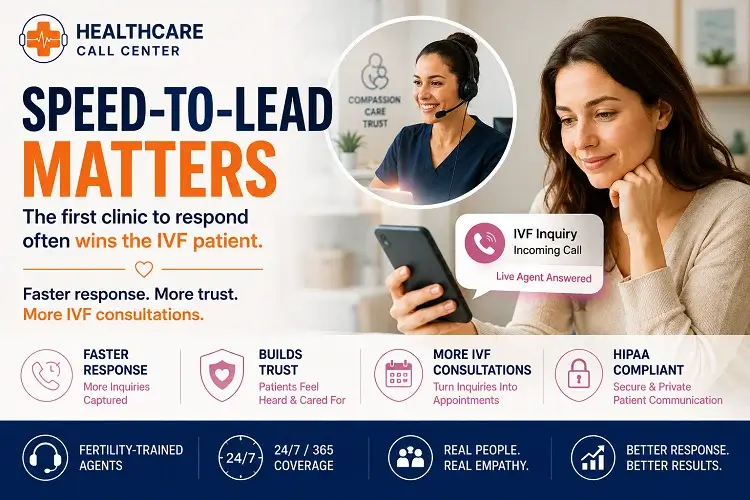
A fertility patient does not usually contact one clinic and wait patiently for a reply. She researches. She compares. She reads reviews. She checks success stories. Then she reaches out to the clinics that feel most trustworthy.
At that moment, speed matters.
Not because fertility care should feel rushed. Not because patients want a sales pitch. Speed matters because the first clinic that responds with clarity, empathy, and confidence often becomes the clinic the patient trusts first.
For fertility clinics, speed-to-lead is not just a marketing metric. It is a patient acquisition advantage.
A new IVF inquiry may represent a treatment journey worth thousands of dollars. But before that patient ever books a consultation, she has to feel that your clinic is responsive, organized, and emotionally safe. If her first call hits voicemail, if her message waits overnight, or if she gets a rushed callback from a busy front desk, the trust gap begins immediately.
That is why a fertility clinic answering service is not simply about answering the phone. It is about protecting the first moment of trust.
What Speed-to-Lead Means in Fertility Marketing
Speed-to-lead is the time between a patient inquiry and your clinic’s first real response. In simple terms, it measures how fast your clinic responds after someone fills out a form, calls the office, clicks an ad, or asks for an appointment.
In many industries, speed-to-lead is treated as a sales performance metric. In fertility care, it is more personal. A patient who contacts an IVF clinic may be anxious, hopeful, overwhelmed, or already disappointed by previous treatment experiences. That patient is not just looking for information. She is looking for reassurance.
A fast response tells her three things:
- This clinic is organized.
- This clinic takes patient inquiries seriously.
- This clinic may be safe to trust with something deeply personal.
A slow response tells a different story, even if that story is unfair. It suggests the clinic is too busy, too disorganized, or not ready to prioritize her needs. That impression can form before she ever speaks to a doctor.
Why Fertility Patients Compare Multiple Clinics
Most fertility patients are not casual shoppers, but they are careful researchers. IVF is expensive, emotional, and life-changing. Patients often compare multiple clinics before deciding where to book their first consultation.
They look at success rates. They read reviews. They compare physicians. They ask friends or online communities. Then they contact the clinics that make the shortlist.
Here is the important part: the first response can shape the entire decision.
If one clinic answers live, explains next steps, shows empathy, and offers a consultation time, that clinic creates momentum. If another clinic sends the call to voicemail or replies the next day with a generic message, the patient may already be emotionally committed elsewhere.
This is why speed-to-lead matters more in fertility than in many other medical specialties. The patient is not only choosing clinical expertise. She is choosing the team that feels most present when she first reaches out.
Your Front Desk Is Part of the Fertility Conversion Funnel
Many fertility clinics think of the front desk as an administrative function. It is not. Your front desk is part of your conversion funnel.
Every Google Ads click, organic search visit, referral, and social media impression eventually has to become a real patient conversation. If that conversation does not happen quickly and smoothly, your marketing spend leaks revenue.
A fertility clinic may invest heavily in SEO, paid ads, reputation management, and physician branding. But if the first call goes unanswered, those investments do not convert at the rate they should.
This is the hidden leak in fertility marketing. The problem is not always traffic. The problem is often response time.
A fertility call center helps close that gap by making sure inquiries are answered quickly, routed properly, and handled with the sensitivity the patient expects.
Why Generic Answering Services Fail IVF Clinics
Fertility calls are different from routine medical calls. Generic answering services often fail where a specialized medical answering service succeeds for fertility practices.
Fertility patients may ask about consultation availability, insurance questions, treatment timelines, prior failed cycles, donor options, financing, lab access, or next steps after an online inquiry. Even when the agent cannot provide clinical advice, the way the call is handled matters.
A good IVF answering service should know how to:
- Respond with empathy without overpromising clinical outcomes.
- Collect the right intake information.
- Route urgent or sensitive calls based on clinic protocol.
- Schedule consultations or pass qualified inquiries quickly to the clinic.
- Protect patient privacy through HIPAA-compliant workflows.
- Represent the clinic’s tone with calm, clear communication.
This is why fertility clinics need more than a basic message-taking service. They need call coverage built around patient experience and conversion.
Speed Does Not Mean Pressure
One mistake clinics make is assuming faster response means more aggressive sales behavior. That is not what fertility patients need.
Speed-to-lead does not mean rushing the patient. It means being present when the patient is ready to talk.
A strong first response should feel calm, human, and helpful. The goal is not to push the patient into treatment. The goal is to make the next step feel simple.
For example, the difference between these two responses is huge:
Cold response: ‘Someone will call you back later.’
Better response: ‘I understand this is an important decision. I can help get your information to the right team and see what consultation times are available.’
Both responses may take less than a minute. But only one builds trust.
Where Fertility Clinics Lose Speed
Most fertility clinics do not lose leads because nobody cares. They lose leads because the front desk is overloaded.
Common gaps include:
- Calls during lunch hours when staff are short-handed.
- After-work calls from patients who cannot call during business hours.
- Weekend inquiries from patients doing research at home.
- Google Ads calls that arrive when staff are handling in-office patients.
- Web form submissions that sit too long before follow-up.
- Voicemails that get returned after the patient has contacted another clinic.
These are operational gaps, but they create marketing losses. The clinic may never see them clearly unless call tracking and response time are measured.
What a Fertility Clinic Answering Service Should Do
The right fertility clinic answering service should do more than answer phones. It should support the entire patient inquiry process.
That includes:
- Live answering during office hours, overflow periods, evenings, weekends, and holidays.
- Consultation scheduling based on your clinic’s rules.
- HIPAA-compliant intake and message handling.
- Escalation protocols for sensitive or urgent calls.
- Clear documentation so your internal team knows what happened.
- Reporting on missed calls, answered calls, and booked opportunities.
When this system works, your clinic does not need to choose between patient care and lead response. Your front desk can focus on in-office patients while trained support captures new inquiries before they go cold.
How Faster Response Times Improve IVF Conversions
In fertility marketing, speed creates trust. Trust creates momentum. Momentum creates booked consultations.
When a patient reaches your clinic and hears a calm human voice, the decision process changes. She is no longer just comparing websites. She is having a real experience with your brand.
That first experience can make your clinic feel accessible, organized, and emotionally supportive. It can also make the next step clear: book the consultation, submit intake information, or speak with the right team member.
This is where speed-to-lead becomes a conversion strategy. It is not only about answering fast. It is about answering well while the patient is still actively deciding.
How to Improve Speed-to-Lead Without Burning Out Staff
Improving response time does not always mean hiring more front desk staff. It means designing a better call coverage system.
Start with these steps:
- Audit your call logs for missed calls, peak call windows, and after-hours inquiries.
- Track how long it takes to respond to forms, voicemails, and missed calls.
- Separate urgent patient calls from new consultation inquiries.
- Create clear scripts for IVF inquiries, financing questions, and appointment scheduling.
- Use a fertility-trained call center for overflow and after-hours support.
- Review weekly reporting to see which inquiry sources convert into booked consultations.
The goal is not more activity. The goal is a faster, calmer, more consistent patient response.
For clinics handling sensitive IVF inquiries, IVF appointment scheduling support can help capture patient intent before the caller loses momentum.
Final Thought: Speed Builds Trust
Fertility patients are making one of the most personal decisions of their lives. They are not only evaluating your doctors, technology, or success stories. They are evaluating how your clinic makes them feel from the first interaction.
If your clinic responds quickly, clearly, and compassionately, you create trust before the first appointment. If your clinic responds slowly, that trust may go to another practice.
Speed-to-lead is not just a marketing concept for fertility clinics. It is a patient experience standard.
Healthcare Call Center helps fertility clinics answer patient inquiries quickly, route calls properly, and protect every high-value IVF opportunity with HIPAA-compliant, empathy-first support.
Book a free consultation to see how many fertility patient inquiries your clinic may be missing and how to recover them.
Frequently Asked Questions
Why does speed-to-lead matter for fertility clinics?
Speed-to-lead matters because fertility patients often compare several clinics before booking. A fast, empathetic response helps build trust while the patient is still actively deciding where to schedule an IVF consultation.
What is a fertility clinic answering service?
A fertility clinic answering service provides live call coverage for IVF and fertility practices. It helps answer patient inquiries, collect intake details, schedule consultations, route urgent calls, and support HIPAA-compliant communication.
How is fertility call handling different from general medical answering?
Fertility calls are often emotional, time-sensitive, and high-value. Agents need to communicate with empathy, avoid clinical overpromising, follow escalation protocols, and understand the sensitivity of IVF patient inquiries.
Can a fertility call center help with after-hours inquiries?
Yes. A fertility call center can answer calls after hours, on weekends, during lunch breaks, and during overflow periods so patient inquiries do not sit in voicemail while the patient contacts another clinic.
Is the fertility clinic’s call answering HIPAA compliant?
A reputable fertility clinic answering service should use HIPAA-compliant workflows, trained agents, secure systems, and a signed Business Associate Agreement when handling patient information.
How quickly can a fertility clinic improve response time?
With the right call coverage partner, setup can happen in up to 2 weeks. That includes call flow planning, script setup, escalation rules, and agent training based on the clinic’s process.