by Erika Sanchez | Jun 8, 2026 | Fertility & IVF Clinic Answering Service
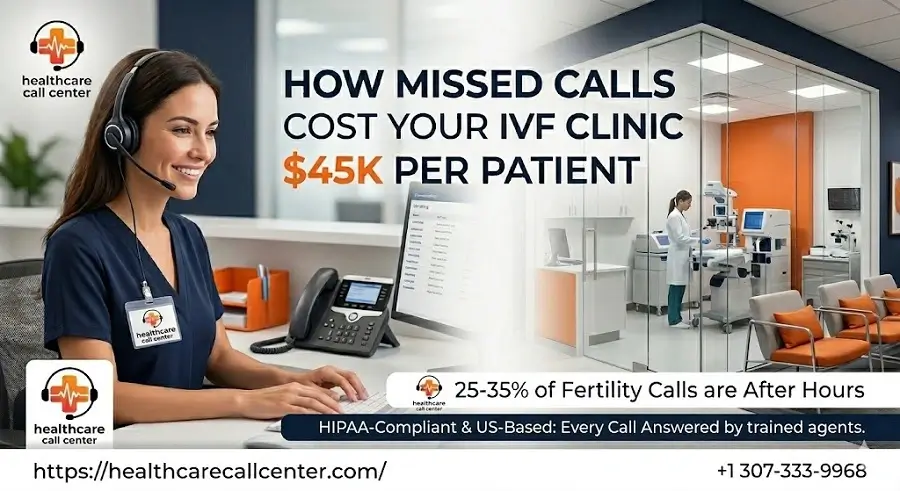
The average IVF clinic in the United States handles 80 to 150 patient calls per day. Between 25 and 35 percent of those calls come in outside normal business hours, early mornings before the first appointment, evenings after staff leave, weekends, and holidays. For a specialty where a single new patient represents $15,000 to $50,000 in lifetime treatment revenue, every unanswered call has a measurable financial impact that compounds over time.
Most fertility practices still rely on voicemail, part-time receptionists, or generic medical answering services with no familiarity with IVF protocols or the emotional reality of patients navigating fertility treatment. This gap between what patients need and what they experience on the phone is one of the most overlooked drivers of patient attrition in the fertility industry.
25 to 35 percent of fertility patient calls come in outside business hours. Each missed new inquiry can represent $15,000 or more in lifetime patient value.
Why IVF Call Patterns Are Different From Standard Medical Practices
IVF treatment generates phone activity that looks nothing like a routine OB-GYN visit or a standard specialist referral. Patients call repeatedly throughout a single treatment cycle, not because they are difficult or uninformed, but because the treatment timeline demands it.
During ovarian stimulation, patients call about medication dosing, side effects, and lab results. During the two-week wait after embryo transfer, call volume does not drop. It shifts to emotional support needs, patients asking if cramping is normal, whether they should avoid certain activities, or what a negative home pregnancy test might mean. If these calls hit voicemail at 6 PM on a Friday, the patient spends the entire weekend in distress that could have been resolved in 90 seconds.
This call pattern repeats across every IVF cycle for every patient. A clinic running 30 to 50 cycles per month generates thousands of touchpoints where the quality of phone support directly affects patient experience and retention.
The Revenue Impact of Missed Calls in IVF
The financial impact is not theoretical. It is calculable based on call volume, conversion rate, and patient lifetime value.
$15,000+ average lifetime value of a fertility patient
- 20 to 35 percent – improvement in consultation conversion with dedicated answering
- 40 percent – of new patient inquiries start with a phone call
- Under 30 seconds – the window to answer before a prospective patient calls the next clinic
A clinic that misses 10 calls per week from prospective patients, with a 25 percent conversion rate and $15,000 average patient value, leaves approximately $5.8 million in potential annual revenue on the table. Even in smaller markets where those numbers compress, the math remains the same: calls answered equal revenue captured, and calls missed equal revenue lost permanently.
For clinics running Google Ads campaigns
where a single click for “IVF clinic near me” costs $15 to $25, an unanswered call means paying for the lead and losing the opportunity. An answering service protects that ad spend by converting every inbound click into a live conversation.
HIPAA Compliance Is Not Negotiable for Fertility Data
Fertility treatment involves some of the most sensitive patient health information in medicine. Patients share genetic testing results, mental health histories, and intimate relationship details during phone consultations. Every call with a fertility patient involves Protected Health Information subject to HIPAA regulations.
Any answering service handling these calls must provide:
- A signed Business Associate Agreement before accessing any patient information
- Encrypted message delivery for call notes and voicemail transcription
- Role-based access controls limiting who can view patient data
- Regular security audits and documented breach response procedures
The HHS Office for Civil Rights has increased enforcement actions against smaller healthcare organizations in recent years. Fertility clinics using non-compliant answering services face regulatory penalties and patient trust damage that is nearly impossible to recover from, particularly in a specialty where patients choose their clinic based on reputation and referrals.
After-Hours Coverage: Why It Is a Patient Safety Issue for IVF
IVF treatment does not follow a 9-to-5 schedule. Patients take medications at specific times that fall outside business hours. They experience symptoms that prompt questions when the clinic is closed. Without 24/7 support, patients face three poor options:
Leave a voicemail and wait hours or days for a callback, which for a patient experiencing spotting after transfer means hours of escalating anxiety.
Visit an emergency room for concerns that could have been addressed by phone in under two minutes.
Search online and encounter unreliable or alarming information from forums and social media.
A dedicated after-hours answering service solves this by triaging calls in real time. Non-urgent questions receive protocol-based guidance and next-day scheduling. Urgent clinical concerns pain after egg retrieval, signs of ovarian hyperstimulation syndrome, fever after anesthesia get warm-transferred to the on-call physician immediately.
After-hours coverage in IVF is not a convenience feature. It is a patient safety measure that also happens to drive retention and reduce emergency department utilization.
US-Based Agents Versus Offshore: The Difference Matters More in Fertility
Fertility patients call because they are anxious and need reassurance, not because they need directions to the office. They are calling about spotting during the luteal phase, nausea from hormone medications, or whether a fever after retrieval warrants a trip to the ER. These calls require someone who understands the clinical context and responds with appropriate urgency — not someone reading from a generic medical script.
What US-Based Agents Provide That Offshore Teams Cannot
US-based agents trained on IVF protocols understand the healthcare system insurance verification for fertility benefits, referral authorization processes, prescription terminology, and the emotional weight of these conversations. They recognize urgency in a patient’s voice when they ask about “spotting after transfer” because they have been trained to understand that phrase in context.
Research published by the NIH confirmed that infertility patients rate communication quality as critical to their treatment experience and frequently report it as insufficient. Cultural and language barriers between patients and offshore agents widen this gap significantly. A patient undergoing their third IVF cycle, calling at 10 PM about cramping, needs a calm, knowledgeable response — not a delayed callback or a transferred call to someone unfamiliar with their file.
Converting Inquiries Into Consultations: The Phone Is Your Funnel
New patient inquiries are where phone handling has the most direct financial impact for IVF clinics. Most prospective patients start with a phone call, questions about success rates, insurance coverage, pricing, and available protocols. The speed and quality of that first response determines whether they book a consultation or move on to the next clinic on their list.
A trained answering service does more than take messages. Agents collect key patient information during the initial call — age, diagnosis, treatment history, insurance details and route it directly into the scheduling system. This turns a voicemail into a pre-qualified consultation booking, eliminating the callback delay that causes prospective patients to choose a competitor.
For clinics investing in paid search, this integration is critical. Every unanswered call from a Google Ads click is money spent with zero return. A 24/7 answering service ensures the clinic captures every paid lead, not just the ones that arrive during business hours.
What to Look for in an IVF Answering Service
Not all medical answering services are equipped for fertility. When evaluating providers, these factors separate adequate services from ones that actually improve clinic performance:
- Fertility-specific training – Agents should understand IVF treatment cycles, common medications, and the emotional context of fertility calls, not just general medical terminology.
- Real-time scheduling integration – The service should connect directly to your EMR or scheduling platform so appointments are booked immediately, not relayed through message tickets.
- HIPAA compliance documentation – Request the Business Associate Agreement, security audit reports, and breach response plan before signing.
- After-hours triage protocols – The service should have clear escalation procedures for urgent clinical concerns, with warm transfer to on-call physicians.
- US-based agents – For fertility patients in emotionally vulnerable states, a US-based agent who understands the healthcare system and cultural context makes a measurable difference in satisfaction and retention.
Key Takeaways
Fertility clinic call coverage is a revenue driver, a patient safety measure, and a competitive differentiator not a back-office operational detail. Clinics that invest in dedicated, HIPAA-compliant answering services see measurable returns in consultation volume, patient retention, and online reputation.
- Track your unanswered calls this week. The data will make the case for investment.
- Verify HIPAA compliance documentation before signing with any answering service.
- Prioritize US-based agents with specific fertility or IVF training.
- Ensure after-hours coverage includes warm transfer to on-call clinical staff.
Integrate your answering service with your scheduling system for real-time consultation booking.
Frequently Asked Questions
What does an IVF clinic answering service do?
It handles all incoming calls for the practice, new patient inquiries, consultation scheduling, medication questions, insurance verification, and after-hours triage. Trained agents follow clinic-specific IVF protocols to route calls and escalate urgent concerns to on-call physicians.
How much does an IVF answering service cost?
Most fertility practices pay between $200 and $800 per month depending on call volume and service level. A single missed IVF consultation can exceed $20,000 in treatment fees, so the service typically pays for itself within the first month of operation.
Can an answering service schedule IVF consultations directly?
Yes. A service integrated with your scheduling platform can collect patient information, verify insurance, and book consultations in real time eliminating the voicemail-to-callback delay that causes prospective patients to choose a competitor.
Is after-hours fertility answering HIPAA compliant?
Reputable healthcare answering services maintain full HIPAA compliance including signed Business Associate Agreements, encrypted message delivery, role-based access controls, and regular security audits. Always verify compliance documentation before contracting.
What happens when a patient calls with an urgent concern after hours?
Non-urgent calls receive protocol-based guidance and next-day scheduling. Urgent clinical concerns, pain after retrieval, signs of OHSS, fever get warm-transferred to the on-call physician immediately.
How does US-based differ from offshore for IVF calls?
US-based agents understand American healthcare terminology, insurance processes, and the cultural context of fertility treatment. For patients in emotionally vulnerable states, this makes a measurable difference in satisfaction, trust, and long-term retention.
Conclusion
Healthcare Call Center provides HIPAA-compliant, US-based answering services designed for fertility and IVF clinics. Our agents are trained on IVF treatment protocols and understand the communication needs of patients at every stage of treatment.
If your practice is experiencing missed calls, voicemail overload, or after-hours gaps, contact us to discuss what dedicated 24/7 coverage looks like for your clinic.
by Erika Sanchez | Jun 3, 2026 | Fertility & IVF Clinic Answering Service
Most fertility clinics get 80 to 150 calls a day, and roughly a quarter of those come in before 8 AM, after 5 PM, or on weekends. That’s not unusual for any medical practice except in fertility, the financial stakes are different.
A new patient who goes through IVF represents anywhere from $15,000 to $50,000 in lifetime treatment revenue. So when those calls hit voicemail, it’s not just a missed call. It’s money walking out the door.
The problem is that most fertility practices handle these calls the same way a general practitioner does front desk during business hours, voicemail after that, and maybe a generic answering service that doesn’t know the difference between a trigger shot question and a scheduling question.
Patients notice. And in fertility, where people research clinics extensively and compare experiences on Reddit and Facebook groups, that phone experience becomes public fast.
The IVF Call Pattern: Why Fertility Is Different
IVF treatment generates phone activity that looks nothing like a standard medical practice. Patients call repeatedly throughout a single treatment cycle not because they are difficult, but because the treatment timeline demands it.
| Treatment Stage |
What Patients Call About |
Urgency Level |
| Ovarian Stimulation (Days 1-10) |
Injection timing, side effects, missed doses |
Medium-High |
| Trigger Shot (Day 10-12) |
Timing confirmation, last-minute questions |
Critical |
| Egg Retrieval Recovery (Day 12-14) |
Pain, bloating, follow-up scheduling |
High |
| Two-Week Wait (Day 14-28) |
Symptom concerns, anxiety, spotting questions |
Medium |
| Beta Results & Beyond |
Next steps, frozen transfer planning |
High |
During the two-week wait after embryo transfer, call volume does not drop, it shifts to emotional support needs. Patients call asking if cramping is normal, whether they should avoid certain activities, or what a negative home pregnancy test means. If these calls hit voicemail at 6 PM on a Friday, the patient spends the entire weekend in distress that could have been resolved in 90 seconds.
Common Fertility Calls That Require Immediate Attention
While answering service agents do not provide medical advice, they can follow clinic-specific protocols to identify situations that may require prompt escalation.
Examples include:
- Severe pain after egg retrieval
- Signs of ovarian hyperstimulation syndrome (OHSS)
- Medication timing concerns
- Trigger shot timing questions
- Heavy bleeding
- Fever following a procedure
Having clear escalation procedures helps ensure patients receive timely support while keeping providers informed.
The Cost of Missed Calls: By the Numbers
The financial impact is not theoretical. It is calculable.
- $15,000+ – average lifetime value of a fertility patient
- 20-35% – improvement in consultation conversion with dedicated answering
- 40% – of new patient inquiries start with a phone call
- 30 seconds – the window to answer before conversion drops significantly
Even a small number of missed inquiries can have a meaningful impact on consultation volume and patient acquisition. For fertility clinics, every opportunity to connect with a prospective patient matter. Even if those numbers seem high for your market, the principle holds at any scale: calls answered equal revenue captured.
Why HIPAA Compliance Matters for Fertility Clinics
Fertility treatment generates some of the most sensitive patient health information in medicine. Patients share genetic information, mental health assessments, and intimate relationship details during treatment. Every phone call with a fertility patient involves Protected Health Information (PHI) subject to HIPAA regulations.
Any answering service handling these calls must provide:
| Requirement |
What It Means |
Risk If Missing |
| Signed BAA |
Business Associate Agreement with the answering service |
HHS penalties up to $50K/violation |
| Encrypted Channels |
All patient data transmitted via encryption |
Breach exposure during transit |
| Access Controls |
Limited, audited access to patient information |
Unauthorized PHI access |
| Agent Training |
Staff trained on PHI handling procedures |
Accidental disclosure risk |
| Audit Logs |
Documented record of all data access |
No accountability for violations |
The HHS Office for Civil Rights has increasingly targeted smaller healthcare organizations in enforcement actions. Fertility clinics that use non-compliant answering services face both regulatory penalties and patient trust damage that is nearly impossible to recover from.
US-Based vs. Offshore: Why It Matters for Fertility
Fertility patients call because they are anxious, not because they need directions. They are calling about spotting during the luteal phase, nausea from medications, or whether a fever after retrieval warrants a trip to the ER. These calls require someone who understands the clinical context, not just someone following a script.
What US-Based Agents Provide That Offshore Teams Cannot
A US-based agent trained on IVF protocols understands the healthcare system insurance verification, referral processes, prescription terminology. They recognize urgency in a patient’s voice when they ask about “spotting after transfer” because they have been trained to understand that phrase in context.
A study published by the NIH confirmed that infertility patients rate communication quality as critical and frequently report it as insufficient a gap that cultural and language distance only widens on the phone.
| Factor |
US-Based Agent |
Offshore Agent |
| Fertility protocol knowledge |
Trained on IVF cycle specifics |
Generic medical training |
| Insurance terminology |
Familiar with US carriers and verification |
Limited familiarity |
| Cultural context |
Understands American patient expectations |
May miss cultural nuances |
| Urgency recognition |
Can identify time-sensitive IVF concerns |
Follows general escalation rules |
| Patient empathy calibration |
Understands emotional weight of fertility treatment |
May not grasp clinical significance |
After-Hours Coverage: Protecting Patients During Critical Windows
IVF treatment does not follow a 9-to-5 schedule. Patients take medications at specific times outside business hours. They experience symptoms that prompt questions when the clinic is closed. Without after-hours support, patients choose between three bad options:
Leave a voicemail and wait hours or days for a callback. Visit an ER for concerns that could have been addressed by phone. Search online and encounter unreliable or alarming information.
A dedicated after-hours answering service solves this by triaging calls in real time. Non-urgent questions get protocol-based guidance and next-day scheduling. Urgent clinical concerns such as pain after egg retrieval or signs of ovarian hyperstimulation get warm-transferred to the on-call physician immediately.
After-hours coverage is not a convenience feature for fertility clinics. It is a patient safety measure that also happens to drive retention.
Converting Inquiries Into Consultations
New patient inquiries are where phone handling has the most direct financial impact. Most prospective patients start with a phone call questions about success rates, insurance, pricing, and available protocols. The speed and quality of that initial response determines whether they book a consultation or call the next clinic.
A trained answering service does more than take messages. Agents can collect key patient information during the initial call age, diagnosis, treatment history, insurance details and route it directly into the scheduling system.
This turns a voicemail into a pre-qualified consultation booking.
| Scenario |
Without Answering Service |
With Answering Service |
| Prospective patient calls during lunch |
Voicemail → callback tomorrow |
Consultation booked immediately |
| Patient calls Saturday morning |
Closed until Monday |
Appointment scheduled for Monday |
| Google Ads click generates a call at 7 PM |
Voicemail → ad spend wasted |
Lead captured, consultation booked |
| Patient calls with insurance question |
Staff busy → voicemail |
Agent verifies coverage in real time |
For clinics running paid search campaigns, this is particularly critical. A Google Ads click for “IVF clinic near me” can cost $15 to $25. If the resulting call goes unanswered, the clinic paid for the lead but lost the opportunity. An answering service protects that investment.
Key Takeaways
Fertility clinic call coverage is not a back-office operational concern. It is a revenue driver, a patient safety measure, and a competitive differentiator. The clinics that invest in dedicated, HIPAA-compliant answering services see measurable returns in consultation volume, patient retention, and online reputation.
✓ Track your unanswered calls this week, the data will make the case for you
✓ Verify HIPAA compliance before signing with any answering service
✓ Prioritize US-based agents with fertility-specific training
✓ Ensure after-hours coverage includes warm transfer to on-call staff
✓ Integrate answering service with your scheduling system for real-time booking
Every Fertility Patient Call Matters
The decision to contact a fertility clinic is rarely made casually. Patients often spend weeks or months researching providers before making that first call. Ensuring those conversations are answered promptly and handled professionally can make a meaningful difference in both patient experience and consultation conversion.
[Schedule a Consultation]
Frequently Asked Questions
What does a fertility clinic answering service do?
It handles all incoming calls for the practice; new patient inquiries, appointment scheduling, medication questions, and after-hours triage. Trained agents follow clinic-specific protocols to route calls, provide guidance, and escalate urgent concerns to on-call physicians.
How much does a fertility answering service cost?
Costs vary based on call volume, coverage requirements, and service features. Many clinics find that improved call handling and consultation scheduling offset the investment.
Can an answering service schedule IVF consultations directly?
Yes. A service integrated with your scheduling system can collect patient information, verify insurance, and book consultations in real time eliminating the voicemail-to-callback delay that causes prospective patients to choose a competitor.
Is after-hours answering HIPAA compliant?
A reputable healthcare answering service maintains full HIPAA compliance including signed Business Associate Agreements, encrypted message delivery, access controls, and regular security audits. Always verify compliance documentation before contracting.
What happens when a patient calls with an urgent concern after hours?
The service triages by urgency. Non-urgent calls get protocol-based guidance and next-day scheduling. Urgent concerns pain after retrieval, signs of OHSS get warm-transferred to the on-call physician immediately.
How does US-based differ from offshore for fertility calls?
US-based agents understand American healthcare terminology, insurance processes, and cultural context. For fertility patients in vulnerable emotional states, this makes a measurable difference in satisfaction and retention.
Conclusion
Fertility clinics spend heavily on clinical technology, marketing campaigns, and patient experience improvements then leave their phone lines to voicemail systems and overworked front desk staff. It is the most visible operational gap in the specialty, and patients notice it immediately. Every unanswered call is a prospective patient who moves to the next clinic on their list, and every patient who cannot reach anyone after hours is a patient who starts questioning whether they made the right choice.
The fix is not complicated. A HIPAA-compliant, US-based answering service with agents trained on fertility protocols captures the calls that voicemail loses, converts the inquiries that voicemail wastes, and provides the after-hours support that keeps patients from switching practices mid-cycle. For most fertility clinics, the service pays for itself within the first month through captured consultations alone.
If your practice has been losing calls or if you are not sure how many calls you are losing because nobody is tracking it start there. Count the unanswered calls for one week. The number will make the decision obvious.
by Erika Sanchez | Jun 2, 2026 | OB-GYN Answering Service
Missed calls are a common challenge for busy OB-GYN and pregnancy clinics. Whether the call is from a new patient looking to schedule prenatal care or an existing patient with an urgent concern, unanswered calls can affect patient satisfaction, continuity of care, and appointment scheduling.
This is what a pregnancy clinic answering service is designed to prevent. When your clinic has a 90% answer rate guarantee, that call gets answered by a real person within three rings even during your busiest hours, even at 2 AM on a Saturday. Let’s get into what that actually looks like in practice.
A pregnancy clinic answering service helps OB-GYN practices answer patient calls 24/7, schedule appointments, manage after-hours inquiries, and ensure urgent concerns are routed according to practice protocols. By providing live call coverage during business hours and after hours, these services help improve patient communication and reduce missed opportunities.
What Actually Is a Pregnancy Clinic Answering Service?
Let me be specific about what I mean here, because there’s a big difference between a pregnancy clinic answering service and the generic medical answering service you might find on Google.
A proper pregnancy clinic call answering service trains its agents on the things that matter to obstetric patients. That means they understand the difference between first-trimester spotting and third-trimester bleeding (and why the triage protocol is completely different for each).
They know that a call about progesterone refills is more urgent than a prenatal vitamin refill. They’re aware that genetic counseling results require a completely different tone than scheduling a routine 28-week checkup.
Agents answer calls using your clinic’s preferred greeting and communication standards, creating a consistent experience for patients.
Why Every Missed Pregnancy Clinic Call Costs You More Than You Think
Many OB-GYN practices discover they are missing more patient calls than expected when reviewing call reports and front desk workloads. High call volumes, staffing limitations, and after-hours inquiries can make it difficult to answer every call consistently.
Many clinics experience unanswered calls during peak hours, especially during busy mornings, lunch periods, and after-hours times when front desk teams are unavailable.
Pregnancy-related questions can arise at any time. Patients may call about contractions, reduced fetal movement, medication concerns, spotting, or other symptoms outside regular office hours. When no one answers, patients often seek guidance elsewhere or visit urgent care and emergency departments for reassurance.
Many of these concerns are covered by guidance from the American College of Obstetricians and Gynecologists (ACOG), helping patients understand when medical attention may be needed.
Why Patients Expect Immediate Responses
Think about what’s happening from the patient’s perspective. She picked your clinic. She read your reviews, checked your credentials, maybe even drove past the office to see what it looked like. She calls to book her first prenatal visit, and nobody answers.
What does she think? She thinks you’re too busy for her. She thinks her care might not be a priority. And she’s not going to give you a second chance, she’ll call the next practice on her Google search results.
How This is Different From a Standard Medical Answering Service
Some clinics discover that generic answering services lack the training needed to handle pregnancy-related calls effectively.
Pregnancy-related calls often involve sensitive questions, urgent concerns, and situations that require empathy, professionalism, and clear communication.
A specialized obstetrics answering service is designed to support the unique communication needs of pregnancy and women’s health practices.
A healthcare answering service built for obstetrics gets this right. The agents are trained on pregnancy-specific terminology, your specific triage protocols, and the communication style that pregnant patients actually need calm, warm, and genuinely helpful.
What a 90% Answer Rate Actually Means for Your Clinic
You’ll see a lot of answering services advertise “live answering” without publishing any actual numbers. Ask them what their answer rate is, and many can’t tell you. The industry average for medical call centers sits somewhere around 75-85%.
A 90% answer rate guarantee means exactly what it says: out of every 100 calls that come into your clinic, at least 90 are answered by a live person. Not voicemail, not a phone tree, not “please hold for the next available representative.”
Here’s what those changes mean in practice:
Your conversion rate from inquiry to booked patient goes up. Not because you’re doing anything differently on the clinical side just because more prospective patients actually reach someone. Improved answer rates often help practices connect with more prospective patients and reduce the likelihood of missed appointment opportunities.
Your on-call providers receive fewer non-urgent interruptions. A prenatal care answering service filters the routine questions (appointment times, prescription refills, insurance questions) from the actual emergencies. Your providers only get called when it matters.
The Calls Your Answering Service Should Be Handling
If you’re going to pay for a service, you should know exactly what you’re getting. Here’s what a well-run setup covers:
- New patient inquiries — These are the most expensive calls to miss. A prospective patient calling to ask about insurance acceptance or book a first prenatal visit represents $4,000-$10,000 in lifetime value. Every single one that goes to voicemail is a patient your competitor gets instead.
- Appointment scheduling —These matters more than many practices realize. When a patient needs to reschedule because of work or childcare, and they can’t get through, a lot of them just don’t come back. An answering service with appointment scheduling support books directly into your EHR; no message-taking, no double entry, no scheduling gaps.
- Symptom triage and escalation — Bleeding, cramping, reduced fetal movement, headaches, and swelling; these calls require a protocol-driven approach. The agent collects information, follows your escalation rules, and either pages the on-call provider or directs the patient to the right level of care. This needs to be customized to your practice, not a generic medical script.
- Lab results and test inquiries — Patients calling about blood work, genetic screening, or ultrasound findings. The agent confirms availability and routes the call to the right clinical staff.
- Prescription refills — Prenatal vitamins, progesterone, anti-nausea medication — the agent logs the request and forwards it per your protocol.
- Insurance and billing — Routine questions about coverage, delivery costs, and payment plans that don’t need a clinician’s input.
- Postpartum follow-up — New mothers calling about recovery, breastfeeding, or postpartum depression concerns. This is a critical retention moment. Handle it well, and that family stays with your practice for years.
Patients often seek additional information from trusted prenatal care resources when questions arise between appointments.
What to Actually Look for in a Provider
Not every answering service is equipped for obstetric work. I’d put these at the top of your evaluation list:
HIPAA compliance isn’t optional — Every pregnancy-related call involves protected health information. The service needs encrypted call recording, secure message transmission, and a signed business associate agreement on file. If a provider can’t produce their BAA template within five minutes of you asking, move on.
Custom triage protocols — A call about bleeding at 6 weeks and a call about bleeding at 34 weeks need different escalation paths. If the service tells you they use a “standard medical triage script,” they’re not set up for prenatal care.
EHR integration — Your agents need to book directly into your scheduling system. If they’re taking messages for your staff to enter later, you’re creating twice as much work, not less.
US-based agents — I know this sounds obvious, but it matters more than you’d think. Your patients are navigating US insurance networks, deductible structures, and referral systems. They need agents who understand how all of that works without having to put the patient on hold to look it up.
Real-time reporting — You should be able to see every call, who called, when, what the concern was, and how it was resolved. Not a weekly email summary. Actual real-time data.
How This Works Day to Day
The best way to think about it is as an overflow system. During your busiest hours, Monday mornings, lunch windows, the 4 PM rush calls that your front desk can’t get to immediately route to the answering service. The patient still gets answered within three rings by someone trained to handle their question.
After hours, all calls go to the service. Routine questions get logged for your next business day. Anything that needs clinical escalation gets routed to your on-call provider with the relevant details already collected. An after-hours answering service helps ensure patients can reach a live representative outside normal business hours.
Weekends and holidays. Same thing full coverage without your staff having to carry phones everywhere.
What a live medical receptionist does that voicemail never could is de-escalate anxiety in real time. A pregnant patient who hears a calm voice say “I can see you’re concerned — let me get your information and connect you with someone who can help right now” gets immediate relief. The same patient leaving a voicemail just sits with her worry.
Benefits of a Pregnancy Clinic Answering Service
Without dedicated call coverage, pregnancy clinics may experience missed calls, delayed responses, and scheduling challenges during peak periods.
With a pregnancy clinic answering service, calls can be answered promptly, appointments scheduled efficiently, and urgent concerns escalated according to practice protocols. This helps improve patient communication while reducing pressure on front desk staff and on-call providers.
The right patient communication solutions should feel like adding two or three extra front desk staff members who happen to work around the clock. If it feels like you’re dealing with a vendor, you’re working with the wrong service.
Frequently Asked Questions
What is a pregnancy clinic answering service?
A pregnancy clinic answering service for OB-GYN and women’s health clinics answers their phone, schedules their appointments, answers questions and handles after-hours calls by routing them according to the protocols of the specific clinic.
Why choose a specialized pregnancy answering service?
A Pregnancy Clinic answering service is specifically trained to handle calls related to pregnancy and women’s health. This helps ensure patients receive the same level of professionalism and care they expect from your practice.
What does a 90% answer rate guarantee mean?
A 90% answer rate guarantee means that 90 out of 100 calls will be answered by a live receptionist from your pregnancy clinic answering service.
How are after-hours calls handled?
We answer after-hours calls for your clinic in the manner you direct. All calls are recorded and Messages are documented and routed according to your clinic’s instructions. We handle urgent situations in the manner you specify and can contact your on-call provider when needed.
Is a pregnancy clinic answering service HIPAA compliant?
We are a HIPAA compliant answering service for pregnancy related calls. We operate under the guidelines of HIPAA, use the latest technology in communication and sign a Business Associate Agreement (BAA) with our healthcare providers to protect their patients’ information.
Can an answering service schedule appointments?
Yes. We can schedule, confirm and cancel appointments in your practice management scheduling software.
Your Patients Are Calling. Someone Should Answer.
Whether you need overflow call handling during busy office hours or full after-hours coverage, a pregnancy clinic answering service can help ensure patients receive timely responses while supporting your practice’s communication goals.
Get Free Audit of Your Practice!
Conclusion
The first promise of prenatal care is simple: we’ll be here when you need us. When a pregnant woman calls your clinic, she’s not shopping for the best deal or comparing features. She’s looking for someone who picks up the phone.
A pregnancy clinic answering service with a 90% answer rate guarantee makes sure that happens — during business hours, after hours, weekends, holidays. Every call. Every time. No voicemail. No patients falling through the cracks.
If your clinic is missing calls right now, you already know the cost. The fix is straightforward, the ROI is measurable, and your patients deserve it.
by Erika Sanchez | Jun 1, 2026 | Patient Communication
The medical answering service industry has grown significantly over the past decade, with practices increasingly outsourcing patient phone coverage to third-party providers. Within that market, offshore call centers represent a substantial portion of the available options often positioned as the most cost-effective solution for practices managing tight budgets.
But cost-effectiveness in healthcare answering isn’t just about the monthly invoice. It’s about what happens on the calls themselves, and whether those interactions support or undermine the patient relationship your practice has built.
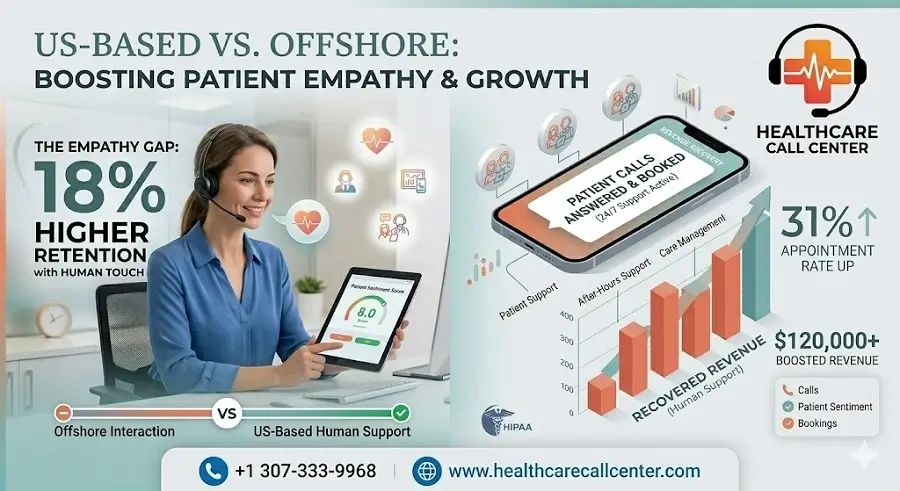
Medical answering service empathy, the ability to understand and respond appropriately to a patient’s clinical and emotional needs during a phone interaction is where offshore call centers might underperform.
This isn’t a criticism of individual agents. It’s a structural limitation that practices need to understand before making a vendor decision.
The Empathy Gap in Healthcare Phone Interactions
Empathy in patient communication isn’t about being warm or friendly. It’s about clinical comprehension. When a patient calls with a concern, the person answering needs to understand what they’re describing, assess whether it’s urgent or routine, and respond in a way that addresses the actual need, not just follow a script.
Offshore agents handling healthcare calls typically work from generalized answering scripts. They’re trained in customer service fundamentals, not in clinical communication. That shows up in several measurable ways:
Patients often describe symptoms using everyday language rather than clinical terminology. Effective healthcare communication requires agents to understand those descriptions, ask appropriate follow-up questions, and follow established escalation protocols when necessary. When that understanding is missing, important details can be overlooked or delayed.
Patients may not remember every detail of a phone conversation, but they often remember how that interaction made them feel. Empathetic patient communication plays an important role in building trust, reducing anxiety, and creating a positive experience before a patient ever visits the practice.
Cultural and Communication Barriers
Healthcare communication in the United States involves navigating a specific insurance landscape, referral networks, and medical terminology that doesn’t translate cleanly across cultures.
Patients ask about in-network coverage status, prior authorization requirements, co-pay structures, and whether a specific procedure is covered under their plan. A US-based live medical receptionist handles these questions conversationally because they operate within the same system. Offshore agents typically rely on reference materials that don’t cover the nuance of individual patient situations.
Beyond terminology, there’s the clinical context issue. Understanding the difference between first-trimester and third-trimester bleeding, recognizing that post-surgical “numbness” might indicate a nerve issue rather than normal healing, knowing that “the baby hasn’t moved much today” at 32 weeks requires different handling than at 22 weeks, these distinctions matter for patient safety and appropriate escalation.
Without that context, calls get misclassified. Urgent situations get logged as routine inquiries. Routine questions trigger unnecessary escalations that disrupt clinical staff. Neither outcome serves the practice or the patient.
Many of these insurance and coverage requirements are governed by federal healthcare regulations and payer policies.
HIPAA Compliance and Data Handling
Protected health information discussed on patient calls diagnoses, medications, symptoms, appointment details fall under HIPAA. When those calls are processed by an offshore answering service operating outside US jurisdiction, the compliance structure becomes more complex.
Offshore vendors can technically meet HIPAA requirements, and many hold the necessary certifications. But enforcement and accountability operate differently when the data handler is in another country under different privacy regulations. If a breach involves patient records processed offshore, the practice itself remains liable to HHS.
The offshore vendor’s legal exposure is limited in ways that a US-based partners would not be.
For practices evaluating vendor options, a HIPAA compliant answering service based in the United States provides a straightforward compliance chain data stays in US jurisdiction, business associate agreements are enforceable under US law, and breach notification and accountability processes follow established domestic frameworks.
This isn’t speculation about offshore capabilities. It’s an acknowledgment that the practice’s risk profile changes when patient data crosses borders, and most practices don’t fully account for that risk during vendor selection.
Impact on Patient Retention
Patient retention in healthcare isn’t solely determined by clinical outcomes. Phone interactions play a measurable role in whether patients stay with a practice or seek care elsewhere.
Studies and industry data consistently show that patient experience including phone communication quality directly correlates with retention rates. When patients encounter impersonal, scripted, or confusing phone interactions, it erodes their confidence in the practice overall. They may not attribute the poor experience specifically to the answering service. They attribute it to the practice.
For a practice handling 600 calls monthly with offshore answering service coverage, even a moderate negative experience rate on patient-facing calls can translate to 8-12 lost patient relationships per month. In specialties like dental, OB-GYN, and plastic surgery where individual patient lifetime value ranges from $3,000 to $10,000+ the revenue impact compounds quickly.
Practices that have transitioned from offshore to US-based healthcare call center solutions generally report measurable improvements in new patient conversion within 60-90 days, typically in the 15-25% range.
Complaint volumes related to phone communication tend to drop as well. These aren’t anecdotal observations; they’re consistent patterns across multiple practice types and sizes.
What US-Based Healthcare Call Centers Do Differently
A US-based call center services designed for healthcare operations offers three structural advantages over offshore alternatives.
- Cultural And System Fluency – Agents understand the insurance terminology, referral requirements, and healthcare delivery structure that US patients navigate daily. Conversations flow without translation delays or clarification loops. Patients experience the interaction as a natural extension of the practice.
- Healthcare-Specific Training – Rather than general customer service scripts, agents trained for healthcare communication follow specialty-specific protocols distinguishing urgent from routine, escalating appropriately, and documenting calls in formats that integrate with clinical workflows.
- Domestic Compliance And Accountability – Patient data remains within US jurisdiction. Business associate agreements are enforceable under US law. Practices maintain a clean compliance trail without the added complexity of cross-border data handling.
The cost difference between offshore and US-based medical answering service options typically ranges from $200-800 per month. For most practices, that gap is recovered through improved patient conversion and retention within the first quarter.
How to Evaluate a Healthcare Answering Service Provider
If your practice is currently using or considering an offshore answering service, these are the areas worth examining:
- Call quality – Review random call recordings across different times and call types not the vendor’s selected samples. Focus on how agents handle clinical questions, urgent scenarios, and patient concerns that don’t fit neatly into a script.
- Patient feedback – Check online reviews and patient complaint logs for phone-related comments. Patterns of frustration with phone communication often trace back to answering service quality rather than clinical care.
- Triage and escalation protocols – Determine whether agents are trained to recognize urgent clinical situations and follow practice-specific escalation paths, or whether they default to logging calls for next-day follow-up regardless of urgency.
- Compliance structure – Confirm where patient data is stored and processed, what security protocols are in place, and how the vendor handles breach notification and accountability.
- Performance metrics – Track new patient conversion rates, call abandonment rates, and patient retention before and after any vendor change. These numbers tell you more about answering service quality than any vendor-provided SLA.
Is Your Current Answering Service Supporting the Patient Experience?
If you’re evaluating healthcare answering service providers or comparing offshore and US-based options, a conversation with an experienced healthcare communication team can help clarify what level of support your practice actually needs.
Schedule a Consultation
Frequently Asked Questions!
Does offshore answering service quality actually impact patient retention?
Yes. Phone interactions represent the first point of contact for most patients. When those interactions feel impersonal or fail to address clinical concerns appropriately, it affects patient perception of the entire practice.
What differentiates medical answering service empathy from standard customer service?
Healthcare empathy requires clinical comprehension understanding what patients are describing, assessing urgency, and responding with appropriate follow-up.
Can offshore answering services meet HIPAA requirements?
Offshore vendors can hold the necessary certifications, but enforcement and accountability differ when data is processed outside US jurisdiction. Practices remain fully liable for any breaches involving their patient data.
What does a US-based answering service cost compared to offshore?
Offshore services typically range from $300-800 per month. US-based healthcare call centers generally cost $500-2,000 depending on call volume and coverage hours.
How do US-based agents handle after-hours calls differently?
US-based agents trained for healthcare follow practice-specific triage protocols that distinguish urgent from routine after-hours concerns. They can escalate immediately to on-call providers with relevant clinical details, rather than defaulting to “call back during business hours” responses.
Conclusion
The phone is where patients form their first impression of a practice. When the person on the other end doesn’t understand their clinical concerns, can’t navigate the healthcare system they depend on, and responds with scripted generalities instead of informed empathy, that impression is negative and it sticks.
Offshore call centers serve industries where the stakes are lower and the interactions are simpler. Healthcare isn’t one of them. The clinical complexity, the regulatory requirements, and the direct impact on patient safety and trust all point toward US-based answering solutions with healthcare-specific training as the more appropriate option for medical practices.
If your practice is evaluating answering service providers, the questions to ask aren’t about price they’re about what happens on the actual calls. Listen to recordings. Check complaint patterns. Track retention metrics. The data will tell you what you need to know.
by Erika Sanchez | May 28, 2026 | plastic surgery call center
Why Plastic Surgery Clinics Miss Consultation Calls After Hours
Plastic surgery clinics often miss consultation opportunities after business hours because many cosmetic patients research procedures privately during evenings and weekends when front desk staff are unavailable.
Plastic surgery clinics rarely lose patients because of surgical skill alone.
A large number of consultation opportunities disappear much earlier in the process. Often during a missed phone call at 8:17 PM. Or a quiet inquiry that comes in after the clinic front desk has already shut down for the day.
Most aesthetic practices spend heavily on branding, surgeon reputation, social media visibility, paid advertising, before-and-after galleries, and patient acquisition campaigns. But the communication side of the experience sometimes stays stuck in regular office-hour systems.
And cosmetic patients do not always behave like general healthcare patients.
Many of them research privately for weeks before reaching out. Some only gather enough confidence to call late at night after work, after family responsibilities, or after spending hours comparing clinics online. If nobody answers, they often move on silently.
This is one reason more clinics are paying attention to how a dedicated plastic surgery answering services fits into patient conversion and retention not just customer service.
Why Cosmetic Surgery Inquiries Often Happen After Business Hours
Cosmetic consultations are usually personal decisions people sit with quietly before contacting a clinic.
Unlike urgent medical situations, elective aesthetic procedures involve hesitation, insecurity, budgeting concerns, appearance anxiety, and privacy considerations. Patients tend to delay making the first inquiry.
Nighttime becomes the window where many finally reach out.
Aesthetic clinics often notice inquiries coming in:
- after 6 PM
- during late evenings
- on weekends
- during lunch breaks
- after patients leave work
A woman considering rhinoplasty may wait until her children are asleep before calling. A man researching hair restoration may avoid calling during office hours because coworkers are nearby.
Someone thinking about body contouring might spend days browsing procedures online before finally dialing a clinic number around 9 PM. The timing of these inquiries reflects how emotionally cautious many cosmetic patients are before reaching out.
And unfortunately, many practices simply are not available when those moments happen.
The Psychology Behind Late-Night Cosmetic Consultation Calls
Cosmetic patients are often emotionally cautious before the first conversation.
They may already feel vulnerable discussing:
- facial changes
- body image concerns
- aging
- weight-related insecurities
- post-pregnancy appearance
- corrective procedures
The first phone call carries emotional weight. Patients listen closely to tone, responsiveness, patience, and discretion. Even small communication gaps can create doubt.
If someone calls a clinic and hears: “Please leave a message after the tone…”
many never do. Not because they are uninterested.
Because cosmetic inquiries are emotionally fragile in the early stage.
Aesthetic patients frequently compare several clinics quietly before booking consultations. They may call three or four practices in one evening. The clinic that responds first and sounds calm, professional, and reassuring often stays in consideration longer.
That matters more in cosmetic medicine than many clinics realize.
What Happens When High-Value Calls Go Unanswered
Most missed calls do not announce themselves as lost revenue.
They just disappear.
A front desk team might return to work the next morning and see:
- two missed calls
- one abandoned inquiry form
- a voicemail with no callback number
By then, the patient may already be booked elsewhere.
Plastic surgery consultations are highly competitive because patients rarely commit to the first clinic they discover. They compare surgeon portfolios, reviews, consultation availability, pricing structure, financing options, responsiveness, and overall professionalism.
Communication becomes part of the brand experience. A delayed callback creates uncertainty.
No response overnight can feel bigger than clinics expect. Especially for high-ticket procedures where patients are already nervous about trust.
How Competing Clinics Capture Missed Opportunities
Aesthetic practices often compete less on procedures and more on accessibility.
If one clinic responds within minutes while another follows up the next day, the faster clinic usually controls the conversation first.
That first interaction shapes momentum.
Patients start asking questions. They open up about concerns. They discuss availability. They become emotionally invested in the process.
Once that relationship starts forming, it becomes difficult for slower clinics to recover the lead.
This happens quietly every week in cosmetic practices. One clinic invests thousands into marketing campaigns generating consultation calls.
Another clinic simply answers those calls more effectively. The second clinic often wins more booked procedures.
Common Operational Communication Gaps Inside Plastic Surgery Clinics
Most front desk teams are not failing intentionally.
They are overloaded.
Plastic surgery clinics juggle:
- consultation scheduling
- existing patient coordination
- post-op questions
- financing discussions
- physician schedules
- social media inquiries
- treatment room flow
- walk-in patients
Phones ring constantly during active clinic hours.
Then around evening, operations stop abruptly.
The front desk leaves at 6 PM.
Voicemails take over.
Online forms pile up overnight.
Meanwhile, patient inquiries continue.
A consultation coordinator may arrive the next morning already handling reschedules, cancellations, surgeon requests, and in-office patient traffic before even starting callback attempts.
Some leads get delayed accidentally.
Some get forgotten.
Some never reconnect.
Not because the clinic lacks interest. Because operational bandwidth is limited.
Why Voicemail Systems Often Fail for Cosmetic Consultations
Voicemail works differently in cosmetic medicine than in general healthcare. Patients calling about elective procedures often want live reassurance, not recorded systems.
Privacy concerns also play a role. A patient considering breast augmentation may not want to leave detailed information aloud.
Someone researching facial feminization surgery may avoid voicemail entirely due to personal privacy. Others simply feel awkward leaving appearance-related concerns on recordings.
Many hang up immediately.
Even when voicemails are left, they are often vague: “Hi, I was calling about a consultation…”
No details.
No emotional context.
No engagement.
By the time callbacks happen, hesitation may have returned.
The patient may no longer answer unknown numbers.
A Realistic Clinic Scenario
A cosmetic clinic runs paid Instagram campaigns promoting mommy makeover consultations.
The ads perform well.
Traffic increases.
Calls increase too.
But most inquiries arrive between 7 PM and 10 PM because that is when potential patients finally have quiet time to research procedures.
The clinic itself closes at 6 PM.
Over several months, staff notice consultation requests feel inconsistent despite strong ad performance. Some weeks are busy. Other weeks feel strangely slow.
Eventually they review call logs.
A large percentage of after-hours calls lasted under 20 seconds.
Patients were calling.
Nobody answered.
Most never called back.
This kind of pattern is more common than many aesthetic clinics realize.
How a Plastic Surgery Call Center Improves Consultation Conversion
A specialized plastic surgery call center does more than answer phones.
The difference is usually in consistency, responsiveness, and emotional handling.
When after-hours inquiries are answered live, patients stay engaged in the conversation instead of drifting back into hesitation.
Good call handling teams understand how to:
- speak calmly with nervous callers
- protect patient privacy
- gather consultation information naturally
- avoid sounding scripted
- escalate urgent surgical concerns appropriately
- support cosmetic consultation scheduling workflows
The tone matters. Cosmetic patients are extremely sensitive to rushed conversations or transactional interactions.
A rushed response can damage trust quickly. But a patient who feels heard during the very first call often becomes more comfortable scheduling consultations.
That is where specialized communication support changes outcomes.
The Role of Empathy and Discretion in Cosmetic Patient Communication
Aesthetic medicine is deeply personal.
Patients are not only evaluating procedures. They are evaluating emotional safety.
Even highly confident patients may feel uncertain discussing:
- facial aging
- weight concerns
- scarring
- body contouring
- revision surgeries
- appearance insecurities
The first phone interaction can either lower anxiety or increase it.
Empathy matters here in a very practical sense.
Patients notice whether someone sounds patient.
Whether questions feel respected.
Whether conversations feel confidential.
Luxury healthcare expectations also influence cosmetic clinics differently than standard medical offices. Patients paying for elective procedures expect responsiveness and professionalism throughout the experience — including evenings and weekends.
That expectation does not disappear after office hours.
How Cosmetic Surgery Call Center Services Support Clinic Growth and Patient Retention
Well-managed cosmetic surgery call center services often support more than appointment scheduling.
They help stabilize communication gaps that grow as clinics become busier.
As aesthetic practices scale, surgeons and coordinators usually become less available personally. Without structured medical answering services, response quality becomes inconsistent.
That inconsistency affects:
- consultation conversion
- patient trust
- follow-up rates
- online reviews
- retention
- referral behavior
Reliable after-hours support helps maintain continuity when internal staff are unavailable.
It also reduces pressure on front desk teams already stretched during daytime clinic operations.
Some clinics discover that improving phone responsiveness produces stronger consultation growth than increasing advertising spend. Some practices have seen measurable improvements in consultation conversion simply by improving how after-hours inquiries are handled.
Not because marketing improved. Because fewer opportunities disappeared.
The Hidden Revenue Impact of Missed After-Hours Consultation Inquiries
Plastic surgery leads are expensive to generate. Clinics already know this.
Advertising costs, social media campaigns, influencer partnerships, SEO efforts, and reputation management all feed into consultation acquisition.
But missed communication quietly weakens the entire system.
Read a case study on how
One unanswered evening inquiry may represent:
- a surgical consultation
- a treatment package
- long-term aesthetic maintenance
- repeat procedures
The financial impact is rarely visible immediately because missed patients usually never complain.
They simply move elsewhere.
That makes communication loss difficult to track.
And because cosmetic surgery is relationship-driven, the clinics that consistently respond well often build stronger long-term patient pipelines without dramatically changing their marketing.
Conclusion
Most cosmetic surgery clinics do not intentionally ignore potential patients after hours. The issue is usually operational.
Front desk teams leave. Staff become overwhelmed. Voicemails replace conversations. Leads cool down overnight.
But cosmetic consultation behavior does not follow office schedules.
Patients often reach out during private moments late in the evening when they finally feel ready to ask questions. Those moments are fragile. If communication breaks there, many inquiries disappear quietly.
This is why many growing aesthetic practices eventually rethink how they manage after-hours patient communication and whether a structured plastic surgery call center should be part of the clinic experience.
Not as a sales tool.
As a way to reduce missed opportunities that were already coming in.
Frequently Asked Questions!
Why do cosmetic surgery patients often call after business hours?
Many aesthetic patients research procedures privately after work or late at night when they feel more comfortable discussing personal appearance concerns. Cosmetic consultations are emotionally sensitive, so patients often wait until they have privacy before reaching out.
Why do so many cosmetic consultation callers avoid voicemail?
Patients considering elective procedures may feel awkward leaving detailed messages about appearance concerns. Others worry about privacy or simply lose confidence once they hear an automated system instead of a live person.
How does a plastic surgery call center help consultation booking rates?
A specialized call center helps clinics answer inquiries consistently during evenings, weekends, and busy clinic hours. Faster live responses usually keep patients engaged longer and reduce the number of consultation opportunities lost overnight.
What should cosmetic surgery call center services understand about aesthetic patients?
Good cosmetic surgery call center services should understand discretion, emotional sensitivity, consultation urgency, and how hesitant aesthetic patients communicate. The tone of the first conversation often affects whether patients feel comfortable scheduling consultations.